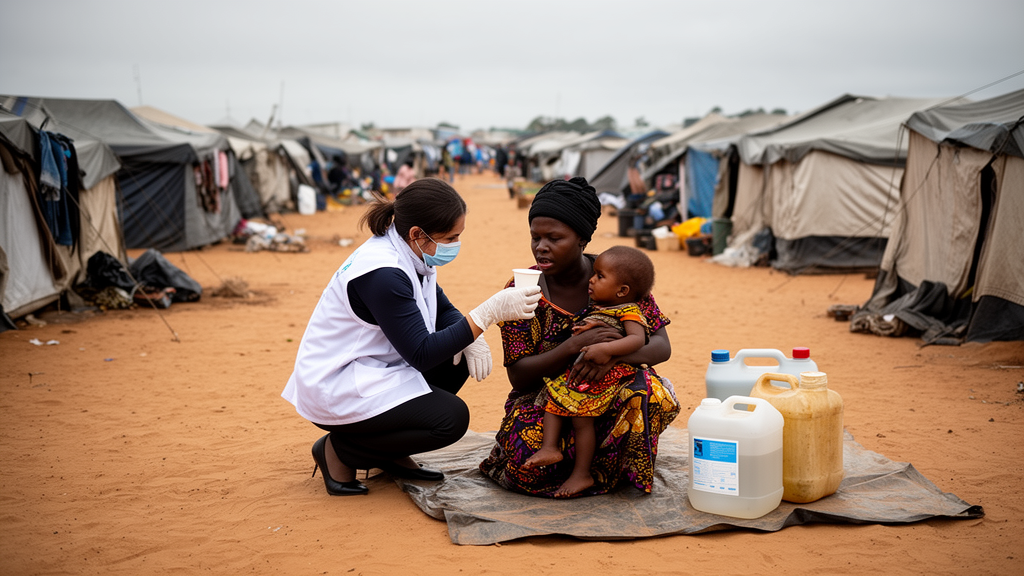
More than nine in ten displaced people surveyed in Gaza’s Mawasi camps reported suffering from diarrhoea since being displaced, according to a cross-sectional study of 601 internally displaced persons published in the journal Conflict and Health. Nearly a third of respondents were ill with the condition at the time the survey was conducted, painting a stark picture of the disease burden inside the camps that have absorbed much of Gaza’s displaced population since the war began in 2023.
The study, led by Lina El-Khairy with Zuhair Dardona and Ayman Dardona, used an Arabic structured questionnaire covering demographics, health-related issues, environmental and disease-related risk factors, and awareness of hygiene practices. The authors frame the work against what they describe as an unprecedented humanitarian crisis: the war has displaced more than 1.9 million people into overcrowded camps, and the collapse of water and sanitation networks has allowed diarrhoeal illnesses to spread, especially among young children.
The clinical profile reported by respondents was consistent with acute diarrhoeal disease. Abdominal pain was the most common manifestation, reported by 83.5 percent of participants, followed by loss of appetite at 72.7 percent; dehydration was also described among the characteristic symptoms. These figures come from self-report within a single camp system at one point in time, so they describe the burden as experienced and recalled by the displaced population rather than clinically confirmed case counts.
The risk-factor data point squarely at water and sanitation. Just under half of participants, 49.1 percent, reported using untreated water, and two-thirds relied on contaminated water sources despite 44.6 percent saying they washed their hands frequently. Lack of sanitation facilities was reported by 9 percent, and insect infestation by 70.7 percent. Statistically significant associations emerged between diarrhoea prevalence and educational status, household size, whether drinking water was potable, and the degree of sanitation, alongside other factors the questionnaire captured.
One finding stands out against the disease numbers: participants reported a high level of knowledge about diarrhoeal diseases.
The authors conclude that the situation amounts to an alarming public health crisis among Gaza’s displaced population, with the war-related collapse of essential infrastructure, particularly water and sanitation, contributing monumentally to diarrhoea-related morbidity. They call for immediate interventions to provide readily accessible potable water, overhaul sanitation, and improve awareness of prevention of this contagious disease.
Subject of Research: Prevalence, risk factors and hygiene knowledge of diarrhoeal diseases among internally displaced persons in Gaza
Article Title: The morbidity of displacement: epidemiological status, determinants, and knowledge of diarrheal diseases in Gaza (2023–2025)
Article References: El-Khairy, L., Dardona, Z., & Dardona, A. (2026). The morbidity of displacement: epidemiological status, determinants, and knowledge of diarrheal diseases in Gaza (2023–2025). Conflict and Health. https://doi.org/10.1186/s13031-026-00851-9
Image Credits: AI Generated
DOI: 10.1186/s13031-026-00851-9
Keywords: Gaza, diarrhoeal disease, internally displaced persons, water and sanitation, cross-sectional study, public health, humanitarian crisis, Mawasi camps, hygiene knowledge, Conflict and Health, morbidity, displacement
News Source: Courtney Benton. (October 28, 2026). Diarrhoea Sweeps Displaced Camps in Gaza, Cross-Sectional Survey Finds. Scienmag.