• HOME
  • NEWS
  • EXPLORE
    • CAREER
      • Companies
      • Jobs
    • EVENTS
    • iGEM
      • News
      • Team
    • PHOTOS
    • VIDEO
    • WIKI
  • BLOG
  • COMMUNITY
    • FACEBOOK
    • INSTAGRAM
    • TWITTER
Thursday, January 8, 2026
BIOENGINEER.ORG
No Result
View All Result
  • Login
  • HOME
  • NEWS
  • EXPLORE
    • CAREER
      • Companies
      • Jobs
        • Lecturer
        • PhD Studentship
        • Postdoc
        • Research Assistant
    • EVENTS
    • iGEM
      • News
      • Team
    • PHOTOS
    • VIDEO
    • WIKI
  • BLOG
  • COMMUNITY
    • FACEBOOK
    • INSTAGRAM
    • TWITTER
  • HOME
  • NEWS
  • EXPLORE
    • CAREER
      • Companies
      • Jobs
        • Lecturer
        • PhD Studentship
        • Postdoc
        • Research Assistant
    • EVENTS
    • iGEM
      • News
      • Team
    • PHOTOS
    • VIDEO
    • WIKI
  • BLOG
  • COMMUNITY
    • FACEBOOK
    • INSTAGRAM
    • TWITTER
No Result
View All Result
Bioengineer.org
No Result
View All Result
Home NEWS Science News

DGIST launched ‘Institute of Next-generation Semiconductor convergence Technology (INST)’

Bioengineer by Bioengineer
July 7, 2021
in Science News
Reading Time: 2 mins read
0
IMAGE
Share on FacebookShare on TwitterShare on LinkedinShare on RedditShare on Telegram

IMAGE

Credit: DGIST

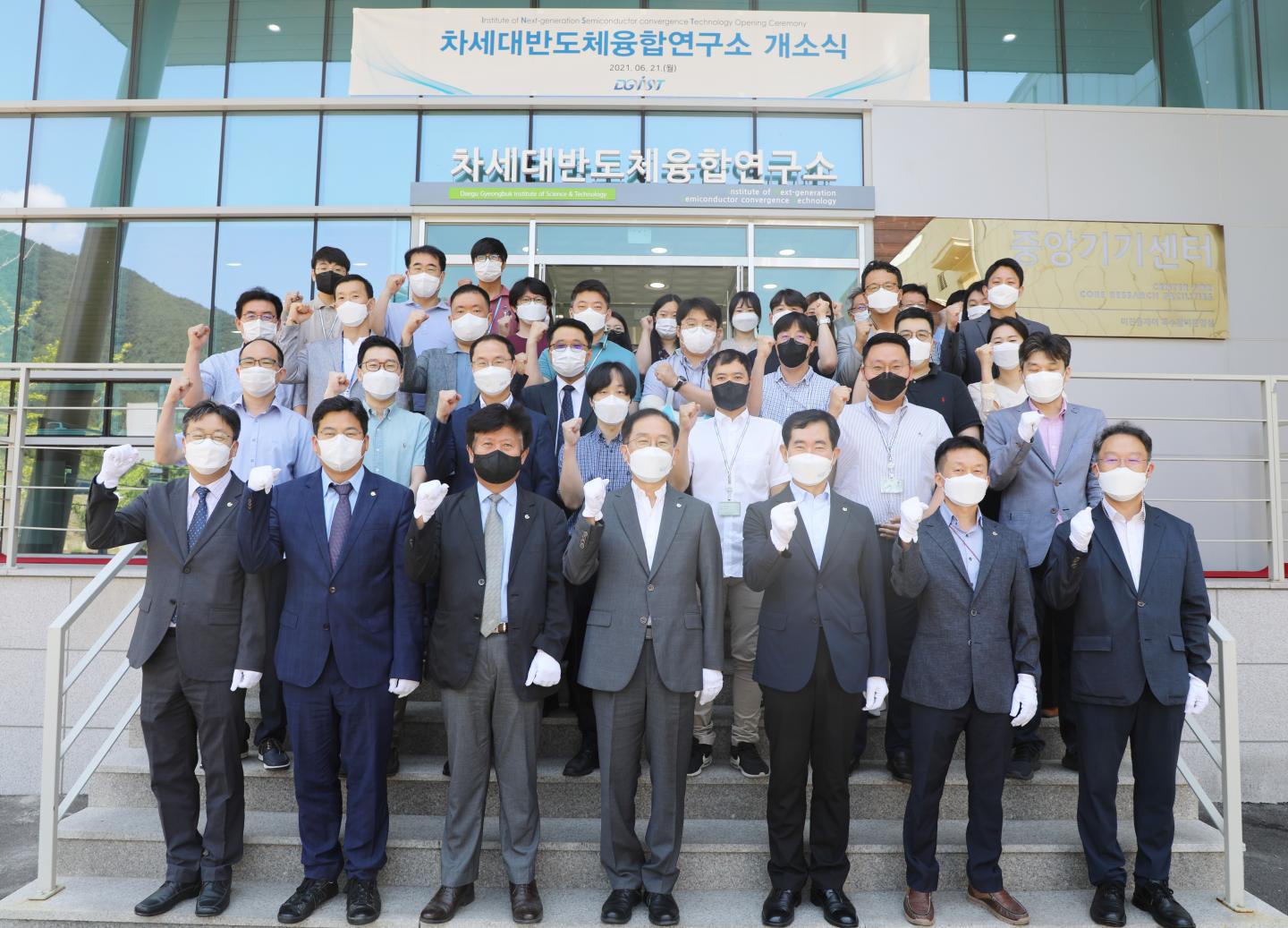
DGIST opened INST to support the creation and further commercialization of next-generation semiconductor convergence technologies. President Young Kuk, DGIST, as well as other prominent administrators and academic members, attended the opening ceremony.

Since 2011, DGIST has established the “Seven Core Public Infrastructure Construction Plan” to pursue international excellence in convergence education and research and has built an integrated public research infrastructure that can be used for interconnection.

INST, which was founded on nanofabrication (nanoFAB) infrastructure and advanced analysis infrastructure, is expected to produce world-class semiconductor-related research results by bringing together the state-of-the-art nanoFAB infrastructure for semiconductor manufacturing and the research capabilities of outstanding researchers at DGIST.

INST will be in charge of ?advancing the nano-infrastructure support system, ?R&D and support for next-generation technologies, ?commercialization of nanoFAB-based technology as well as the establishment of new industries, and ?human resource development in the semiconductor and nanotechnology sectors.

The research institute is organized into laboratories for materials, device process, and design; the nanoFAB process center; the analysis and evaluation center; and the business planning department. In terms of operational manpower, 46 members of DGIST will serve including 26 professors and researchers who will be involved in semiconductor research to initiate full-scale research.

INST Director Myoung-Jae Lee, a former Samsung Electronics employee and expert in the next-generation AI semiconductors, said, “Based on the highest level of nanoFAB facilities and professionals, we will do our best to achieve the best results by concentrating our semiconductor and nanotechnology research capabilities.”

“With the new research institute, DGIST will respond more actively to semiconductor-related research, technology transfer, and human resource development,” stated the President Young Kuk. “INST will become a research institute that leads South Korea not only in research but also in education and industrial support.”

###

Media Contact
Kwanghoon Choi
[email protected]

Original Source

https://dgist.ac.kr/en/html/sub06/060201.html

Tags: Electrical Engineering/ElectronicsResearch/DevelopmentSuperconductors/SemiconductorsTechnology/Engineering/Computer Science
Share13Tweet8Share2ShareShareShare2

Related Posts

Affordable Housing Boosts Intergenerational Mobility Insights

Affordable Housing Boosts Intergenerational Mobility Insights

January 8, 2026
Genome of Alpine Streptomyces Reveals Bioactive Compounds

Genome of Alpine Streptomyces Reveals Bioactive Compounds

January 8, 2026

AI Revolutionizes Traditional Motifs in Design Integration

January 8, 2026

Unraveling Human Lipid Transfer Mechanisms

January 8, 2026
Please login to join discussion

POPULAR NEWS

  • Enhancing Spiritual Care Education in Nursing Programs

    153 shares
    Share 61 Tweet 38
  • PTSD, Depression, Anxiety in Childhood Cancer Survivors, Parents

    143 shares
    Share 57 Tweet 36
  • Impact of Vegan Diet and Resistance Exercise on Muscle Volume

    46 shares
    Share 18 Tweet 12
  • SARS-CoV-2 Subvariants Affect Outcomes in Elderly Hip Fractures

    44 shares
    Share 18 Tweet 11

About

We bring you the latest biotechnology news from best research centers and universities around the world. Check our website.

Follow us

Recent News

Affordable Housing Boosts Intergenerational Mobility Insights

Genome of Alpine Streptomyces Reveals Bioactive Compounds

AI Revolutionizes Traditional Motifs in Design Integration

Subscribe to Blog via Email

Enter your email address to subscribe to this blog and receive notifications of new posts by email.

Join 71 other subscribers
  • Contact Us

Bioengineer.org © Copyright 2023 All Rights Reserved.

Welcome Back!

Login to your account below

Forgotten Password?

Retrieve your password

Please enter your username or email address to reset your password.

Log In
No Result
View All Result
  • Homepages
    • Home Page 1
    • Home Page 2
  • News
  • National
  • Business
  • Health
  • Lifestyle
  • Science

Bioengineer.org © Copyright 2023 All Rights Reserved.