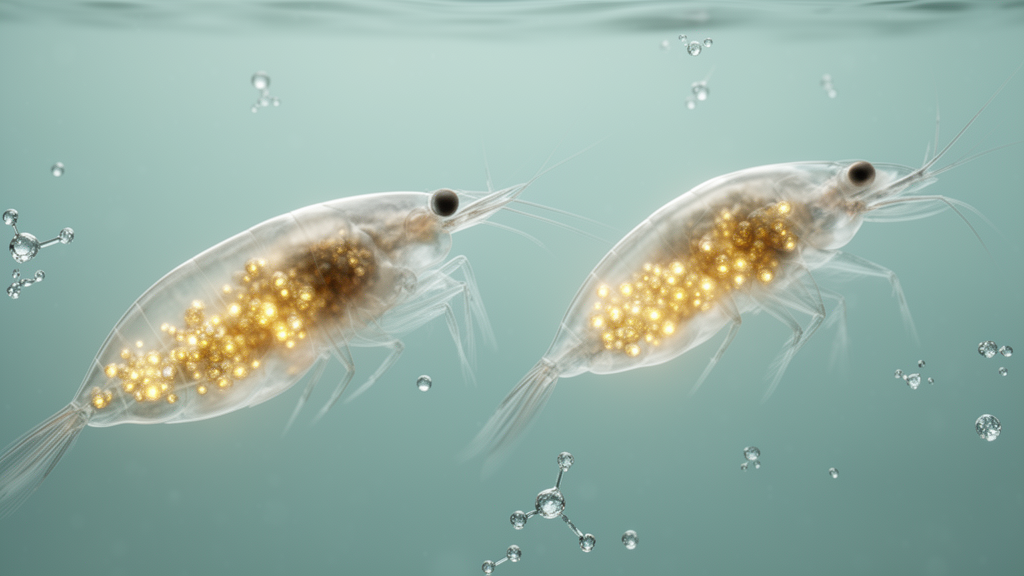
Two closely related brine shrimp species react very differently to phenanthrene, a model polycyclic aromatic hydrocarbon, and new research points to a possible explanation: how strongly each species can switch on a key detoxification enzyme. The study, published in the journal Ecotoxicology, compared Artemia franciscana and Artemia salina and found that differences in glutathione S-transferase (GST) responsiveness tracked the species’ contrasting sensitivity to the contaminant.
The researchers set out to test whether variation in GST inducibility is associated with differing phenanthrene tolerance in these congeneric crustaceans. Importantly, phenanthrene served as a model compound to probe detoxification responses rather than to derive environmental toxicity thresholds, so the results should not be read as environmental safety limits.
Acute toxicity was assessed in nauplii, the larvae of these brine shrimp, after 24 and 48 hours of exposure. Adult animals were exposed for seven days to measure both survival and GST activity. The design allowed the team to compare short-term sensitivity in early life stages with longer-term biochemical responses in adults.
The interspecific differences were marked. After 24 hours of exposure, the EC50 for A. salina was 380.8 micrograms per litre, whereas no EC50 could be calculated for A. franciscana at all. After 48 hours, the EC50 values were 28.81 micrograms per litre for A. salina and 186.5 micrograms per litre for A. franciscana, confirming that the latter species is considerably more tolerant.
In the adult exposure, mortality remained low in both species throughout the seven days, which meant the most informative comparison came from the biochemical measurements rather than survival. GST activity told a strikingly different story for each species.
In A. franciscana, the more tolerant species, GST activity increased significantly in a clear dose-dependent pattern, reaching approximately 1.7-fold, 1.9-fold and 2.0-fold of baseline at phenanthrene concentrations of 16, 64 and 256 micrograms per litre, respectively. In contrast, A. salina showed a weaker response: GST activity rose significantly at 16 micrograms per litre but then remained relatively constant at higher concentrations.
The authors interpret this pattern as consistent with the species’ contrasting phenanthrene sensitivity. GSTs are phase II detoxification enzymes, and the findings suggest that inducible phase II detoxification may contribute to interspecific differences in tolerance. In other words, the species that can ramp up GST activity progressively as contaminant levels rise is also the one that withstands higher phenanthrene exposures in acute tests.
The study is a comparative laboratory experiment in a single genus of crustaceans, and the authors frame the association between GST responsiveness and tolerance as suggestive rather than definitive; the work supports using comparative biomarker approaches to interpret species-specific responses to organic xenobiotics in marine invertebrates. Because phenanthrene was chosen as a model contaminant rather than an environmental benchmark, the EC50 values reported here describe experimental sensitivity under the tested conditions rather than thresholds for real-world risk assessment.
For ecotoxicologists, the takeaway is that closely related species cannot be assumed to respond identically to organic contaminants, and that measuring inducible detoxification capacity alongside standard toxicity endpoints may help explain why sensitivity varies. For A. salina and A. franciscana, the divergence in GST inducibility now offers a concrete biochemical thread linking enzyme regulation to species-level differences in contaminant tolerance.
Subject of Research: Comparative detoxification enzyme responses and phenanthrene tolerance in two brine shrimp species
Article Title: Glutathione S-transferase inducibility explains differential tolerance between Artemia franciscana and Artemia salina
Article References: Vannuccini, M. L., De Benedictis, C., Sebastianelli, F., Carere, C., & Canestrelli, D. (2026). Glutathione S-transferase inducibility explains differential tolerance between Artemia franciscana and Artemia salina. Ecotoxicology, 35(9), Article 190. https://doi.org/10.1007/s10646-026-03177-7
Image Credits: AI Generated
DOI: 10.1007/s10646-026-03177-7
Keywords: Artemia franciscana, Artemia salina, glutathione S-transferase, phenanthrene, polycyclic aromatic hydrocarbons, ecotoxicology, biomarkers, detoxification, marine invertebrates, toxicity testing, Glutathione, S-transferase
News Source: Drew Townsend. (October 27, 2026). Detox Enzyme Inducibility May Explain Why Two Brine Shrimp Species Differ in Phenanthrene Tolerance. Scienmag.