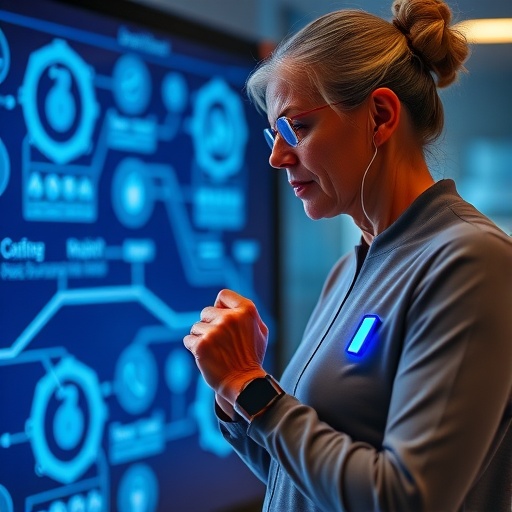
In the rapidly evolving landscape of healthcare technology, the integration of wearable devices presents a promising frontier for enhancing the quality of life among older adults. A recent qualitative study spearheaded by Leuzzi, Bertoni, Scafoglieri, and colleagues, published in BMC Geriatrics, delves into the crafting of a multidimensional active ageing intervention tailored specifically for this demographic. This research unveils critical insights into how wearable technology can be optimally harnessed to support active ageing, addressing a complex interplay of physical, mental, social, and environmental factors.
Active ageing, as conceptualized by the World Health Organization, aims to optimize opportunities for health, participation, and security to enhance the quality of life as people age. Wearable devices, ranging from fitness trackers and smartwatches to advanced biosensors, offer continuous monitoring capabilities that can significantly contribute to this vision. However, the mere availability of technology is not sufficient; the design and implementation of interventions must consider the unique multidimensional needs and preferences of older adults to be truly effective.
The study employed a qualitative methodology, engaging older adults through in-depth interviews and focus groups to gather rich, nuanced data about their expectations, experiences, and concerns related to wearable technologies. This approach provided an unparalleled depth of understanding about how these individuals perceive active ageing and the potential role of wearables within their daily lives. The interplay between usability, comfort, privacy, and perceived benefit emerged as pivotal themes throughout the investigation.
One of the most striking findings of the research is the necessity of a holistic approach when integrating wearables into active ageing interventions. Unlike interventions focused solely on physical activity, the multidimensional model accounts for cognitive stimulation, emotional well-being, social engagement, and environmental adaptability. Wearable technology can thus serve as a platform not only for health monitoring but also for fostering social connections and cognitive challenges, thereby encompassing a broad spectrum of ageing-related needs.
From a technical perspective, the study emphasizes the importance of sensor accuracy and data reliability in the context of older adults. Devices must be capable of capturing a diverse range of physiological parameters, including heart rate variability, sleep patterns, mobility metrics, and biochemical markers, with precision. Advanced algorithms processing this data in real time can trigger timely interventions or alerts, enhancing preventative healthcare measures and reducing the incidence of adverse events such as falls or acute medical episodes.
The user interface and ergonomic design of wearables also play a crucial role in acceptability and sustained use. The participants expressed a strong preference for unobtrusive devices that seamlessly integrate into their lifestyles without causing discomfort or stigmatization. This aligns with recent advancements in soft electronics and flexible bio-integrated sensors, which are revolutionizing wearable form factors to be lighter, more breathable, and adaptable to various skin types and body areas.
Furthermore, the study addresses privacy and data security concerns, which remain prominent barriers to technology adoption in older populations. Transparent data governance models and user-controlled privacy settings were highlighted as essential components for building trust. The integration of secure data encryption protocols and compliance with healthcare regulations such as HIPAA and GDPR ensures the ethical management of sensitive health information.
An innovative dimension of the research is the exploration of social connectivity facilitated by wearables. Older adults valued features that foster virtual companionship, support networks, and community engagement. These social interventions are instrumental in combating loneliness and social isolation, issues that have been exacerbated by demographic changes and the increasing prevalence of chronic conditions among the elderly.
Environmental adaptability is another aspect diligently considered in the study. Wearable systems designed for older adults need to function reliably across various environmental contexts, including indoor and outdoor settings with differing temperatures, humidity, and electromagnetic interference. Robust hardware coupled with adaptive software algorithms can ensure consistent performance and data integrity under these varying conditions.
The qualitative insights gathered also revealed the importance of personalized feedback and motivation systems embedded within wearable platforms. Participants responded positively to tailored recommendations, goal-setting features, and reward mechanisms that encourage adherence to healthy behaviors. This aligns with behavior change theories and underscores the role of personalized interventions in sustaining engagement.
Integrating wearables into clinical pathways represents a transformative potential highlighted in the study. Continuous data streams can inform healthcare providers with actionable insights, enabling personalized treatment adjustments, remote monitoring, and early detection of deteriorating health statuses. Such integration requires interoperable systems that comply with standardized health informatics frameworks like HL7 and FHIR.
The study also contemplates the cost and accessibility challenges inherent in deploying wearable interventions on a wide scale among older adults. Addressing socioeconomic disparities through subsidized programs, community partnerships, and inclusive design ensures that technological benefits are equitably distributed and do not exacerbate existing health inequities.
Crucially, the research advocates for participatory design processes that involve older adults in every stage of intervention development. This user-centered approach ensures that technologies resonate with the lived experiences and cultural contexts of the target population, enhancing relevance and adoption.
Looking forward, the integration of artificial intelligence and machine learning within wearable interventions offers exciting prospects for predictive analytics and personalized health trajectories. These capabilities may revolutionize proactive healthcare by anticipating risks and automating tailored intervention adjustments to optimize ageing outcomes.
In sum, the study led by Leuzzi and colleagues charts a visionary yet pragmatic pathway for crafting multidimensional active ageing interventions grounded in wearable technology. By addressing technical, human, ethical, and systemic considerations, this research sets a new benchmark for designing digital health solutions that are effective, acceptable, and scalable for older adults worldwide.
As the demographic shift towards an ageing global population accelerates, such innovations hold the promise to transform ageing from a period of decline into a phase of sustained vitality and fulfillment, powered by intelligent wearable ecosystems that respond dynamically to the intricate tapestry of ageing needs.
Subject of Research:
Multidimensional active ageing interventions using wearable technology for older adults.
Article Title:
Crafting the ideal multidimensional active ageing intervention with wearables for older adults: insights from a qualitative study.
Article References:
Leuzzi, G., Bertoni, G., Scafoglieri, A. et al. Crafting the ideal multidimensional active ageing intervention with wearables for older adults: insights from a qualitative study. BMC Geriatr (2026). https://doi.org/10.1186/s12877-026-07121-6
Image Credits: AI Generated
Tags: active ageing intervention designbiosensors in elderly carechallenges in elderly tech adoptionfitness trackers for seniorshealthcare technology for aging populationimproving quality of life with wearablesmental and social factors in active ageingmultidimensional active ageing supportqualitative study on ageing and techuser-centered design for elderly wearableswearable devices in geriatric healthcarewearable technology for older adults