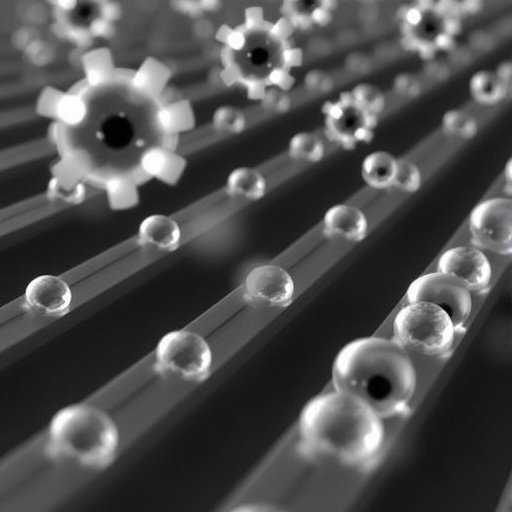
In a groundbreaking advance in the field of microfluidics, researchers from The University of Osaka, Kansai University, and Okayama University have unveiled a new theoretical framework that fundamentally changes how particles are sorted within microchannels. Powered by the unparalleled computational capabilities of Japan’s supercomputer “Fugaku,” the team has discovered that the deformability of particles radically alters their focusing behavior, departing from classical understanding that has long been rooted in studies of rigid particles. This revelatory insight holds striking implications for biomedical science, particularly in the development of sophisticated liquid biopsy devices designed for early cancer detection and disease diagnostics.
Microfluidics, the manipulation of fluids in channels on micron scales, has been at the forefront of lab-on-a-chip technologies that promise fast, inexpensive, and highly sensitive biological analyses. Central to its function is the precise control over how particles—such as cells—migrate within fluid flow in confined geometries. Historically, the inertial migration of rigid particles in microchannels has been well-characterized, showing tendencies to equilibrate at distinct positions near the channel walls due to the balance of inertial lift forces. However, biological entities like cells are not rigid; they are soft, deformable, and reactive to flow stresses. Until now, how this softness affects focusing patterns had remained elusive due to the complex interplay of hydrodynamics and particle mechanics.
The joint research team set out to explore and quantify how particle deformability influences inertial migration by combining meticulous experiments with cutting-edge numerical simulations and rigorous theoretical modeling. Their experimental setup employed hydrogel particles engineered to emulate the size and mechanical softness of actual biological cells, thus offering an ideal proxy for living tissues without biological variability. This combination of experimentation and simulation underpinned their ability to dissect the subtleties of particle migration patterns in both circular and square microchannels.
Their computational efforts leveraged Fugaku’s immense processing power, enabling simulations over a broad range of flow conditions characterized by dimensionless parameters such as the Reynolds number—representing inertial forces—and the Capillary number—indicative of particle deformability relative to viscous stresses. These simulations uncovered a novel “phase transition” in particle focusing behavior governed by what the researchers termed the Laplace number, essentially the ratio capturing inertial to deformability effects. The particle migration patterns shifted sharply from classical Segré-Silberberg ring formations near channel walls to equilibrium focusing along one of three other loci: channel centerline (CEP), midline equilibrium positions (MEP), or diagonal equilibrium positions (DEP), depending on the flow regime.
In rigid particle systems, this Segré-Silberberg effect results in the equilibration of particles roughly at 0.6 times the radius from the channel centerline, creating a well-known annular focusing ring. The new study shows that even a slight increase in softness causes particles to migrate toward the channel’s diagonal lines or center, profoundly altering device design criteria for microfluidic sorting. The team’s theoretical model deconstructs the complex nonlinear interaction between fluid inertia and particle deformability, effectively decoupling these forces into linear contributions that illuminate the fundamental physics behind the observed transitions.
This freshly developed theoretical framework is more than an academic exercise; it signifies a paradigm shift in microfluidic device engineering. Design strategies have traditionally relied heavily on empirical correlations and trial-and-error methods, particularly when handling biological samples. By introducing deformability as a tunable parameter with quantitative predictability, this work enables precise tailoring of channel geometries and flow conditions to optimize separation efficiency. For example, devices can be engineered to selectively target cancer cells, which typically exhibit altered stiffness compared to healthy cells, thereby accelerating diagnostic workflows with greater sensitivity and selectivity.
The implications for precision medicine are profound. Early cancer detection relies increasingly on isolating rare circulating tumor cells (CTCs) from blood samples, a challenge compounded by the physical similarity of these cells to abundant healthy cells. By exploiting differences in mechanical properties like stiffness and viscoelasticity, microfluidic platforms can now harness inertial migration guided by deformability, enriching malignant cells without labeling or chemical processing. This research thus opens the door to minimally invasive liquid biopsies that improve prognosis and personalized treatment monitoring by enabling real-time assessment of cell mechanical changes during therapeutic intervention.
Beyond oncological applications, the newfound control over particle focusing dynamics offers utility in stem cell sorting, blood component separation, and even environmental monitoring by efficiently isolating bioparticles or synthetic microparticles on demand. The team’s integration of experimental validation with multicore simulations and analytic theory establishes a robust roadmap for extending these principles across particle shapes, channel cross-sections, and fluid properties, heralding a versatile platform technology.
The expertise behind this milestone represents a collaborative synergy between computational fluid dynamics, polymer physics, and bioengineering disciplines. The dedication to leveraging supercomputing resources signifies a shift in microfluidics research towards high-fidelity predictive modeling, which is indispensable for designing next-generation devices in an era demanding rapid innovation. As Yuma Hirohata, lead author of the study, emphasizes, continued efforts aim to translate these foundational insights into commercial and clinical prototypes that can revolutionize diagnostics and bioseparation alike.
This study, published in the Journal of Fluid Mechanics under the title “Experimental and numerical study on the inertial migration of hydrogel particles suspended in square channel flows,” exemplifies how fundamental science can be immediately impactful. Through a multi-institutional collaboration spearheaded by The University of Osaka, funded by the Japan Society for the Promotion of Science and the Japan Science and Technology Agency, the research demonstrates the potency of combining theory, simulation, and experiment to crack challenging biophysical phenomena.
In summary, this research redefines the landscape of inertial microfluidics by demonstrating that particle deformability is not a perturbation but a primary driver of focusing behavior. With a concise, predictive model linking inertia and soft particle mechanics via the Laplace number, the study empowers engineers to design microfluidic platforms capable of precise, label-free sorting of biological cells according to mechanical phenotype. As liquid biopsy and personalized medicine grow ever more essential, these insights and tools will accelerate the advent of point-of-care diagnostics with unprecedented speed and reliability, heralding a new era in microfluidic innovation.
Subject of Research:
Deformability-driven inertial migration of hydrogel particles in microfluidic channels.
Article Title:
Experimental and numerical study on the inertial migration of hydrogel particles suspended in square channel flows.
News Publication Date:
18-Sep-2025
Web References:
https://doi.org/10.1017/jfm.2025.10574
Image Credits:
Kazuyasu Sugiyama
Keywords
Computer science, Supercomputing, Physics, Technology, Microfluidics, Cells, Cancer cells
Tags: advanced microfluidic device designbiomedical applications of microfluidicscomputational modeling in fluid mechanicsdeformable particles in microfluidicsimplications of particle deformability in diagnosticsinertial migration of deformable cellslab-on-a-chip technologies for biological analysisliquid biopsy technology for cancer detectionmicrofluidic channel dynamicsparticle sorting mechanisms in microchannelssoft particle behavior in fluid flowsupercomputing in scientific research