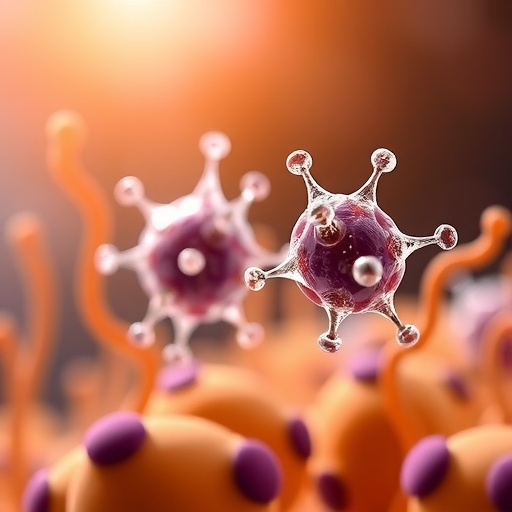
A groundbreaking discovery in cancer research has emerged from a collaborative study conducted by scientists at Tokyo University of Agriculture and Technology and the University of Tokyo. This multinational team, led by Professor Kaori Sakurai and her colleagues Associate Professor Hiroaki Itoh and Professor Masayuki Inoue, has unveiled a novel dual mechanism of action for yaku’amide B—a structurally intricate peptidic compound isolated from a deep-sea sponge native to the coastal environs near Yakushima Island, Japan. This innovative research illuminates unprecedented insights into yaku’amide B’s unique anticancer properties, which go beyond its previously known inhibition of ATP synthase.
Yaku’amide B, a molecule renowned for its architectural complexity, exemplifies the potential of natural products to engage simultaneously with multiple cellular targets through transient and diversified interactions. The molecule’s inhibitory effect on ATP synthase—a pivotal enzyme in mitochondrial energy production—was known but insufficient to fully explain its efficacy against aggressive cancer phenotypes. The current study leverages an advanced technique called photoaffinity labeling (PAL) to chemically capture transient molecular interactions, effectively “freezing” ephemeral binding events, thereby enabling precise identification of previously elusive target proteins influenced by yaku’amide B.
Utilizing a strategically engineered PAL probe derivative of yaku’amide B, the research team identified tetraspanin CD9, a membrane protein prominently implicated as a cancer stem cell marker, as a transient intracellular binding partner. CD9’s relevance lies in its association with highly aggressive cancer cells that underpin tumor recurrence and metastatic spread. Remarkably, yaku’amide B not only binds to CD9 but also induces its degradation within cancer cells, a phenomenon not documented previously for any natural product.
Concurrently, yaku’amide B translocates to mitochondria where it exerts its established inhibitory action on ATP synthase, culminating in substantial depletion of cellular ATP pools. This energy consumption blockade hampers cancer cell viability, thereby impeding tumor proliferation. The simultaneous targeting of CD9 degradation and ATP synthase inhibition manifests a synergistic anticancer effect, explaining the compound’s robust suppression of both proliferative and migratory capacities in cancer cells.
Professor Sakurai emphasized the clinical importance of these findings by underlining CD9’s central role as a biomarker and functional contributor to cancer aggressiveness. The ability of yaku’amide B to expedite CD9 degradation heralds a novel paradigm in therapeutic intervention—targeting cancer stem cells and their signature proteins through the induced proteolysis mechanism. This approach expands horizons in drug discovery, especially in the development of multi-functional anticancer agents that can simultaneously disrupt multiple oncogenic pathways.
Furthermore, Professor Inoue highlighted the significance of the dual mode of action as a comprehensive explanation for yaku’amide B’s profound anticancer efficacy. This study represents the first report to document a natural product’s capability to trigger CD9 degradation, positioning photoaffinity labeling as a formidable methodological advance for elucidating transient, dynamic biomolecular interactions. PAL not only facilitates target identification but also enables deeper mechanistic understanding for next-generation anticancer agents designed to multifunctionally engage with cancer cells.
The implications of this work are substantial for the field of natural product-based drug discovery, advocating for a shift towards multi-target and protein degradation strategies. These approaches challenge the classical single-target drug design model, favoring complex molecules capable of inducing targeted protein turnover and metabolic disruption within cancer cells. As a result, yaku’amide B sets a precedent for tapping into natural chemical diversity to address intricate disease biology, particularly cancer stem cell-driven malignancies.
In addition to illuminating yaku’amide B’s molecular mechanism, the research underscores the power of interdisciplinary collaboration and cutting-edge chemical biology techniques in the ongoing quest for innovative cancer therapeutics. By exploiting advanced PAL technology, researchers are now equipped to decode transient interactions that traditional biochemical methods often overlook, thereby unveiling new molecular targets and modes of drug action hidden within the “latent chemical space” of natural products.
This study’s publication in the prestigious Journal of the American Chemical Society not only validates its scientific rigor but also signals a promising direction for natural product research, integrating photochemical labeling, proteomics, and functional assays. The novel dual mechanism discovered expands the conceptual framework for anticancer drug design, stirring excitement for translational efforts aimed at harnessing such compounds for clinical use.
Importantly, the comprehensive funding from Japanese scientific bodies—including the Japan Society for the Promotion of Science, the Ministry of Education, Culture, Sports, Science and Technology, and dedicated foundations—reflects the recognized potential of this research in shaping future cancer treatment modalities. The collective expertise of the involved research groups represents a compelling synergy that propelled this discovery from marine natural product isolation to molecular target characterization and functional validation.
In conclusion, yaku’amide B exemplifies the next frontier in cancer pharmacology, where molecules derived from nature’s deep-sea reservoirs can enact sophisticated biological interventions. Its simultaneous induction of energy metabolism disruption and proteolytic degradation of a cancer stem cell marker places it at the cutting edge of multi-modal anticancer therapeutics development. This breakthrough fuels optimism for natural products as invaluable templates in crafting innovative, multi-target drugs capable of mitigating cancer’s resilience and heterogeneity.
Subject of Research: Cells
Article Title: Photoaffinity Labeling Strategy Reveals Tetraspanin CD9 as a Transient Target of Anticancer Yaku’amide B
News Publication Date: January 28, 2026
References: DOI: 10.1021/jacs.5c13808
Image Credits: Hiroaki Ito, the University of Tokyo
Keywords: Drug development, Pharmacology, Biochemistry, Drug design, Cancer, Cancer treatments, Cancer medication, Medical treatments, Diseases and disorders, Life sciences
Tags: advanced cancer research in JapanATP synthase inhibition in cancer cellsdeep-sea natural compounds for cancer treatmentdual mechanism of action in cancer therapyinnovative anticancer natural productsmitochondrial energy production and cancernatural product drug targets identificationpeptidic compounds from marine spongesphotoaffinity labeling technique in drug discoverytetraspanin CD9 in cancertransient molecular interactions in oncologyyaku’amide B anticancer mechanism