In an effort to better understand the multifactorial etiology of malignancies affecting women worldwide, an investigative team has implemented an unsupervised deep learning framework to capture complex, non-linear interactions among behavioral and environmental factors linked to breast and cervical cancers. Drawing on hospital-based matched case-control data collected in Morocco, the researchers explored how combinations of lifestyle habits, exogenous hormone exposures, reproductive history, and chemical pollutants structure latent patient profiles. The analytical pipeline integrated an artificial neural network autoencoder with Shapley Additive exPlanations, identifying multi-variable interaction patterns that are frequently challenging to isolate using conventional regression models.
Breast and cervical malignancies remain leading contributors to female morbidity and mortality globally, imposing a heavy burden in low- and middle-income regions. Global cancer statistics referenced by the investigators indicate that breast cancer emerged as the most frequently diagnosed cancer worldwide in 2022 with approximately 2.3 million new cases, while cervical cancer accounted for more than 661,000 cases and stood as the most prevalent female cancer across 25 nations.
To investigate these relationships, the study formulated an explicit research question examining the primary factors associated with breast and cervical cancers and evaluating the extent to which deep learning algorithms could characterize complex interactions among them. The empirical work was situated at the Regional Oncology Center of Meknes, Morocco, and spanned a 25-month window from April 2, 2023, to April 28, 2025. The final cohort comprised 632 women, divided into 316 confirmed cancer cases substantiated by histopathological examination and 316 age-matched controls matched within five years. Among the diagnosed participants, 247 women presented with breast cancer and 69 with cervical cancer, with disease-specific comparative analyses carried out along distinct analytical pipelines.
Data collection relied on a uniform, structured face-to-face questionnaire designed to capture sociodemographic variables, documented environmental exposures, and lifestyle practices. For the cervical cancer sub-analysis, the investigators gathered information on lifetime sexual partner counts, age at sexual debut, history of sexually transmitted infections, and the specific duration and type of contraceptive use. For the breast cancer group, data collection incorporated reproductive variables, including age at menarche, menopausal status, parity, age at first childbirth, breastfeeding history, and family medical background. Controls were recruited from two distinct sources: relatives of enrolled patients and individuals visiting Moulay Ismail Hospital for unrelated medical conditions.
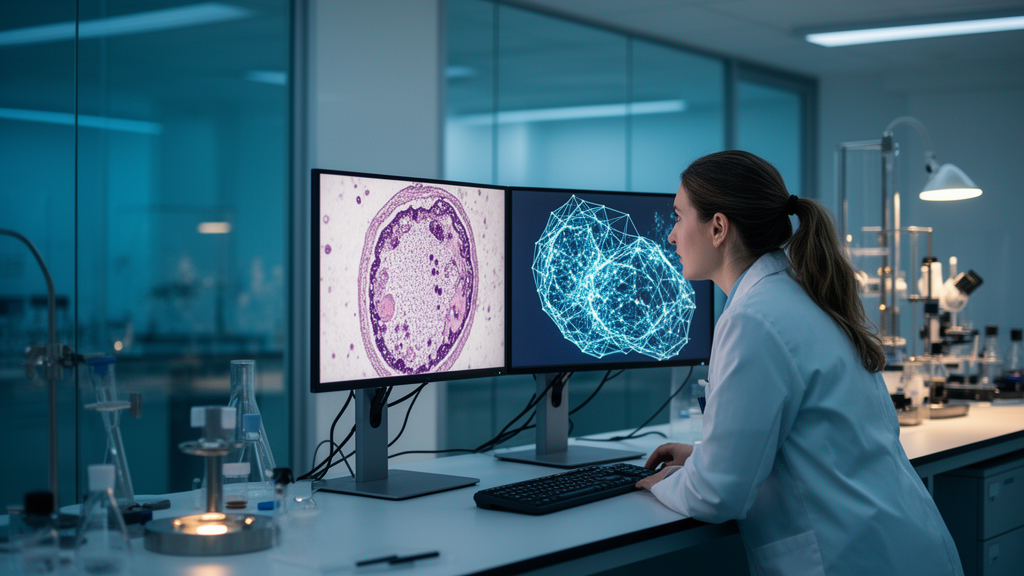
The analytical architecture relied on a modular deep learning workflow executed in PyTorch, Scikit-learn, Pandas, and NumPy. After removing dependent diagnostic labels to focus purely on explanatory features, categorical interview responses were converted into binary numeric values, standardized to zero mean and unit variance, and converted into tensors. The neural network architecture featured a fully connected autoencoder consisting of an encoder and a decoder. The encoder compressed the standardized input features through four sequential layers of 64, 32, 10, and 3 neurons with rectified linear unit activation functions, mapping the data into a three-dimensional latent representation. The network was trained for 50 epochs utilizing the Adam optimizer and mean squared error reconstruction loss with a learning rate of 0.01 and a batch size of 32.
To interpret the latent representations learned by the unsupervised encoder, the authors applied Kernel SHAP, an interpretability framework rooted in cooperative game theory. In this unsupervised configuration, SHAP values quantified the structural contribution of each input variable to the activation of the latent space dimensions rather than generating a direct clinical prediction or causal risk estimate. Positive SHAP values indicated that a variable increased latent dimensional activation, aligning with characteristics observed in case profiles, whereas negative SHAP values indicated an active dampening effect on latent activation. The authors also calculated pairwise interaction attributions by averaging the sum of absolute SHAP values for paired variables, allowing the identification of joint explanatory weights without serving as formal statistical hypothesis tests.
Within the breast cancer analysis, the SHAP evaluation identified oral contraceptive use as exerting a prominent positive impact on latent encoding. Conversely, breastfeeding history and regular physical activity demonstrated protective signatures, appearing with higher prevalence among control participants. When examining pairwise interactions, the combination of oral contraceptive pill usage and the absence of breastfeeding emerged as the single most influential pairing, exhibiting a SHAP impact score of 0.576. Other top-ranking pairs included the concurrent use of oral and injectable hormonal contraceptives, the synergistic protective profile of breastfeeding combined with physical activity, and environmental interactions linking rural residence or non-breastfeeding to agricultural insecticide exposure.
For cervical cancer, the SHAP analysis demonstrated a marked concentration of high positive attribution values among cases for oral contraceptive use and a history of sexually transmitted infections. Conversely, intrauterine device use presented substantial negative SHAP values within the control cohort, reflecting an association with reduced predicted risk. The authors noted that this apparent protective effect may represent both biological alterations to the cervical environment and a screening proxy, as intrauterine device users often undergo regular gynecological follow-up. The combination of oral contraceptive pills and sexually transmitted infections exhibited the highest joint SHAP impact, followed by pairings involving multiple sexual partners alongside infections, dual hormonal contraception, and urban residence coupled with oral contraceptive use.
The investigators emphasized that their findings should be viewed as exploratory and hypothesis-generating rather than confirmatory of direct biological causality. Because the autoencoder functions as an unsupervised representation learning system rather than a supervised classifier, standard clinical performance metrics such as sensitivity, specificity, and receiver operating characteristic curves were not evaluated. Instead, model training stability was gauged via reconstruction loss convergence. The authors noted several key methodological constraints, including hospital-based convenience sampling, the combination of relative and patient controls without a formal sensitivity analysis, potential recall or reporting bias regarding sensitive sexual behaviors, the absence of systematic human papillomavirus testing, and the potential for unmeasured residual confounding.
In their concluding assessment, the authors highlighted that combining unsupervised deep neural representations with game-theoretic interpretability provides a viable computational strategy for unraveling complex, compounding epidemiological exposures in women’s health. While machine learning models can identify subtle latent patterns that escape standard regression models, the researchers stressed that prospective studies with probabilistic community sampling, downstream supervised validation steps, and comprehensive biomarker testing are essential before these multivariable profiles can directly guide precision public health initiatives or clinical risk stratification.
In contextualizing their inquiry within broader epidemiological trends, the authors noted that global tallies in 2012 documented approximately 1,671,149 new breast cancer diagnoses alongside 528,000 cervical cancer cases. They grounded their evaluation in international cohort findings, citing an eleven-year multi-country study that confirmed how modifiable behaviors such as tobacco use, physical inactivity, and unbalanced diet contribute to female cancer development. The researchers also highlighted evidence demonstrating a linear dose-response relationship between alcohol consumption and breast cancer risk, alongside investigations into environmental organochlorine pollutants such as polychlorinated biphenyls, dioxins, and DDT. In cervical pathology, prior pooled analyses indicated that having six or more sexual partners elevated relative risk to between 2.27 and 2.78, while Danish cohort data established measurable risk increments following prolonged hormonal contraceptive use.
Within the Moroccan study cohort itself, the model revealed unexpected nuances across individual variables. In the breast cancer sub-analysis, cigarette smoking, alcohol intake, and environmental pesticide exposure exhibited low explanatory importance across both case and control groups, suggesting indirect or complex relationships rather than direct linear risks. For cervical cancer, attribution values for the number of sexual partners were distributed evenly between cases and controls. Rather than acting as an isolated primary risk factor, partner multiplicity appeared to operate indirectly, mediated through variables such as sexually transmitted infections, contraceptive practices, or age at sexual debut, alongside potential reporting bias regarding sensitive personal behaviors in interview responses.
The analysis of variable pairings highlighted notable interactions where protective lifestyle practices modulated environmental and pharmaceutical exposures. In breast cancer profiles, combining injectable contraceptives with regular exercise illustrated how physical activity might partially attenuate the hormonal effects of synthetic contraception. Conversely, coupling insecticide exposure with injectable contraceptives reflected compounding toxic and hormonal disruptions that could accelerate abnormal cellular proliferation. Additionally, the pairing of oral contraceptive pills and insecticide exposure illustrated how synthetic hormones and environmental chemical hazards could act jointly to aggravate an individual’s oncological vulnerability. In the cervical cancer analysis, pairing fewer than two sexual partners with intrauterine device use, physical exercise, or rural residence demonstrated strong protective signatures, reflecting lifestyle stability, minimal infection risk, and the clinical benefits of routine gynecological oversight.
Beyond immediate analytical findings, the investigation was framed to support broader public health priorities, directly aligning with United Nations Sustainable Development Goals targeting good health, well-being, and gender equality through localized clinical insights in Morocco. To ensure scientific reproducibility, the research team placed their analytical workflow online, providing open access to the Python scripts, neural network architectures, and interpretation procedures on GitHub. The authors also noted that the underlying data remain accessible upon reasonable request, allowing independent investigators to further scrutinize the multidimensional factor structures shaping women’s cancer profiles.
Subject of Research: Deep learning analysis of behavioral and environmental factors associated with breast and cervical cancers
Article Title: Deep learning based analysis of factors associated with breast and cervical cancer using matched case control data
Article References: Abraou, H., Azekour, K., Hlali, A., Dadda, S., & El bouhali, B. (2026). Deep learning based analysis of factors associated with breast and cervical cancer using matched case control data. Discover Public Health, 23(1), Article 1839. https://doi.org/10.1186/s12982-026-03290-2
Image Credits: AI Generated
DOI: 10.1186/s12982-026-03290-2
Keywords: Breast Cancer, Cervical Cancer, Deep Learning, Autoencoders, SHAP Analysis, Epidemiology, Case-Control Study, Environmental Exposures, Lifestyle Risk Factors, Oral Contraceptives, Breastfeeding, Sexually Transmitted Infections, Intrauterine Devices, Public Health, Precision Health, Morocco Oncology
News Source: Blake Davidson. (November 20, 2026). Deep Learning Maps Complex Lifestyle and Environmental Factor Interactions in Female Cancers. Scienmag.