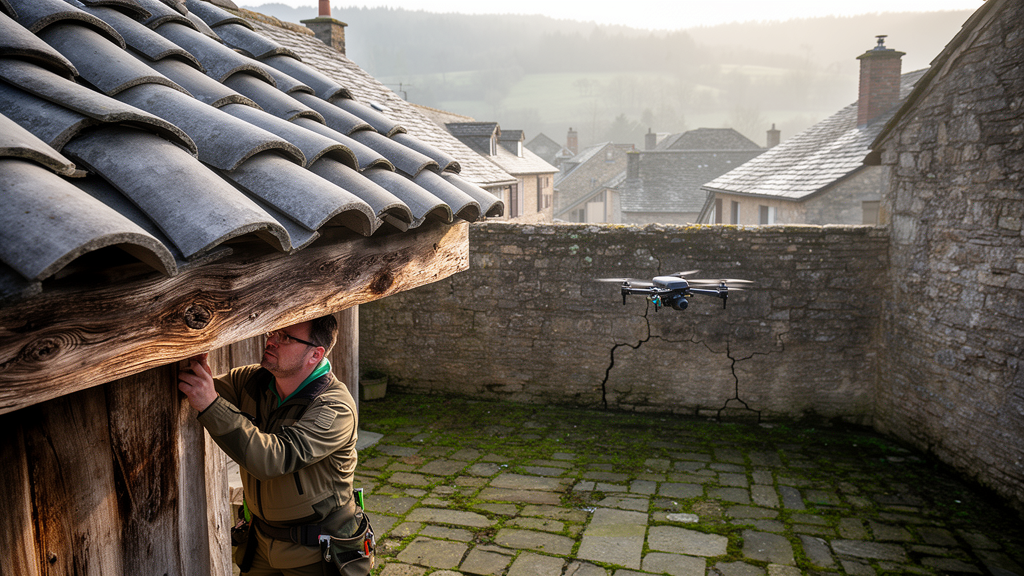
A newly proposed intelligent protection framework combining deep learning and the Internet of Things has achieved a 98.78 percent accuracy rate in detecting structural damages and recognizing architectural components within traditional village buildings. The strategy, reported by researcher Nan Shao in Discover Applied Sciences, was developed to address the preservation and inheritance needs of architectural heritages located in typical historical villages. By pairing advanced sensing hardware with specialized neural network architectures, the experimental framework demonstrated the capacity to identify physical deterioration across historic building elements while evaluating degradation trends.
Traditional villages serve as vital protectors of cultural heritage, yet their historic structures face continuous threats from environmental erosion, natural ageing processes, and human activities. The study notes that conventional preservation practices have historically depended upon manual visual inspections and sparse physical records. These traditional safeguarding approaches cannot provide real-time monitoring of building conditions, nor do they offer the predictive capability necessary to anticipate structural risks before serious physical damage occurs across historical sites.
To overcome the constraints of manual survey techniques, the research team designed an Internet of Things sensing network specifically configured to collect continuous multi-modal data from heritage structures. The deployed IoT monitoring network gathered environmental variables, structural indicators, and visual information from target sites. Through this automated field deployment, the sensing network generated a standardized dataset comprising 408 image records of heritage buildings accompanied by corresponding structural and environmental measurements.
Raw data gathered from operating sensor environments required multi-stage signal processing to eliminate noise and ensure compatibility across measurement channels. The methodology employed wavelet transform algorithms to denoise the acquired physical signals. In parallel, an adaptive filter was implemented to adjust its operating parameters dynamically, enhancing the overall clarity and quality of the acquired sensor readings. To integrate the heterogeneous inputs, spatiotemporal feature alignment was used to synchronize the various signals across physical space and operational time, ensuring consistent data representation across the entire monitoring stream.
For fine-grained perception and risk analysis, the research developed a composite deep learning architecture combining a Namib Beetle Optimized Vision Transformer with a bidirectional Long Short-Term Memory network, designated as NB-ViT-BiLSTM. The Namib Beetle optimization technique was specifically applied to optimize internal model parameters and improve computational learning efficiency. Within this integrated framework, the Vision Transformer component analyzed the spatial characteristics of building imagery to identify architectural components and visual deteriorations. Simultaneously, the bidirectional Long Short-Term Memory module utilized temporal connections within the collected time-series information to evaluate trends in structural degradation and generate predictive risk assessments.
The complete computational workflow for the proposed architecture was implemented, trained, and evaluated using the Python programming environment. Experimental testing of the integrated system demonstrated that the framework detected structural damages with 98.78 percent accuracy while successfully classifying distinct architectural components. The resulting combination of automated IoT data acquisition, signal refinement, and dual spatial-temporal deep learning offers an automated alternative to sparse manual records for preserving fragile traditional village architecture.
Subject of Research: Intelligent monitoring and damage detection in traditional village architectural heritage using deep learning and IoT
Article Title: Deep learning and IoT-driven protection and inheritance of architectural heritage in traditional villages
Article References: Shao, N. (2026). Deep learning and IoT-driven protection and inheritance of architectural heritage in traditional villages. Discover Applied Sciences. https://doi.org/10.1007/s42452-026-09465-5
Image Credits: AI Generated
DOI: 10.1007/s42452-026-09465-5
Keywords: traditional villages, architectural heritage, deep learning, Internet of Things, damage detection, structural degradation, Namib Beetle optimization, Vision Transformer, bidirectional Long Short-Term Memory, wavelet transform, adaptive filter, spatiotemporal feature alignment, environmental erosion, heritage conservation, cultural heritage protection, real-time monitoring, Python modeling
News Source: Blake Davidson. (November 12, 2026). Deep Learning Framework Achieves 98.78 Percent Accuracy Detecting Traditional Village Damage. Scienmag.