A proof-of-concept study has demonstrated the feasibility of training a deep-learning artificial intelligence model to objectively quantify visualization quality during single-operator peroral cholangioscopy-guided electrohydraulic lithotripsy for difficult bile duct stones. Conducted as a retrospective pilot investigation at Kagawa University, the research addressed the longstanding challenge of intraprocedural lens obscuration, historically described as a snowstorm effect caused by fragmented stone debris, sludge, bile, and air bubbles. While the convolutional neural network proved capable of generating automated quality ratings across thousands of endoscopic video frames, an independent validation against blinded expert consensus demonstrated only moderate classification agreement and revealed marked systematic under-detection of usable endoscopic views under natural procedural conditions.
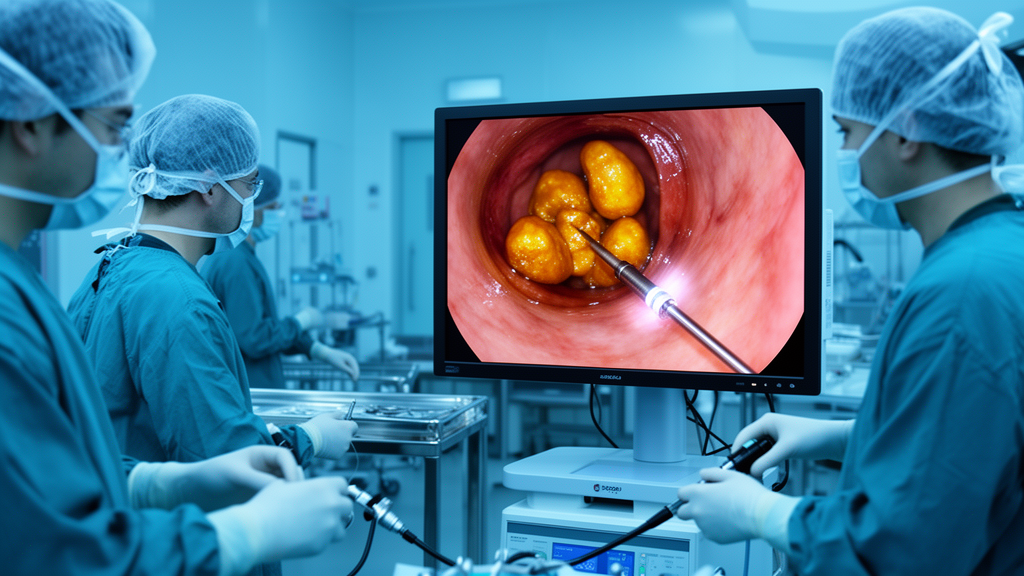
Single-operator peroral cholangioscopy allows clinicians direct visual access to the biliary tract, enabling the targeted application of electrohydraulic lithotripsy probes directly against refractory biliary stones. However, the shockwaves produced during lithotripsy inevitably fragment stones into fine particulate matter that rapidly clouds the surrounding fluid medium. Under standard clinical practice, endoscopists rely on vigorous irrigation with normal saline to flush the duct and clear the camera lens. Because conventional saline possesses low viscosity, shockwave delivery generates turbulent dispersion of debris that repeatedly obscures visualization. Such obscuration frequently forces operators to interrupt lithotripsy for clearing flushes, prolonging procedure times and elevating intrabiliary pressure, which in turn carries risks of bacteremia, cholangitis, or accidental ductal injury if lithotripsy continues under compromised sight.
To overcome the turbulent dispersion associated with saline, researchers explored the use of a transparent, high-viscosity endoscopic gel as an alternative immersion and irrigation medium. The high-viscosity gel resists rapid mixing with surrounding fluids, theoretically acting as a physical damper or maintaining near-laminar conditions that prevent particulate debris from churning in front of the lens. Evaluating whether viscous gel provides superior visual stability has previously been hindered by the absence of standardized, objective visual metrics, as endoscopic visibility has historically been rated using subjective Likert scales. To establish an automated and objective measurement tool, the research team developed a computer-vision pipeline to score visual clarity frame by frame throughout the lithotripsy phase.
The deep-learning architecture utilized a ResNet-18 convolutional neural network initialized with pre-trained ImageNet weights and modified with a five-unit classification head to predict visual quality on an ordinal five-point scale. The scoring rubric defined Score 0 as unusable, Score 1 as poor, Score 2 as fair, Score 3 as good, and Score 4 as excellent. Ground-truth training labels were established by a board-certified cholangioscopy expert across video recordings from three initial development cases. To address substantial class imbalance across the raw training frames, where poor and fair views predominated, the investigators applied an inverse-frequency weighted random sampler during optimization with the Adam optimizer and cross-entropy loss rather than applying synthetic data augmentation.
Initial convergence checks conducted on a one-hundred-frame hold-out set sampled from the development cases yielded high apparent performance, demonstrating an overall binary accuracy of 99.0 percent, a sensitivity of 100 percent, and a specificity of 98.8 percent. However, because these hold-out frames were extracted from the same three patient procedures utilized during training, neighboring video frames remained correlated, leading the investigators to caution that hold-out figures substantially overestimated real-world generalizability. To determine true clinical validity, the authors conducted a rigorous independent validation protocol utilizing one hundred and twenty video frames randomly sampled across twelve previously unseen test cases, comprising ten frames per patient.
The validation frames were evaluated independently by two board-certified biliary endoscopists who were completely blinded to the procedural medium, patient cohort, and model predictions. The human experts demonstrated near-perfect concordance with one another, achieving an inter-reader five-class weighted kappa of 0.98 and a binary kappa of 0.95. In contrast, the deep-learning model exhibited only moderate agreement with the expert consensus, recording a five-class weighted kappa of 0.60 and an overall binary accuracy of 70.8 percent across the validation sample, with an unadjusted binary sensitivity of 60.7 percent and a specificity of 79.7 percent.
Because the validation cohort was purposefully stratified across predicted output classes to ensure representation from every score level, the resulting sample was artificially enriched with predicted-usable frames, accounting for 39 percent of the validation set compared to only 13.8 percent of all analyzed procedural frames. Recognizing the presence of verification bias, the authors applied a Begg-Greenes-type correction to mathematically re-weight validation metrics to the true natural distribution of the 1,950 analyzed procedural frames. Following re-weighting, the estimated real-world sensitivity dropped sharply to 29.8 percent, while specificity reached 93.5 percent and accuracy was estimated at 73.6 percent, confirming that the model acts as a highly conservative classifier that systematically under-detects genuinely usable endoscopic operative fields.
The study also analyzed whether the model displayed systematic evaluation bias between different procedural fluids. When validated separately across fifty gel frames and seventy saline frames, the model demonstrated comparable binary accuracies of 72.0 percent for gel and 70.0 percent for saline, with overlapping confidence intervals. The mean signed error between predicted scores and expert consensus was minus 0.40 for gel and minus 0.19 for saline, with a permutation test confirming no statistically significant difference between media. If anything, the negative signed error demonstrated that the neural network scored gel frames somewhat more conservatively than saline frames, mitigating concerns that automated measurements were falsely inflated in favor of the viscous gel cohort.
As a secondary exploratory exercise, the investigators applied their model across the full electrohydraulic lithotripsy video recordings of the twelve test patients, comparing five patients treated under viscous gel immersion against seven patients treated under standard saline irrigation. The primary automated metric, termed the High-Quality View Rate, measured the proportion of lithotripsy frames possessing a greater than 50 percent combined probability of scoring as good or excellent. In a patient-level non-parametric analysis, the median High-Quality View Rate was 22.7 percent in the viscous gel group versus 8.4 percent in the saline group; however, this numerical divergence did not attain statistical significance under an exact Mann-Whitney U test, yielding a p-value of 0.15.
Additional post hoc exploratory analyses revealed differences in secondary visual metrics between the two fluids. A threshold-independent mean predicted quality score, representing the probability-weighted continuous expected score from zero to four, differed significantly at the patient level, recording a median of 1.65 in the gel group compared to 1.35 in the saline group with a p-value of 0.005. Furthermore, temporal analysis indicated that the median longest continuous usable visual interval was 24.4 seconds for gel compared to 5.2 seconds for saline. Adverse events remained limited to mild Tokyo Guidelines Grade I cholangitis, which developed in one of five gel patients and four of seven saline patients, all resolving uneventfully with conservative medical therapy.
The investigators emphasized that their findings represent a preliminary feasibility demonstration rather than a validated clinical measurement instrument. Major methodological constraints include the retrospective, single-center design and a small sample size of twelve comparison patients, which precluded adjustment for baseline confounders. Notably, patients in the gel group presented with larger average stone diameters of 16.2 millimeters compared to 13.3 millimeters in the saline group, and experienced longer median lithotripsy durations of 928 seconds versus 455 seconds, reflecting a more complex baseline stone burden. Furthermore, procedural techniques, injection volumes, and irrigation pressures were unstandardized, training annotations relied on a single expert reader, and the High-Quality View Rate lacks an established link to definitive clinical endpoints.
Ultimately, the study confirms that convolutional neural networks can automate frame-level visibility assessments during biliary lithotripsy, but current performance limitations necessitate larger, multi-case training cohorts and prospective validation before deep learning can serve as a reliable clinical trial endpoint. While exploratory data suggest that viscous gel immersion may damp turbulent shockwave dispersion and sustain visual clarity longer than saline, the authors conclude that these comparative signals remain strictly hypothesis-generating, requiring rigorous randomized prospective investigations to determine whether enhanced visual stability translates into improved procedural efficiency or safety.
Subject of Research: Deep-learning assessment of visualization quality during cholangioscopy-guided lithotripsy
Article Title: Feasibility of a Deep‐Learning Model for Objective Visualization‐Quality Assessment During Cholangioscopy‐Guided Lithotripsy: A Proof‐of‐Concept Study
Article References: Kamada, H., Kobayashi, K., Yamana, H., Fujita, N., Namima, D., Yamada, M., Fujita, S., Suto, H., Okano, K., & Kobara, H. (2027). Feasibility of a Deep‐Learning Model for Objective Visualization‐Quality Assessment During Cholangioscopy‐Guided Lithotripsy: A Proof‐of‐Concept Study. DEN Open, 7(1), Article e70454. https://doi.org/10.1002/deo2.70454
Image Credits: AI Generated
DOI: 10.1002/deo2.70454
Keywords: peroral cholangioscopy, electrohydraulic lithotripsy, deep learning, ResNet-18, bile duct stones, snowstorm effect, viscous gel immersion, saline irrigation, computer vision, image classification, endoscopic imaging, visualization quality, verification bias, biliary endoscopy, inter-observer reliability, pilot study
News Source: Blake Davidson. (November 24, 2026). Deep Learning Evaluates Endoscopic Visual Quality During Bile Duct Stone Fragmentation. Scienmag.