• HOME
  • NEWS
  • EXPLORE
    • CAREER
      • Companies
      • Jobs
    • EVENTS
    • iGEM
      • News
      • Team
    • PHOTOS
    • VIDEO
    • WIKI
  • BLOG
  • COMMUNITY
    • FACEBOOK
    • INSTAGRAM
    • TWITTER
Saturday, November 7, 2026
BIOENGINEER.ORG
No Result
View All Result
  • Login
  • HOME
  • NEWS
  • EXPLORE
    • CAREER
      • Companies
      • Jobs
        • Lecturer
        • PhD Studentship
        • Postdoc
        • Research Assistant
    • EVENTS
    • iGEM
      • News
      • Team
    • PHOTOS
    • VIDEO
    • WIKI
  • BLOG
  • COMMUNITY
    • FACEBOOK
    • INSTAGRAM
    • TWITTER
No Result
View All Result
Bioengineer.org
No Result
View All Result
Home NEWS Science News Technology

Deep Feature Framework Enhances Early Loan Delinquency Predictions Under Data Limits

by
November 7, 2026
in Technology
Reading Time: 2 mins read
0
Deep Feature Framework Enhances Early Loan Delinquency Predictions Under Data Limits

Deep Feature Framework Enhances Early Loan Delinquency Predictions Under Data Limits

Share on FacebookShare on TwitterShare on LinkedinShare on RedditShare on Telegram

A deep feature extraction framework designed to improve early predictions of borrowers transitioning into long-term delinquency has been introduced in Applied Intelligence by researchers Yoona Chung, Daehan Kim, Hosoo Shin, and Eunchan Kim. The study positions representation learning as a complementary enhancement to existing traditional classifiers rather than as an independent standalone predictive model, specifically targeting early identification challenges in credit risk management.

In practical financial environments, credit risk forecasting is frequently hindered by short observation windows and highly aggregated tabular credit records. According to the authors, these restricted temporal conditions and low-information data structures substantially limit the performance and applicability of standard time-series models as well as conventional handcrafted feature-based engineering strategies.

To overcome these data constraints, the proposed architecture combines self-attention-based global interaction learning with TabNet-inspired soft feature selection. This integration enables the framework to construct latent representations that capture delinquency-related risk signals directly from low-information tabular credit data without relying on extensive historical timelines.

Evaluated on a real-world multi-debtor credit dataset, the feature extraction framework demonstrated potential in strengthening long-term delinquency transition predictions. In addition to predictive accuracy, examinations of feature-space distances and model explainability demonstrated enhanced class separability and offered interpretable insights into the mechanisms driving transitions into long-term delinquency.

Overall, the results indicate that deep representation learning provides a practical, interpretable, and effective solution for early delinquency transition detection in realistic credit risk settings. According to the researchers, the framework directly addresses the operational constraints of tabular credit data environments where decision-making is limited by short observation windows and restricted temporal information.

Subject of Research: Deep representation learning for long-term credit delinquency transition prediction

Article Title: Deep feature extraction for long-term delinquency transition prediction under short observation windows

Article References: Chung, Y., Kim, D., Shin, H., & Kim, E. (2026). Deep feature extraction for long-term delinquency transition prediction under short observation windows. Applied Intelligence, 56(16), Article 549. https://doi.org/10.1007/s10489-026-07587-2

Image Credits: AI Generated

DOI: 10.1007/s10489-026-07587-2

Keywords: credit risk management, delinquency transition, deep feature extraction, representation learning, tabular credit data, self-attention, TabNet, machine learning, Deep, feature, extraction, long-term

News Source: Denise Maddox. (November 7, 2026). Deep Feature Framework Enhances Early Loan Delinquency Predictions Under Data Limits. Scienmag.


Tags: credit risk managementdeepdeep feature extractiondelinquency transitionextractionfeatureLong-termMachine Learningrepresentation learningself-attentionTabNettabular credit data
Share12Tweet7Share2ShareShareShare1

Related Posts

Homomorphic Encryption Framework Balances Distributed Datasets and Boosts Federated Learning Accuracy

Homomorphic Encryption Framework Balances Distributed Datasets and Boosts Federated Learning Accuracy

November 7, 2026
Neuro-Fuzzy Architecture Improves Appliance Disaggregation and Uncertainty Estimation in Microgrids

Neuro-Fuzzy Architecture Improves Appliance Disaggregation and Uncertainty Estimation in Microgrids

November 7, 2026

Graph Convolutional Network Recognizes Martial Arts Categories on Edge Hardware

November 7, 2026

Reinforcement Learning Outperforms Algorithmic Planning in Simulated Automotive Wire Harness Assembly

November 7, 2026

POPULAR NEWS

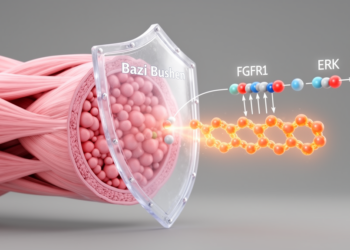
  • Research report: Bazi Bushen Attenuates Skeletal Muscle Decline Associated With Oestrogen Deficiency and Modulates FGFR1/ERK Signalling

    Research report: Bazi Bushen Attenuates Skeletal Muscle Decline Associated With Oestrogen Deficiency and Modulates FGFR1/ERK Signalling

    29 shares
    Share 12 Tweet 7
  • Cholesterol Binding Stabilizes THIK-1 Channel and Promotes Atherosclerosis

    29 shares
    Share 12 Tweet 7
  • Enzymes boost activity and fluid flow in crowded protein droplets

    29 shares
    Share 12 Tweet 7
  • First Record of the Clouded Reed Snake in Yunnan Expands Known Range

    29 shares
    Share 12 Tweet 7

About

We bring you the latest biotechnology news from best research centers and universities around the world. Check our website.

Follow us

Recent News

Autonomous Grazing Maintains Dutch River Floodplains at Lower Cost

Four Plasma Proteins Linked to Macrovascular Complications in Type 2 Diabetes

Framework Reassesses Radiation Dose Constraints for IDH-Wildtype Glioblastoma Treatment

Subscribe to Blog via Email

Enter your email address to subscribe to this blog and receive notifications of new posts by email.

Join 86 other subscribers
  • Contact Us

Bioengineer.org © Copyright 2023 All Rights Reserved.

Welcome Back!

Login to your account below

Forgotten Password?

Retrieve your password

Please enter your username or email address to reset your password.

Log In
No Result
View All Result
  • Homepages
    • Home Page 1
    • Home Page 2
  • News
  • National
  • Business
  • Health
  • Lifestyle
  • Science

Bioengineer.org © Copyright 2023 All Rights Reserved.