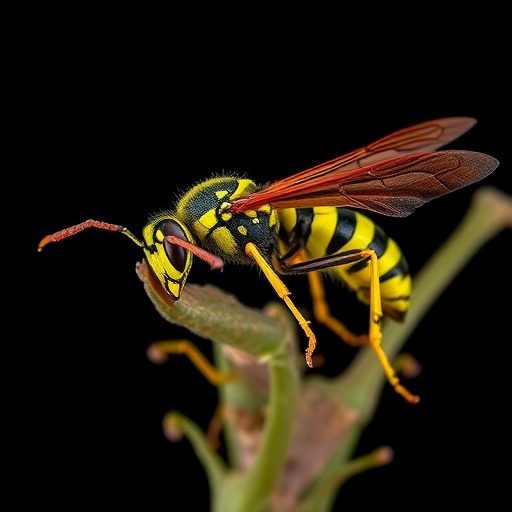
Recent research into the intricate world of parasitic wasps has unveiled unique features regarding the ovipositor of the encyrtid wasp, Microterys flavus. This tiny insect, often overlooked in discussions about ecosystem dynamics and pest control, embodies complex structures that have essential implications for its reproductive strategies and host interactions. While the significance of these adaptations may elude casual observation, they represent the culmination of millions of years of evolutionary refinement.
The ovipositor, a specialized organ used by female wasps to deposit eggs, serves as a critical tool for survival in the highly competitive environments where these insects live. Within the context of Microterys flavus, the structure and function of this organ reveal fascinating insights into its behavior and the interactions it fosters within its ecosystem. Understanding the morphology and operational mechanisms of this ovipositor not only adds to the broader field of entomology but also opens avenues for applications in biological control.
Detailed anatomical studies have shown that the ovipositor of Microterys flavus features a complex array of valves and sensors, allowing for precise egg-laying at targeted sites. This precision decreases the likelihood of predation on the eggs and increases the chances of successful hatching. The uncertainties of the natural world necessitate such adaptations; by laying eggs within specific host organisms, Microterys flavus enhances its progeny’s likelihood of survival.
The composition of the ovipositor also plays a pivotal role in its functionality. Researchers emphasize that the secretions used during egg-laying have both chemical and mechanical functions, enabling the wasps to navigate through various substrates. This dual potential exemplifies evolutionary ingenuity, as presented morphologies and functions of the ovipositor can directly impact the species’ reproductive success in an ever-changing environment.
Furthermore, the research highlights the evolutionary significance of the ovipositor structure in Microterys flavus. It serves not only as an instrument of reproduction but also as a vital element in adapting to ecological pressures. The developmental pathways leading to such morphological features reflect the pressures exerted by predators, competing species, and environmental changes, revealing a broader narrative of survival and adaptation in the natural world.
Examining the evolutionary lineage of Microterys flavus through the lens of its ovipositor emphasizes the intricate relationships within the Encyritidae family. Morphological traits are largely influenced by evolutionary changes and adaptations that facilitate parasitism, showcasing trends among various wasp species within this group. Such studies provoke questions about the interconnectedness of ecological roles and serve to deepen our understanding of biodiversity.
Moreover, the functionality of the ovipositor extends beyond mere egg placement. The ability to inject substances into host organisms helps the larvae develop more advantageously, showcasing a truly unique reproductive strategy. These secretions can manipulate host physiology, preparing an optimal environment for offspring growth. Thus, the ovipositor ensures that Microterys flavus has evolved as a competitive player in its niche, contributing to the complexity of its life cycle.
In various experiments, researchers have observed how female Microterys flavus selectively target healthy, unsuspecting hosts while avoiding those that may pose a higher risk of predation or competition. This selectivity speaks to the finely tuned evolution of behavioral patterns that are influenced by the ovipositor’s functional design. By delving deeper into these patterns, we gain insight into the broader ecological ramifications of parasitism and its role in trophic interactions.
Another fascinating aspect of this research is how the ovipositor’s design aligns with specific environmental contexts. In areas where host availability fluctuates, the structural integrity and adaptability of the ovipositor become paramount. It raises significant considerations about how global changes, such as climate shift and habitat destruction, may alter these interactions and subsequently impact species population dynamics.
Additionally, the findings underscore the importance of conservation efforts focusing on parasitoid wasps like Microterys flavus. As vital components of biological control, these wasps aid in naturally regulating pest populations that threaten crops and natural habitats. Thus, understanding their reproductive mechanisms can inform effective management strategies in agricultural practices.
The multifaceted nature of the ovipositor aligns with advancing biomimetic technologies. Inspired by nature’s complex designs, researchers are exploring how features of the ovipositor can influence innovations in materials science and robotics. This crossover emphasizes the importance of entomological research as it relates to technology, underscoring interdisciplinary connections that can lead to breakthroughs in various domains.
In summary, the ovipositor of Microterys flavus serves as a remarkable case study within insect physiology, encapsulating the intersection of structure, function, and ecological interaction. The ongoing research not only extends the scientific community’s understanding of parasitic wasps but also promises implications for biodiversity conservation and agricultural sustainability.
The journey of discovery surrounding the ovipositor of Microterys flavus is just beginning, stirring curiosity and appreciation for the delicate balance within our ecosystems. As more researchers turn their attention to these fascinating insects, who knows what other secrets they might unfold in the complex tapestry of life?
Subject of Research: Structure and function of the ovipositor in the encyrtid wasp Microterys flavus.
Article Title: Structure and function of the ovipositor of the encyrtid wasp Microterys flavus.
Article References:
Kraft, R., Betz, O., Rack, A. et al. Structure and function of the ovipositor of the encyrtid wasp Microterys flavus.
Front Zool 22, 24 (2025). https://doi.org/10.1186/s12983-025-00575-1
Image Credits: AI Generated
DOI: https://doi.org/10.1186/s12983-025-00575-1
Keywords: Ovipositor, Microterys flavus, encyrtid wasp, evolutionary adaptations, parasitism, biological control, insect morphology, environmental interactions.
Tags: biological control applicationsecosystem dynamics of waspsencyrtid wasp ecological roleentomology and insect behaviorevolutionary refinement in waspsinsect egg-laying mechanismsMicroterys flavus ovipositor adaptationsmorphological studies of wasp anatomyparasitic wasps reproductive strategiespest control strategies in agricultureprecision ovipositor functionwasp-host interactions