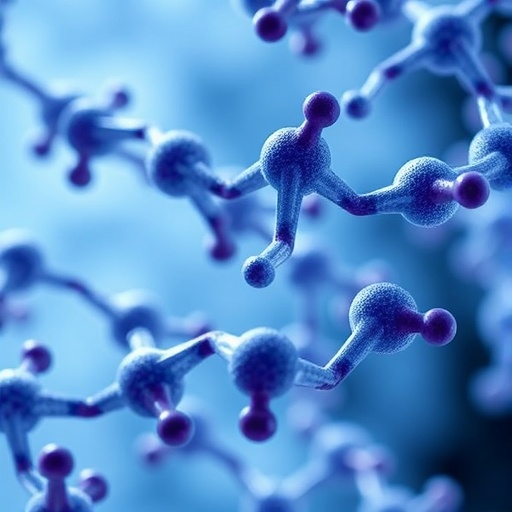
In the rapidly evolving realm of drug delivery systems, polymer micelles have emerged as pivotal players, offering innovative solutions to the challenges of solubilizing and administering poorly soluble drugs. Among these, Poloxamer 407 (P407) has garnered significant interest due to its unique thermoresponsive behavior—it transforms from a fluid solution into a semi-solid gel near human body temperature. This characteristic not only facilitates the controlled, sustained release of pharmaceutical agents but also minimizes systemic side effects and the need for frequent dosing. However, despite P407’s widespread application, the fundamental mechanisms driving its sol–gel transition have remained elusive, largely because this phenomenon hinges not on isolated micelle behavior but on the collective interactions and spatial organization of these micelles in complex biological environments.
Traditional investigations of P407 micelles have predominantly centered on aqueous systems, which, though simpler, fail to mimic the ionic complexities of bodily fluids. The human physiological milieu is enriched with various salts and ions that markedly influence micellar behavior, yet prior theoretical models for inter-micellar interactions have been inadequate when applied to such saline conditions. These conventional models often rely on assumptions unsuitable for polymeric micellar systems, leaving critical interaction forces poorly quantified and their implications for gel formation misunderstood. To bridge this substantial knowledge gap, a multidisciplinary team of researchers at Chiba University, led by Associate Professor Takeshi Morita, embarked on an exhaustive experimental inquiry into the micellar interactions of P407 within phosphate-buffered saline (PBS)—a solution designed to simulate human bodily fluids.
Rather than presuming behaviors based on pre-existing theoretical frameworks, the study uniquely embraced an empirical approach, integrating advanced experimental techniques to capture the nuanced dynamics of P407 micelles in saline conditions. Small-angle X-ray scattering (SAXS) was employed to elucidate the spatial arrangement and collective structural organization of micelles on the nanoscale, shedding light on how they position themselves relative to one another as temperature increases toward gelation. Complementing this, dynamic light scattering (DLS) measurements provided insights into the size distributions, translational motion, and fluctuations of individual micelles, polymer chains, and subsequent aggregates. This dual-method strategy empowered the team to deduce the ‘pair interaction potential’—a rigorous quantitative descriptor delineating the balance of attraction and repulsion forces between micelles as a function of the interparticle distance.
Remarkably, the research uncovered that as temperature approached the gelation threshold, P407 micelles adopted a more regular, though slightly more distanced, arrangement within the PBS environment. This restructuring aligns with the well-known Alder transition, an entropy-driven process where particles spontaneously organize into crystalline patterns to maximize configurational freedom during thermal agitation. Yet, critical deviations emerged in the saline setting: micellar attractions were notably amplified compared to pure water systems, resulting in tighter binding and a constrained ability for micelles to separate freely. Consequently, gels formed under physiological saline conditions exhibited pronounced structural fluctuations and diminished uniformity relative to those developed in aqueous solutions.
These altered interaction patterns manifest profoundly in the physical properties and stability of the resultant gels. Gels synthesized in PBS demonstrated reduced thermostability, breaking down at lower temperatures than their water-based counterparts. Such diminished robustness is attributed to amplified structural fluctuations that undermine gel integrity as temperature rises. This insight not only advances fundamental understanding but also has pragmatic implications: it reveals that the ionic milieu can crucially modulate gel lifecycle and, by extension, the kinetics of drug release from P407-based formulations in vivo. The ability to anticipate and manipulate these interactions opens promising avenues for optimizing therapeutic delivery systems tailored to physiological conditions.
Associate Professor Morita emphasizes that unraveling the intricacies of inter-micellar forces within saline environments represents a pivotal step toward comprehensively characterizing drug nanocarrier behaviors. This knowledge is indispensable for deciphering the mechanistic pathways that underpin sustained drug release and temperature-induced gelation under biologically relevant conditions. By experimentally grounding their models in realistic media, the researchers have laid a robust foundation for predictive simulation and rational formulation design, potentially transforming how polymer micelles are deployed across biomedical applications.
The implications extend beyond P407, as the methodologies and findings resonate across the broader field of soft matter physics and nanomedicine. Understanding how complex soft materials self-organize and respond in milieus containing physiological ions could revolutionize the design and fabrication of next-generation drug delivery vehicles. Such vehicles would be capable of precision-tuned release profiles and tailored mechanical properties, enabling superior therapeutic outcomes and enhanced patient compliance.
This experimentally driven approach also highlights the limitations of relying solely on theoretical constructs when addressing the behavior of polymeric micellar systems. The interplay between empirical data and theoretical modeling is crucial to elucidating emergent phenomena borne from collective interactions, which are often obscured in oversimplified frameworks. As demonstrated, integrating SAXS and DLS techniques furnish multidimensional perspectives necessary to capture these subtleties, empowering researchers to unravel complex phase transitions like the sol–gel–sol phenomena in physiologically relevant contexts.
The study’s findings carry substantial weight for pharmaceutical science, particularly in the context of delivering anticancer and anti-inflammatory agents that frequently suffer from poor aqueous solubility. Optimizing micellar formulations in saline environments enables the design of drug carriers that not only stabilize compounds but also modulate release to achieve desired therapeutic concentrations over extended periods. By controlling the delicate balance of micelle interactions, researchers can hinder premature gel breakdown and improve dosage efficacy.
Beyond healthcare, the work offers fundamental insights into the physics of mesoscopic systems—those existing between macroscopic bulk matter and individual molecules. By probing micellar assembly and fluctuations, the research extends understanding of self-assembled nanostructures, which are central to materials science and nanotechnology innovations. These insights may find applications in areas ranging from tissue engineering scaffolds to environmentally responsive coatings.
Moreover, the collaborative nature of the research underscores the value of interdisciplinary partnerships. The team, comprising experts from Chiba University, Nagahama Institute of Bio-Science and Technology, and Muroran Institute of Technology, combined expertise spanning physical chemistry, pharmaceutical sciences, and engineering. This synergy was critical in refining experimental approaches and interpreting complex data to render a cohesive picture of micelle behavior in complex solvents.
Ultimately, the work by Dr. Morita and colleagues heralds a new era of precision nanocarrier design where the interplay between ionic environments and polymeric nanostructures is no longer mysterious but quantitatively understood and exploitable. This deeper mechanistic understanding promises to accelerate the translation of nanoscience into real-world clinical innovations, reducing patient burdens and fostering the next wave of smart, responsive drug delivery technologies.
Subject of Research: Not applicable
Article Title: Clarifying pair interaction potential between poloxamer 407 micelles solvated into phosphate-buffered saline in sol-gel-sol transition
News Publication Date: 1-Apr-2026
Web References: Journal of Colloid and Interface Science Article
References: Takeshi Morita, Shunsuke Takamatsu, Hiroshi Imamura, Minami Saito, Kenjirou Higashi, Tomonari Sumi. Clarifying pair interaction potential between poloxamer 407 micelles solvated into phosphate-buffered saline in sol-gel-sol transition. Journal of Colloid and Interface Science, Volume 707, April 2026, Article 139642. DOI: 10.1016/j.jcis.2025.139642
Image Credits: Dr. Takeshi Morita, Graduate School of Science, Chiba University, Japan
Keywords
Physical sciences, Materials science, Colloids, Micelles, Physical chemistry, Polymers, Drug delivery, Drug delivery systems, Sol gel process, Crystals, Crystallization
Tags: advancements in nanocarrier technologycontrolled drug release systemsgel formation mechanisms in polymersinter-micellar interactions in biologyionic complexities in drug deliveryminimizing side effects in drug therapyPoloxamer 407 thermoresponsive behaviorPolymer micelles in drug deliverypoorly soluble drug administrationsaline conditions impact on micellesspatial organization of polymer micellestraditional vs. modern micelle studies