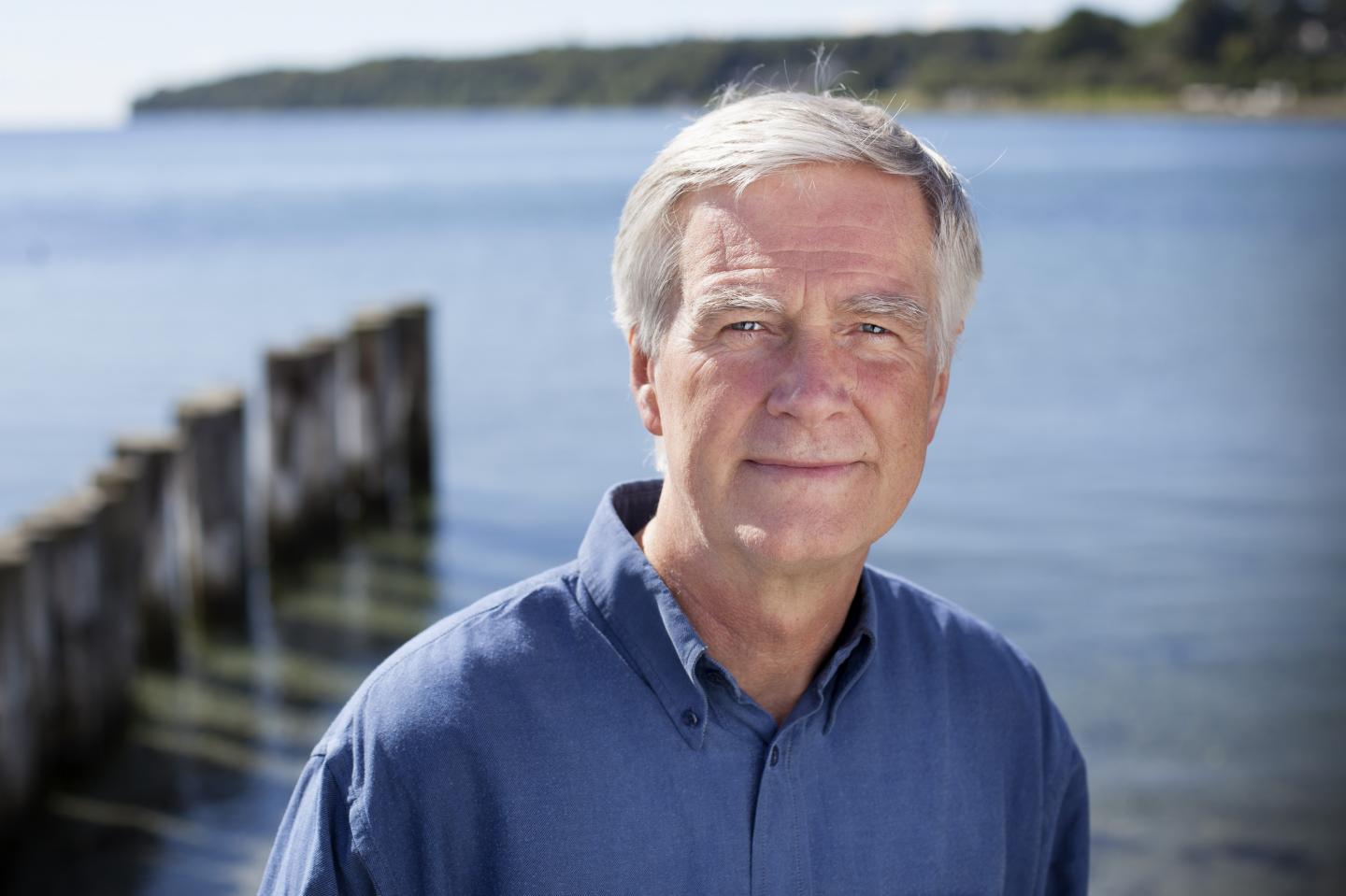
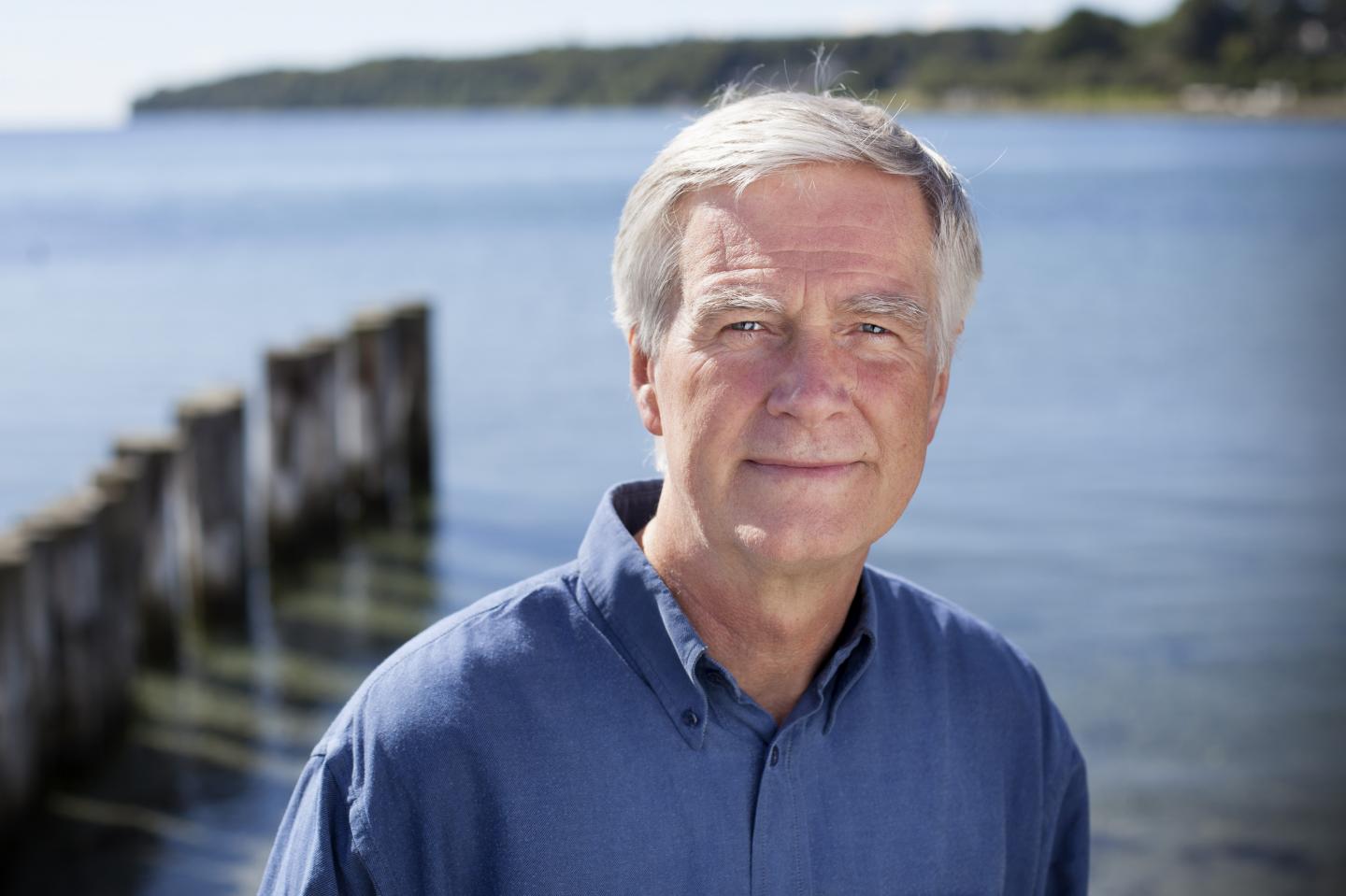
Credit: Photo: Lars Kruse, Aarhus University
On Friday, The Association for the Sciences of Limnology and Oceanography (ASLO) honors Danish Professor Bo Barker Jørgensen with the prestigious 2017 A.C. Redfield Award at the Aquatic Sciences Meeting in Honolulu, Hawaii 26 February – 03 March, 2017.
Dr. Bo Barker Jørgensen receives the prize for his lifelong and groundbreaking work advancing our understanding of marine sediment microbial ecology and biogeochemistry. His work has ranged from surface sediments to the deep biosphere, several kilometers into the seabed.
ASLO is an international aquatic science society founded in 1948. For more information about ASLO, please visit their website: http://www.ASLO.org.
"Jaw dropping" influence on science
In their press release, ASLO writes, "Bo Barker Jørgensen has led the way in advancing our understanding of the biogeochemistry and microbial ecology of marine sediments. His papers have been cited more than 32,000 times, with two of his papers having over one thousand citations each. Colleagues say these statistics are evidence of Jørgensen's "jaw dropping" influence on science and a tribute to the huge impact of his lifelong work."
ASLO also highlights Bo Barker Jørgensen's early research on the sulfur cycle in marine sediments presented in a paper in 1977. The method he developed for determining the rate of bacterial sulfate reduction in marine sediments is still in use today and his paper is of one of the most highly cited papers in marine sediment biogeochemistry.
Microelectrodes
Another highlight in a long and illustrious science career is the work of Bo Barker Jørgensen and then graduate student, Niels Peter Revsbech who is now a professor and colleague at Aarhus University, Denmark.
During the late 70's and early 80's they used oxygen microelectrodes for the first time to measure the distribution of oxygen in sediments, "…shocking the scientific community with their discovery that oxygen penetrates only a few millimeters into coastal sediments. Their introduction of microelectrodes revolutionized our understanding of the distribution and dynamics of oxygen and oxidants in marine sediments," ASLO writes in their nomination.
Super-mentor
Bo Barker Jørgensen is famous not only for developing techniques, instruments and publishing influential papers, but the A. C. Redfield award also recognizes his work achievements as a mentor. Many of the young scientists he advised have established successful scientific careers of their own.
"The list of students, postdoctoral fellows and colleagues who have been mentored by Jørgensen reads like a virtual 'who's who' of marine microbiology," the nomination reads.
Establishing world-leading research centers
Bo Barker Jørgensen's vision for microbial research is credited by colleagues as central for the establishment of Max Planck Institute for Marine Microbiology in Bremen, Germany. Bo Barker Jørgensen served as director of the Institute from 1992-2011, and helped to establish it as a world leader in research on marine microbes.
In 2007, Bo Barker Jørgensen established the Center for Geomicrobiology in Aarhus, where he has built an international team of leading scientists focused on sediments in the deep biosphere. "He and his team are 'providing fundamental and new insights into the nature of what may be the largest, yet least known, biosphere on Earth,'" it is written in the nomination.
Contact: Bo Barker Jørgensen is at the moment in Hawaii but can be reached on mail: [email protected]
Facts:
The ASLO Lifetime Achievement award is given to those that have excelled in limnologic and oceanographic research, education, service to the community and society throughout a lifetimes work. The prize was first presented in 1994 and has since 2004 been named after Alfred Clarence Redfield, an American oceanographer whose major discovery was the atomic ratio between nitrogen, phosphorus, and carbon found in marine plankton (phytoplankton), also known as the Redfield ratio.
Dr. Jørgensen is Professor and Head of the Center for Geomicrobiology at Aarhus University in Denmark. In his long career, Bo Barker Jørgensen has received numerous prizes and honors for his impressive work:
Fellow of the Geochemical Society, 2001
The G. Evelyn Hutchinson Award (ASLO), Savannah, USA, 2004
The ECI Prize, International Ecology Institute, Germany, 2004
Doctor of Honor, Univ. Southern Denmark, 2006
Fellow of the American Academy of Microbiology, 2009
Fellow of the European Academy of Microbiology, 2009
The German Environmental Prize, 2009
The Jim Tiedje Award, International Society for Microbial Ecology, 2010
Holst-Knudsen Research Prize, Aarhus University, 2013
A. C. Redfield Award (ASLO), Honolulu, USA, 2017
###
Media Contact
Bo Barker Jørgensen
[email protected]
@aarhusuni
http://www.au.dk
############
Story Source: Materials provided by Scienmag