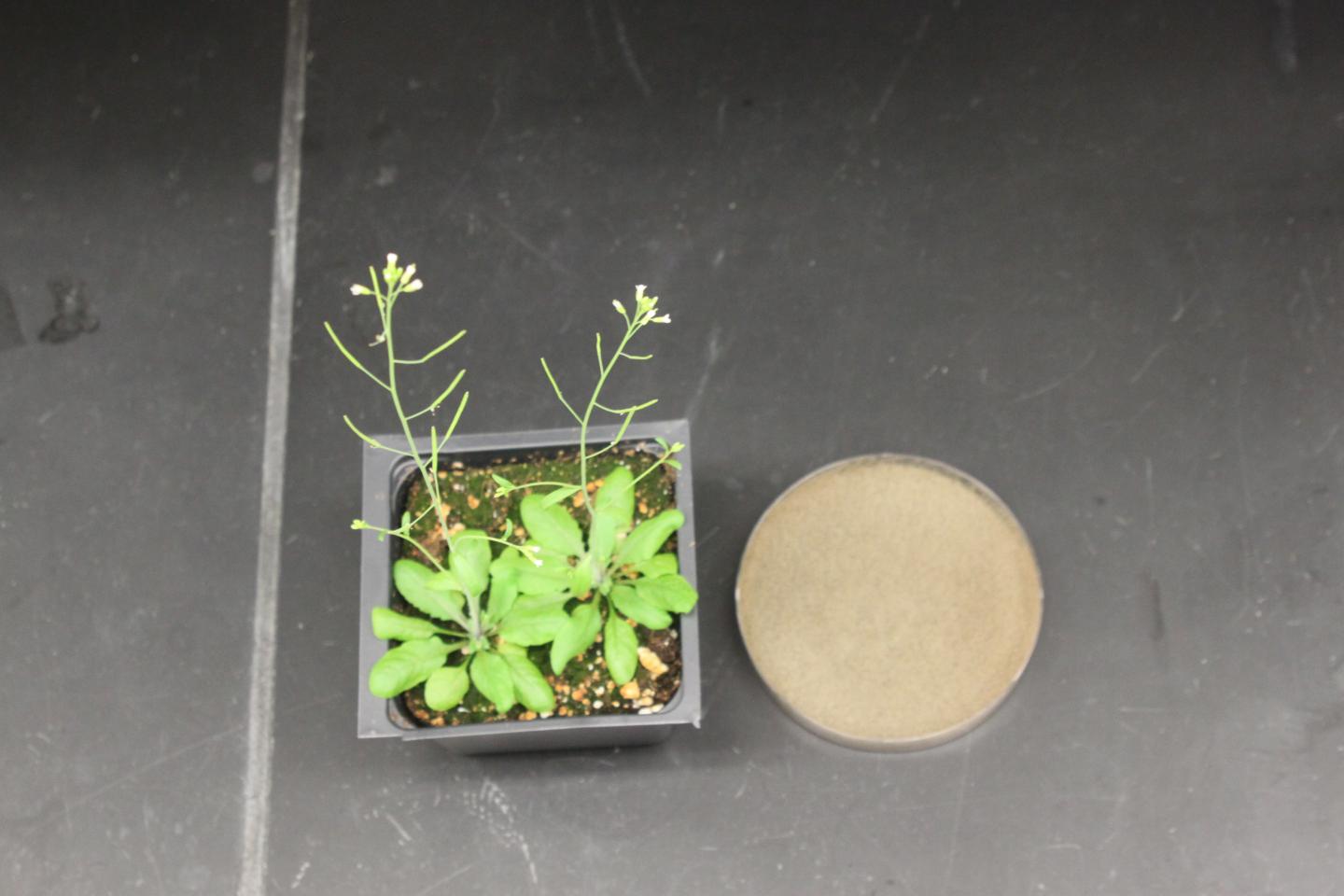
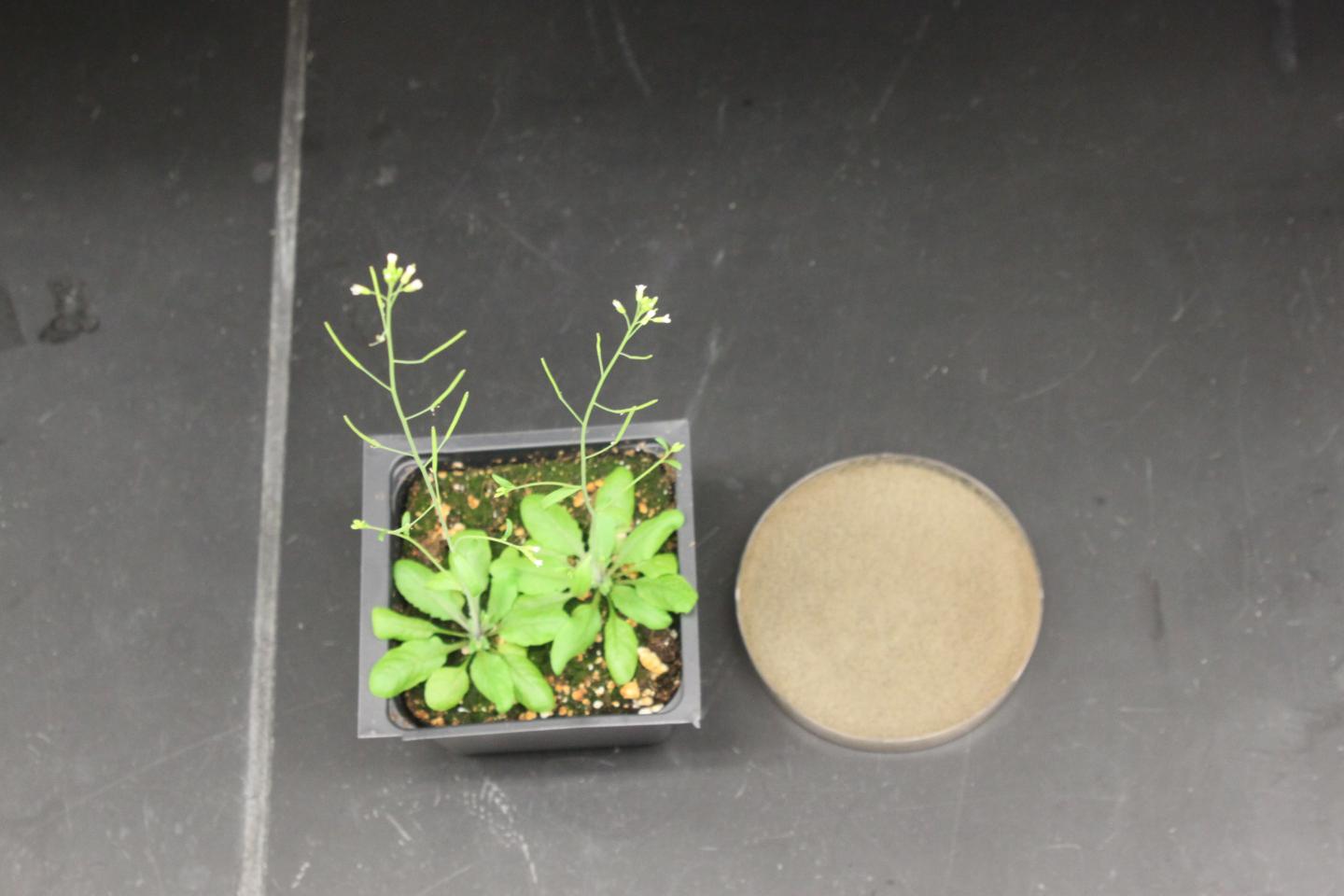
ITHACA, NY — A protein that signals tissue damage to the human immune system has a counterpart that plays a similar role in plants, report researchers at the Boyce Thompson Institute (BTI).
Professor Daniel Klessig and colleagues have identified a new damage-associated molecular pattern molecule or "DAMP" in plants. DAMP molecules released by injured cells trigger an immune response in plants and animals. The researchers describe this protein, called HMGB3, in a new paper in PLOS Pathogens. Knowledge of HMGB3, and its human equivalent, HMGB1, enhances our understanding of how humans and plants fight off infections.
Plants and animal tissues use DAMPs to detect when they are wounded, so that they can promote healing and to fend off infection. DAMPs are always present inside cells, but are released into the surrounding space in response to tissue damage, where they activate inflammatory and immune responses.
The researchers discovered the actions of HMGB3 through their investigations of plant and animal proteins that interact with salicylic acid, a plant immune regulator and the main breakdown product of aspirin. A previous study by Klessig's lab found that salicylic acid blocks HMGB1, a DAMP in humans that is associated with multiple inflammation-related diseases. When they searched the genome of the model plant Arabidopsis for genes coding for similar proteins, they found HMGB3.
They compared the actions of HMGB3 in Arabidopsis plants to other known plant DAMPs, and measured the protein's ability to help plants fight off gray mold infection.
"We injected the protein into the extracellular space of the plant and then examined different layers of immune activity," said lead author Hyong Woo Choi, a senior research associate at BTI. The protein triggered a signaling cascade involved in the plant immune response, activated the expression of genes involved in defense, started callose deposition — a protective thickening of the cell walls — and made the plants more resistant to gray mold infection.
They found that, like human HMGB1, HMGB3 also interacts with salicylic acid, which inhibits its activities. The immune-boosting effects of HMGB3 in gray mold-infected plants were erased when the researchers added salicylic acid.
"The identification of salicylic acid's shared targets and mechanisms of action in plants and animals enable us to translate what has been learned in one system to the other, said Klessig. "For example, glyceraldehyde 3-phosphate dehydrogenase is another shared target. It is involved in the replication of several plant and animal viruses, including hepatitis A, B and C viruses in humans and tomato bushy stunt virus in plants. Notably, salicylic acid binding to this target suppresses replication of the plant virus."
In future work, Klessig and colleagues will continue to investigate targets of salicylic acid shared by plants and animals, which have important roles in disease.
###
Media Relations Contacts:
Patricia Waldron
607-254-7476
[email protected]
or
Kitty Gifford
607-592-3062
[email protected]
Communications Office
Boyce Thompson Institute
533 Tower Road
Ithaca, New York 14853 USA
To learn more about Boyce Thompson Institute (BTI) research, visit the BTI website at http://bti.cornell.edu.
Connect online with BTI at http://www.facebook.com/BoyceThompsonInstitute and http://www.twitter.com/BTIScience.
About Boyce Thompson Institute
Boyce Thompson Institute is a premier life sciences research institution located in Ithaca, New York on the Cornell University campus. BTI scientists conduct investigations into fundamental plant and life sciences research with the goals of increasing food security, improving environmental sustainability in agriculture and making basic discoveries that will enhance human health.
BTI employs 150 staff, with scientists from 40 countries around the world and has twice been named as one of the Best Companies in New York State. Its 15 principal investigators are leading minds in plant development, chemical ecology, microbiology and plant pathology, and have access to the institute's state-of-the-art greenhouse facilities with computerized controls and a system of integrated pest management. BTI has one of the largest concentrations of plant bioinformaticists in the U.S., with researchers who work across the entire spectrum of "omics" fields. BTI researchers consistently receive funding from NSF, NIH, USDA and DOE and publish in top tier journals. Throughout its work, BTI is committed to inspiring and educating students and to providing advanced training for the next generation of scientists. For more information, visit http://www.bti.cornell.edu.
Media Contact
Patricia Waldron
[email protected]
607-254-7476
@BTIscience
http://bti.cornell.edu