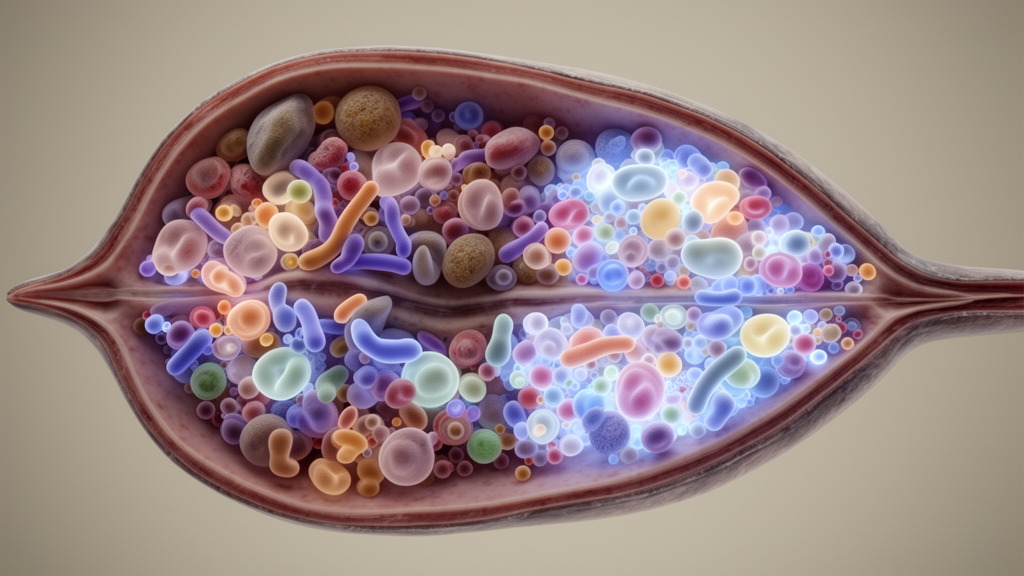
Researchers have provided the first systematic characterization of the bacterial communities residing in the renal sac fluid of the pharaoh cuttlefish, Acanthosepion pharaonis. Published in Frontiers in Microbiology, this original research study reveals that while the taxonomic composition of these microbial communities varies significantly among wild-caught individuals, their predicted functional profiles remain remarkably stable. The findings suggest that the chemically harsh environment of the renal sac acts as a functional filter, selecting for bacteria with specific metabolic capabilities rather than enforcing a conserved set of bacterial species. This discovery offers new insights into how host-associated microbial communities maintain functional redundancy in specialized physiological niches.
The cephalopod renal organ plays a central role in nitrogen waste elimination, a critical function for animals with high metabolic rates that rely heavily on amino acid catabolism. The renal sac is a fluid-filled compartment enclosing the renal appendages, characterized by acidic conditions and high concentrations of ammonia. Previous studies in Octopus vulgaris indicated that renal sac fluid has a pH of approximately 5.3 to 5.8 and contains high levels of ammonia, along with dialyzable organic solutes dominated by kynurenic acid and other aromatic compounds. This chemically unique microenvironment represents a selective niche where microbial communities must tolerate extreme conditions to persist.
Despite the physiological importance of the renal sac, the existence and biological significance of its microbiota had never been investigated in coleoid cephalopods. The study team, led by researchers from the Institute of Cellular and Organismic Biology, Academia Sinica, aimed to characterize the bacterial community structure in this overlooked excretory niche. They utilized PacBio full-length 16S rRNA sequencing to achieve high taxonomic resolution, allowing for detailed analysis of the bacterial amplicon sequence variants (ASVs) present in the renal sac fluid. This methodological approach provided a robust framework for comparing microbial communities across different environmental contexts.
The study included two distinct groups of cuttlefish: eleven wild-caught individuals collected from fishing ports in northern Taiwan between September 2024 and April 2025, and five laboratory-reared individuals raised from eggs in a controlled flow-through seawater system. The laboratory-reared group served as a controlled reference, while the wild-caught group allowed for the examination of renal sac bacterial communities under natural conditions. Renal sac fluid was collected from each individual after anesthesia, and the microbial biomass was isolated through centrifugation and stored for DNA extraction. This design enabled the researchers to assess how environmental exposure influences microbial community assembly in the renal sac.
Alpha diversity analyses revealed that bacterial communities were detectable in all renal sac fluid samples, with rarefaction curves indicating sufficient sequencing depth to capture most of the bacterial diversity. While some wild-caught individuals exhibited higher ASV richness, no significant differences in alpha diversity metrics were observed between the wild-caught and laboratory-reared groups after multiple-testing correction. However, the dispersion of alpha diversity values was broader among wild-caught individuals, suggesting greater variability in community structure within this group. These results indicate that the renal sac environment does not uniformly constrain microbial diversity across all individuals.
Beta diversity analysis using principal coordinates analysis (PCoA) highlighted a stark contrast between the two groups. Laboratory-reared individuals formed a tight cluster, indicating highly consistent bacterial compositions dominated by the family Vibrionaceae. In contrast, wild-caught individuals were broadly dispersed across the ordination space, showing strong inter-individual variation in family-level composition. No single bacterial family was consistently dominant across all wild-caught samples, with families such as Flavobacteriaceae, Cyclobacteriaceae, and Pseudohongiellaceae appearing in high abundance in some individuals but nearly absent in others. Multivariate dispersion analysis confirmed that wild-caught individuals had significantly greater heterogeneity than their laboratory-reared counterparts.
Functional prediction using PICRUSt2 and Tax4Fun2 revealed that despite the taxonomic divergence, the predicted metabolic profiles of the bacterial communities were highly convergent. Several predicted pathways were related to tryptophan-derived metabolism, aromatic compound degradation, and amino acid metabolism. KEGG enrichment analysis identified tryptophan metabolism and degradation of aromatic compounds as significant pathways in wild-caught individuals relative to laboratory-reared individuals. These metabolic themes align with the chemical composition of the renal sac fluid, which is enriched in nitrogenous compounds and aromatic metabolites derived from host physiology and diet.
Family-level correlation analysis identified candidate bacterial taxa associated with these predicted metabolic pathways. Burkholderiaceae showed the strongest positive correlations with pathways related to aromatic compound degradation, including toluene and naphthalene degradation. Microbacteriaceae and Muribaculaceae were associated with specific aromatic acid degradation pathways, while Flavobacteriaceae correlated with NAD biosynthesis from tryptophan and glutamate and glutamine biosynthesis. These associations suggest that different bacterial families may contribute complementary functions to the processing of complex organic substrates in the renal sac. The distribution of metabolic potential across multiple taxa supports the hypothesis of functional redundancy within the community.
The study suggests that the renal sac fluid acts as a chemically selective host-associated niche, shaping bacterial communities at the level of metabolic potential rather than taxonomic composition. The consistent enrichment of pathways related to aromatic-compound degradation and tryptophan metabolism indicates that the environment favors bacteria with the capacity to process chemically complex substrates. This functional filtering may explain how taxonomically variable communities maintain stable metabolic capabilities, potentially aiding in the management of nitrogenous waste and aromatic metabolites in the host. The findings provide a baseline for understanding microbial interactions in cephalopod excretory systems.
However, the study has limitations that must be considered when interpreting the results. The functional profiles were inferred from 16S rRNA gene data using predictive tools, meaning they represent predicted metabolic potential rather than direct measurements of gene expression or metabolic activity. The associations between bacterial taxa and predicted pathways are based on correlations and should be regarded as candidate relationships rather than direct evidence of metabolic function. Additionally, the study did not quantify dicyemid abundance or species composition, which could be a source of inter-individual variation in bacterial community structure. Future studies integrating metagenomics, metabolomics, and direct physiological experiments will be necessary to confirm these predicted relationships and elucidate the functional roles of renal sac microbiota in cephalopod host-associated systems.
Beyond its physicochemical properties, the cephalopod renal sac hosts a distinctive biological community featuring microscopic symbionts known as dicyemids. These extracellular organisms adhere to the folded surfaces of the renal appendages through specialized anterior cells and absorb low-molecular-weight nutrients directly from the surrounding excretory fluid via endocytosis. Previous genomic analyses revealed that dicyemids retain expanded gene families dedicated to membrane trafficking and cytoskeletal organization despite experiencing severe metabolic reductions. Although researchers previously hypothesized that dicyemids might facilitate host nitrogen excretion by acidifying the fluid, experimental confirmation remains lacking. Comparing this niche to other cephalopod tissues highlights notable contrasts: while the Hawaiian bobtail squid maintains an exclusive light-organ symbiosis with Vibrio fischeri and female cuttlefish maintain specialized bacterial consortia in the accessory nidamental gland for egg defense, the renal sac represents an open, chemically challenging environment where host physiology, dicyemid symbionts, and transient or resident bacteria potentially converge.
To characterize this internal niche, the researchers established an extensive experimental and bioinformatic pipeline. Specimens were anesthetized in filtered seawater containing five percent magnesium chloride, verified by the cessation of righting reflexes and touch responsiveness, before aseptic surgical dissection. Collected renal sac fluid was centrifuged at 8,000 times gravity at four degrees Celsius, washed in phosphate-buffered saline to eliminate soluble background compounds, and extracted using spin-column protocols. Full-length bacterial 16S ribosomal RNA genes were amplified using universal 27F and 1492R primers across 25 cycles, followed by circular consensus sequencing on a PacBio Sequel IIe instrument. Denoising through the pb-16S-nf Nextflow workflow yielded high-fidelity amplicon sequence variants classified against SILVA, GTDB, and RefSeq-RDP databases. After excluding organellar sequences, diversity calculations were standardized at 1,486 reads per sample, ensuring uniform depth across all individuals.
Numerical beta-diversity testing confirmed distinct structural dynamics across environmental regimes. Permutational multivariate analysis of variance established a significant community distinction between wild-caught and laboratory-reared cuttlefish, with an R-squared value of 0.255 and a p-value of 0.001. Multivariate dispersion tests demonstrated that wild cuttlefish exhibited a significantly higher distance to the spatial group median than laboratory-reared specimens, averaging 0.690 compared to 0.176, with an F-statistic of 69.69 and a p-value below 0.001. Beyond the dominant Vibrionaceae, laboratory cuttlefish shared Beijerinckiaceae, both showing broad negative correlations with specialized degradation pathways. Conversely, wild specimens harbored distinct taxa including Coxiellaceae, Sphingomonadaceae, and Yersiniaceae. Differential abundance testing via linear models and gene set enrichment analyses linked these wild communities to pathways governing catechol, protocatechuate, phenylacetate, and xylene degradation, demonstrating how heterogeneous bacterial assemblages align with common degradation tasks.
Underlying these functional predictions are specific enzymatic pathways documented in related marine and host-associated bacteria. For instance, members of the Flavobacteriaceae possess a complete five-gene kynurenine pathway acquired through horizontal gene transfer, providing an established mechanism for de novo NAD biosynthesis from tryptophan. Similarly, Burkholderiales genomes typically harbor extensive ring-cleavage machinery for processing catechols and aromatic intermediates, aligning with the observed correlations for toluene and naphthalene catabolism. Muribaculaceae, previously detected in deep-sea cephalopods like Vampyroteuthis infernalis, carry genetic potential for benzoate processing. Furthermore, bacterial pathways mediating ammonium assimilation through glutamate and glutamine biosynthesis offer a crucial survival strategy in an excretory pouch filled with concentrated nitrogenous wastes.
Subject of Research: Characterization of bacterial community structure and predicted functional profiles in the renal sac fluid of Acanthosepion pharaonis
Article Title: Bacterial community structure and stable predicted functional profiles in the renal sac fluid of the cuttlefish Acanthosepion pharaonis
Article References: Chiu, L., Wen, S.-H., Kuan, P.-L., Tseng, Y.-C., & Lu, T.-M. (2026). Bacterial community structure and stable predicted functional profiles in the renal sac fluid of the cuttlefish Acanthosepion pharaonis. Frontiers in Microbiology, 17, Article 1994344. https://doi.org/10.3389/fmicb.2026.1994344
Image Credits: AI Generated
DOI: 10.3389/fmicb.2026.1994344
Keywords: Acanthosepion pharaonis, renal sac microbiota, cephalopod physiology, 16S rRNA sequencing, functional redundancy, aromatic compound degradation, tryptophan metabolism, bacterial community structure, host-associated niche, nitrogen waste elimination, PacBio sequencing, PICRUSt2 prediction, wild-caught vs laboratory-reared, microbial metabolic potential, Frontiers in Microbiology
News Source: Morgan Morrow. (November 14, 2026). Cuttlefish renal sac bacteria show functional consistency despite taxonomic variation. Scienmag.