• HOME
  • NEWS
  • EXPLORE
    • CAREER
      • Companies
      • Jobs
    • EVENTS
    • iGEM
      • News
      • Team
    • PHOTOS
    • VIDEO
    • WIKI
  • BLOG
  • COMMUNITY
    • FACEBOOK
    • INSTAGRAM
    • TWITTER
Wednesday, April 1, 2026
BIOENGINEER.ORG
No Result
View All Result
  • Login
  • HOME
  • NEWS
  • EXPLORE
    • CAREER
      • Companies
      • Jobs
        • Lecturer
        • PhD Studentship
        • Postdoc
        • Research Assistant
    • EVENTS
    • iGEM
      • News
      • Team
    • PHOTOS
    • VIDEO
    • WIKI
  • BLOG
  • COMMUNITY
    • FACEBOOK
    • INSTAGRAM
    • TWITTER
  • HOME
  • NEWS
  • EXPLORE
    • CAREER
      • Companies
      • Jobs
        • Lecturer
        • PhD Studentship
        • Postdoc
        • Research Assistant
    • EVENTS
    • iGEM
      • News
      • Team
    • PHOTOS
    • VIDEO
    • WIKI
  • BLOG
  • COMMUNITY
    • FACEBOOK
    • INSTAGRAM
    • TWITTER
No Result
View All Result
Bioengineer.org
No Result
View All Result
Home NEWS Science News Biology

Cutting the cost of ethanol, other biofuels and gasoline

Bioengineer by Bioengineer
July 5, 2017
in Biology
Reading Time: 2 mins read
0
Share on FacebookShare on TwitterShare on LinkedinShare on RedditShare on Telegram
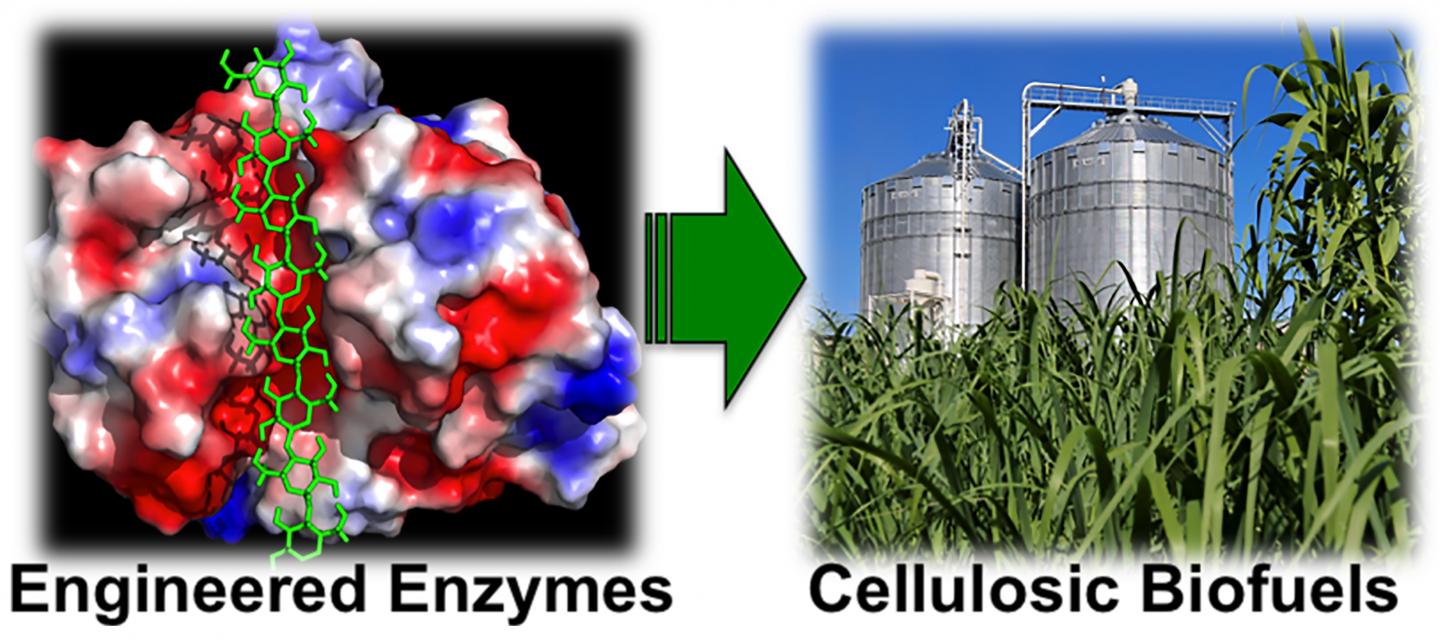
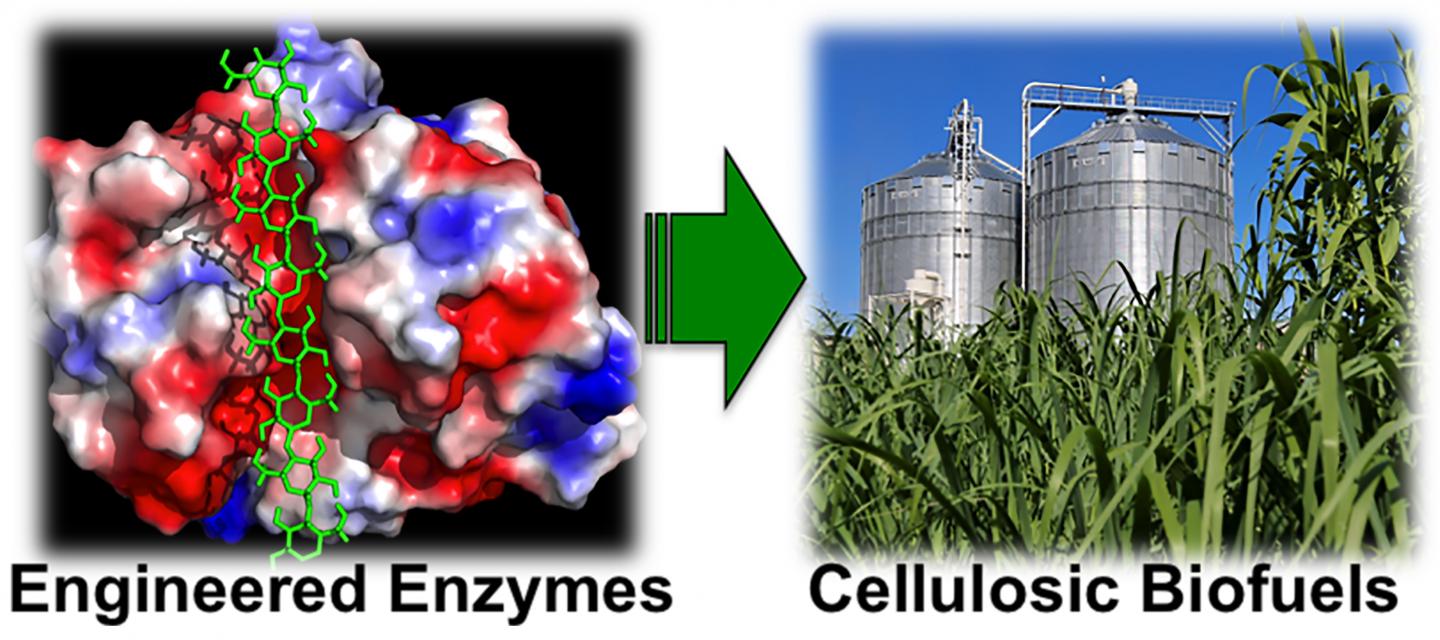
IMAGE

Credit: Shishir Chundawat/Rutgers University and U.S. Department of Energy.

Biofuels like the ethanol in U.S. gasoline could get cheaper thanks to experts at Rutgers University-New Brunswick and Michigan State University.

They've demonstrated how to design and genetically engineer enzyme surfaces so they bind less to corn stalks and other cellulosic biomass, reducing enzyme costs in biofuels production, according to a study published this month on the cover of the journal ACS Sustainable Chemistry & Engineering.

"The bottom line is we can cut down the cost of converting biomass into biofuels," said Shishir P. S. Chundawat, senior author of the study and an assistant professor in the Department of Chemical and Biochemical Engineering at Rutgers University-New Brunswick.

Typically, the enzymes tapped to help turn switchgrass, corn stover (corn stalks, leaves and other leftovers) and poplar into biofuels amount to about 20 percent of production costs, said Chundawat, whose department is in the School of Engineering. Enzymes cost about 50 cents per gallon of ethanol, so recycling or using fewer enzymes would make biofuels more inexpensive.

In the United States, gasoline typically contains up to 10 percent ethanol and corn grain is the primary feedstock of ethanol, according to the U.S. Energy Information Administration. Biorefineries produce about 15 billion gallons of ethanol a year.

In the last few years, some refineries began converting the inedible parts of corn plants into ethanol, Chundawat said.

"The challenge is breaking down cellulose (plant) material, using enzymes, into sugars that can be fermented into ethanol," he said. "So any advances on making the enzyme processing step cheaper will make the cost of biofuel cheaper. This is a fairly intractable problem that requires you to attack it from various perspectives, so it does take time."

Biomass contains lignin, an organic polymer that binds to and strengthens plant fibers. But lignin inactivates enzymes that bind to it, hampering efforts to reduce enzyme use and costs, according to Chundawat.

The Rutgers and Michigan State University researchers showed how specially designed enzymes (proteins) can limit their binding to and inactivation by lignin. That would ultimately lower enzyme use and make enzyme recycling feasible for biorefineries in the near future, Chundawat said.

###

The study's lead author is Professor Timothy Whitehead of Michigan State University. Other authors are Chandra K. Bandi, a doctoral student in Rutgers' Department of Chemical and Biochemical Engineering; Marissa Berger, an undergraduate student in Rutgers' Department of Biomedical Engineering; and Jihyun Park, a former undergraduate student in Rutgers' Department of Chemical and Biochemical Engineering. Professor Chundawat's ongoing research on engineering enzymes for enabling low-cost biofuel production is supported primarily by the National Science Foundation (NSF Awards #1236120 & #1604421).

Media Contact

Todd B. Bates
[email protected]
848-932-0550
@RutgersU

http://www.rutgers.edu

Original Source

http://news.rutgers.edu/research-news/cutting-cost-ethanol-other-biofuels-and-gasoline/20170630#.WVaP1IQrK70 http://dx.doi.org/10.1021/acssuschemeng.7b01202

############

Story Source: Materials provided by Scienmag

Share12Tweet8Share2ShareShareShare2

Related Posts

Do Your Genes Influence How Lifestyle Choices Affect Aging?

Do Your Genes Influence How Lifestyle Choices Affect Aging?

April 1, 2026
Combining Single-Cell Multiomics Unlocks Precise Identification of Rare Cell Types and States

Combining Single-Cell Multiomics Unlocks Precise Identification of Rare Cell Types and States

March 31, 2026

Genetically Engineered Marmosets Pave the Way for Advancements in Human Deafness Research

March 31, 2026

How Great Hammerhead Sharks Outsmart Ocean Temperature Swings: Insights from FIU Researchers

March 31, 2026
Please login to join discussion

POPULAR NEWS

  • blank

    Revolutionary AI Model Enhances Precision in Detecting Food Contamination

    96 shares
    Share 38 Tweet 24
  • Imagine a Social Media Feed That Challenges Your Views Instead of Reinforcing Them

    1006 shares
    Share 398 Tweet 249
  • Promising Outcomes from First Clinical Trials of Gene Regulation in Epilepsy

    51 shares
    Share 20 Tweet 13
  • Popular Anti-Aging Compound Linked to Damage in Corpus Callosum, Study Finds

    43 shares
    Share 17 Tweet 11

About

We bring you the latest biotechnology news from best research centers and universities around the world. Check our website.

Follow us

Recent News

Creating Desktop Particle Accelerators to Open New Frontiers in Scientific Research

Do Your Genes Influence How Lifestyle Choices Affect Aging?

Urban Systems and Traffic: Unequal Two-Way Links

Subscribe to Blog via Email

Enter your email address to subscribe to this blog and receive notifications of new posts by email.

Join 78 other subscribers
  • Contact Us

Bioengineer.org © Copyright 2023 All Rights Reserved.

Welcome Back!

Login to your account below

Forgotten Password?

Retrieve your password

Please enter your username or email address to reset your password.

Log In
No Result
View All Result
  • Homepages
    • Home Page 1
    • Home Page 2
  • News
  • National
  • Business
  • Health
  • Lifestyle
  • Science

Bioengineer.org © Copyright 2023 All Rights Reserved.