The challenge of targeting cancer cells while sparing healthy tissue has long bedeviled oncologists, making the pursuit of precision therapies one of the highest stakes areas in biomedical research today. A groundbreaking advancement by researchers at the University of Geneva (UNIGE) promises to revolutionize this field by leveraging synthetic DNA strands to engineer a sophisticated, “smart” drug delivery system. This system not only recognizes cancer cells with exceptional accuracy but also unleashes potent therapeutic agents exclusively at the tumor site, potentially redefining how cancer and other complex diseases are treated.
The cornerstone of modern oncology is the capacity to attack malignant cells selectively, minimizing collateral damage that causes debilitating side effects. Antibody–drug conjugates (ADCs), which marry the targeting specificity of monoclonal antibodies with cytotoxic drugs, have already marked a significant advance by directly homing in on cancer cells. Nevertheless, their bulky structure limits how deeply they penetrate tumors and caps the amount of drug payload they can deliver, leaving room for more efficient and flexible solutions.
Addressing these limitations, the UNIGE team has innovated with DNA-based components, which are considerably smaller than traditional antibodies. Their diminutive size facilitates enhanced mobility through the dense and often impenetrable tumor microenvironment. This innovation enables DNA strands to permeate tumor tissue more effectively, circumventing a key obstacle in the delivery of therapeutics to solid tumors.
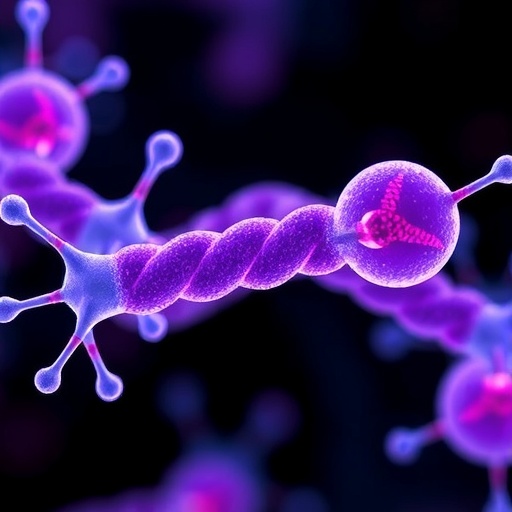
Central to this technology is a modular design where separate DNA strands carry distinct functionalities: two different cancer-targeting binder molecules and a highly cytotoxic payload. This modularity allows for a complex assembly process at the tumor site, driven by the presence of specific molecular markers unique to cancer cells. When two particular cancer biomarkers interact with their corresponding DNA-linked binders, the separate DNA fragments initiate a hybridization chain reaction, self-assembling into a larger structure that delivers an amplified dose of the drug precisely where needed.
This approach mirrors the principle of two-factor authentication in cybersecurity, where secure access requires two separate keys. Similarly, the drug delivery system activates only upon simultaneous recognition of both cancer markers. This “AND” logic gate mechanism ensures exceptional specificity, drastically reducing the risk of activating the drug in healthy tissue, where one or both markers are absent. The drug payload remains inert in the absence of this exact combination, thus sparing healthy cells and mitigating systemic toxicity.
Laboratory experiments have shown the system’s extraordinary precision. Cancerous cells bearing the two defined protein markers were selectively identified and targeted, resulting in the effective destruction of these malignant cells without affecting neighboring healthy cells. This precision heralds the potential for therapies that are not only more effective but also substantially safer for patients, alleviating the often debilitating side effects of conventional chemotherapy.
Beyond single-drug administration, the research demonstrates the capability to integrate multiple therapeutics within one treatment regime. By combining different cytotoxic agents in a single DNA-mediated delivery platform, this approach provides a strategic advantage in combating drug resistance, one of the most pervasive challenges in oncology. Tumors that evolve resistance to one class of drugs may be effectively targeted by a multipronged assault, thereby enhancing long-term treatment efficacy.
Professor Nicolas Winssinger, the study’s senior author, highlights the novel concept underlying this system: “What’s transformative here is that the drug molecule itself can ‘compute’ biological signals and respond intelligently.” Unlike traditional therapeutics passively delivered through the bloodstream, this new paradigm represents a shift towards autonomous, self-regulating medicines capable of logic-based decision-making at the molecular level.
This intelligent system employs fundamental logic operations analogous to those underpinning conventional computers—“AND,” “OR,” and “NOT” gates—but implemented through molecular interactions. The current proof-of-concept utilizes an “AND” gate, activating the drug only in the presence of two distinct biomarkers. This molecular computation not only enhances drug selectivity but also opens the doorway to future medicines layered with complex logic gates, capable of nuanced responses to the biochemical environment of each patient.
Looking forward, the integration of additional logic gates could give rise to programmable drugs with unparalleled sophistication, adjusting therapeutic delivery dynamically based on comprehensive molecular cues. Such adaptability could signify a watershed moment in personalized medicine, enabling treatments tailored at an unprecedented level to an individual’s unique disease signature and physiological state, all while minimizing side effects and improving patient outcomes.
These advances are not intended to replace medical professionals but to augment clinical decision-making by providing highly controllable, targeted therapeutics. As this technology matures, it holds the potential to transform the oncology landscape, making cancer therapies more precise, efficient, and patient-friendly. Moreover, the principles demonstrated here may extend beyond cancer, enabling the development of smart therapeutics for a broad spectrum of diseases where targeted drug delivery is critical.
Supported by the Swiss National Science Foundation and building on foundational work from the NCCR Chemical Biology program, the UNIGE research embodies a pioneering approach at the intersection of chemistry, biology, and information technology. Published in Nature Biotechnology, the study exemplifies the potential of molecular computing in medicine, laying groundwork for a future where treatments act with computational intelligence, internalizing and interpreting biological information to guide their action.
As the field progresses, this molecular logic-gated drug delivery system may catalyze a paradigm shift, ushering in an era where “smart” medicines not only fight disease more effectively but also adapt in real time to the complex, evolving biology of the human body. The promise of programmable, responsive therapeutics stands as a beacon of hope for patients worldwide, signaling a future where cancer and other fatal diseases can be treated with precision, potency, and personalized care.
Subject of Research:
DNA-based logic-gated drug delivery systems targeting cancer cells
Article Title:
DNA–drug conjugates enable logic-gated drug delivery amplified by hybridization chain reactions
News Publication Date:
27-Mar-2026
Web References:
http://dx.doi.org/10.1038/s41587-026-03044-0
Keywords:
Cancer targeting, DNA–drug conjugates, hybridization chain reaction, logic-gated drug delivery, molecular computing, targeted therapy, synthetic DNA, personalized medicine, tumor specificity, drug resistance, oncology, smart therapeutics
Tags: advancements in antibody-drug conjugatesDNA nanotechnology in medicineDNA-based therapeutic agentsinnovative cancer drug carriersminimizing side effects in cancer treatmentovercoming tumor microenvironment barriersprecision cancer therapiesselective tumor targeting methodssmart drug delivery systems for cancersynthetic DNA in oncologytargeted cancer cell recognitionUniversity of Geneva cancer research