A prospective observational study has demonstrated that patient-specific three-dimensional printed partial femoral head arthroplasty provides substantial pain relief and functional recovery for individuals with peri-collapse osteonecrosis of the femoral head. Conducted across a mean follow-up of 24.5 months, the research evaluated whether lesion-specific resection and individualized reconstruction could preserve viable bone and joint mechanics. Patients undergoing the procedure achieved significant gains in hip mobility and daily physical function, offering initial evidence for an alternative surgical strategy when conventional joint-preserving options cannot restore femoral head integrity.
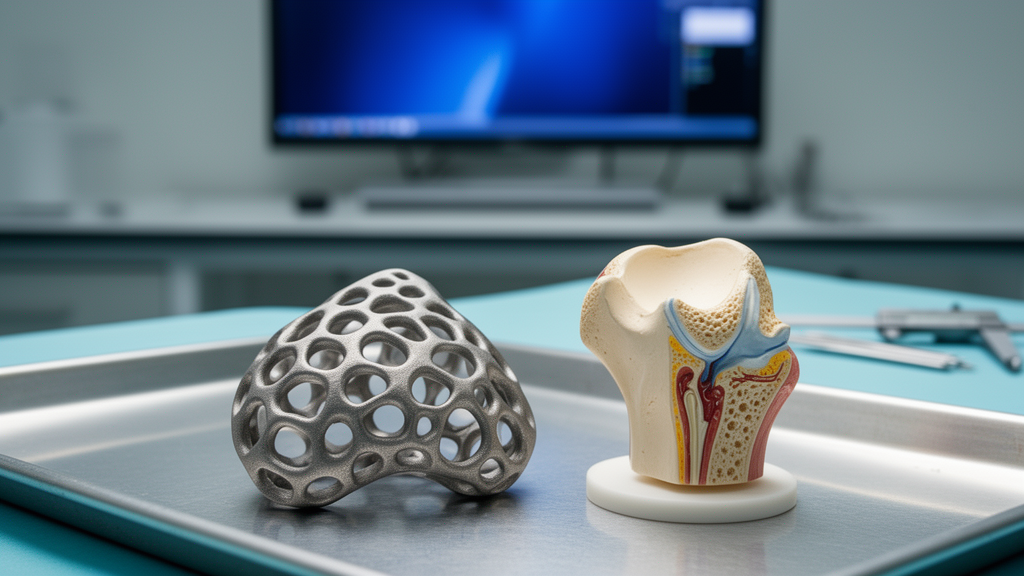
Preserving natural hip anatomy in patients with peri-collapse osteonecrosis of the femoral head remains a difficult challenge in orthopaedic surgery. When osteonecrotic lesions compromise structural support and articular congruity, traditional hip-preserving procedures frequently fail to restore mechanical stability. To address these limitations, investigators developed a patient-specific 3D-printed partial femoral head arthroplasty. The rationale behind this design was to enable targeted resection confined strictly to damaged bone while reconstructing the articular surface, thereby shielding viable native bone and the acetabulum from unnecessary removal.
The surgical approach relied on digital mapping and personalized manufacturing protocols before operative intervention. Preoperative computed tomography scans were acquired for each patient to generate precise three-dimensional anatomical reconstructions of the hip joint. Using these computer models, the surgical team customized both the partial prosthesis and dedicated patient-specific surgical guides. This planning aimed to ensure accurate positioning, secure alignment, and precise boundary resection during surgery, directly matching the unique contour of each patient’s necrotic lesion and native joint anatomy.
The clinical study evaluated a consecutive series of 31 symptomatic patients with peri-collapse osteonecrosis of the femoral head treated between November 2022 and June 2025. Standardized clinical evaluations and radiographic surveillance were conducted over a mean follow-up period of 24.5 ± 8.0 months. Investigators measured pain using the visual analogue scale, assessed hip performance with the Harris Hip Score and Oxford Hip Score, tracked range of motion, and recorded overall health status with the EQ-5D-5L visual analogue scale. Postoperative radiographs were examined to verify implant position, monitor acetabular changes, and detect radiographic complications.
Across the cohort, clinical assessments demonstrated significant functional improvements and pain reduction at final follow-up. The mean visual analogue scale pain score dropped from 7.3 ± 0.7 preoperatively to 2.4 ± 1.7. Concurrently, the mean Harris Hip Score improved from 51.3 ± 6.6 to 87.2 ± 10.2, with both improvements reaching statistical significance at P < 0.001. At final assessment, the mean Oxford Hip Score reached 41.1 ± 3.1, while the mean EQ-5D-5L visual analogue scale score was 79.7 ± 10.6. Overall, 27 patients (87.1 percent) reported being very or moderately satisfied with the outcome.
Postoperative monitoring identified several adverse events and revision procedures during follow-up. Two patients required revision surgery to total hip arthroplasty, and three other individuals reported ongoing residual pain. Follow-up examinations and radiographic reviews also revealed cases of heterotopic ossification, suspected progression of acetabular osteoarthritis, and one incisional infection requiring surgical debridement. Importantly, the team observed no instances of periprosthetic joint infection, joint dislocation, aseptic implant loosening, or periprosthetic fracture throughout the study period.
The authors concluded that patient-specific 3D-printed partial femoral head replacement is a feasible hip-preserving approach for carefully selected patients with peri-collapse osteonecrosis of the femoral head. By combining lesion-specific resection with individualized structural and articular reconstruction, the technique substantially improved pain and hip function while conserving native bone and the acetabulum. However, the researchers emphasized that longer-term follow-up and comparative trials remain necessary to confirm the durability, implant longevity, and definitive clinical role of this personalized surgical approach.
Subject of Research: Patient-specific 3D-printed partial femoral head replacement for peri-collapse osteonecrosis
Article Title: Patient-specific 3D-printed partial femoral head replacement for peri-collapse osteonecrosis of the femoral head: a prospective observational study of early clinical outcomes
Article References: Liu, F., Li, T., Gao, J., Duan, Y., Peng, Y., Huang, C., Ding, R., Wang, W., Liu, Z., & Zhang, Q. (2026). Patient-specific 3D-printed partial femoral head replacement for peri-collapse osteonecrosis of the femoral head: a prospective observational study of early clinical outcomes. Journal of Orthopaedic Surgery and Research. https://doi.org/10.1186/s13018-026-07392-0
Image Credits: AI Generated
DOI: 10.1186/s13018-026-07392-0
Keywords: osteonecrosis of the femoral head, 3D-printed implants, partial femoral head arthroplasty, hip preservation, peri-collapse ONFH, computed tomography, surgical guide design, Harris Hip Score, visual analogue scale, Oxford Hip Score, range of motion, total hip arthroplasty, heterotopic ossification, acetabular osteoarthritis, orthopaedic surgery, prospective observational study, EQ-5D-5L
News Source: Ophelia Keating. (November 21, 2026). Custom 3D-Printed Partial Implants Improve Hip Function in Early Osteonecrosis Study. Scienmag.