Undergraduate physiotherapy students perceive curriculum-integrated, high-complexity simulation-based education as a meaningful, situated learning experience that reinforces reflection, knowledge integration, and application while advancing their non-technical competencies and confidence.
The investigation was designed to address a recognized challenge in physiotherapy education, where traditional clinical placements offer essential practical experience but may not fully prepare students for the unpredictability and complexity of real-world healthcare settings. By examining student experiences through the theoretical lens of experiential learning theory, the researchers evaluated how integrating high-complexity simulation into the formal curriculum creates a safe, realistic, and structured educational environment.
Conducted at the Faculty of Health Sciences and Wellbeing within the University of Vic – Central University of Catalonia in Spain, the study recruited twenty-eight undergraduate physiotherapy students. The cohort included individuals from the second, third, and fourth academic years, specifically representing the fourth, sixth, and eighth semesters of study. Researchers utilized purposive sampling to encompass participants across diverse academic stages and varying simulation assignments, including both active practitioner roles and observer positions across six focus groups held between June and October 2024.
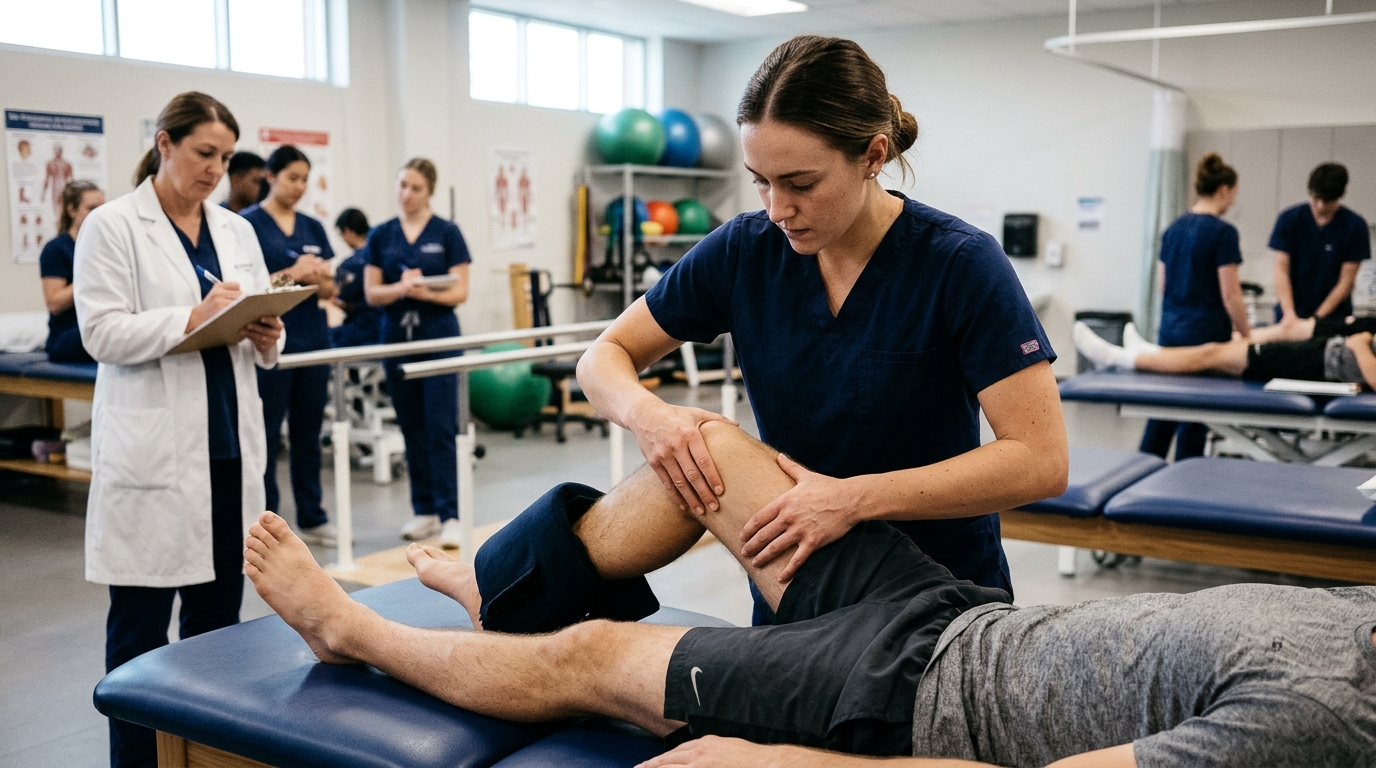
The educational intervention embedded high-complexity simulation sessions directly within the physiotherapy curriculum, utilizing trained simulated patients alongside structured facilitation. To analyze participants’ reported experiences, investigators applied reflexive thematic analysis to focus group discussions, subsequently mapping themes to experiential learning theory. Data management was conducted using ATLAS.ti software, and qualitative rigor was maintained by returning transcripts to student participants for member checking. The study protocol was registered on clinicaltrials.gov under the identifier NCT06852482.
The thematic analysis identified two primary domains: constructing non-technical skills through action, observation, and reflection, and experiencing safety and immersion. Participants indicated that both active performance and observation roles provided substantial educational value, with observation distinctly promoting reflection, vicarious learning, and reduced performance anxiety. Furthermore, structured debriefings, progressive exposure, and peer feedback reinforced skill acquisition, while facilitator guidance and psychological safety fostered learner confidence. Students also reported that simulated patients heightened authenticity and emotional immersion, noting the potential value of simulated patients contributing direct feedback.
Subject of Research: Experiential learning and non-technical skill development in undergraduate physiotherapy simulation-based education
Article Title: Physiotherapy students’ experiential learning through curriculum-integrated high-complexity simulation: a qualitative study
Article References: Ochandorena-Acha, M., Escribà-Salvans, A., Jolis-Prat, R., Briones-Buixassa, L., Vaqué-Crusellas, C., Rierola-Fochs, S., Oliveira, V. R., & Terradas-Monllor, M. (2026). Physiotherapy students’ experiential learning through curriculum-integrated high-complexity simulation: a qualitative study. Advances in Simulation, 11(1), Article 83. https://doi.org/10.1186/s41077-026-00474-3
Image Credits: AI Generated
DOI: 10.1186/s41077-026-00474-3
Keywords: physiotherapy education, simulation-based education, experiential learning, clinical simulation, non-technical skills, qualitative research, thematic analysis, health sciences, Physiotherapy, students, experiential, learning
News Source: Courtney Benton. (November 7, 2026). Curriculum-Integrated Clinical Simulations Support Experiential Learning in Physiotherapy Students. Scienmag.