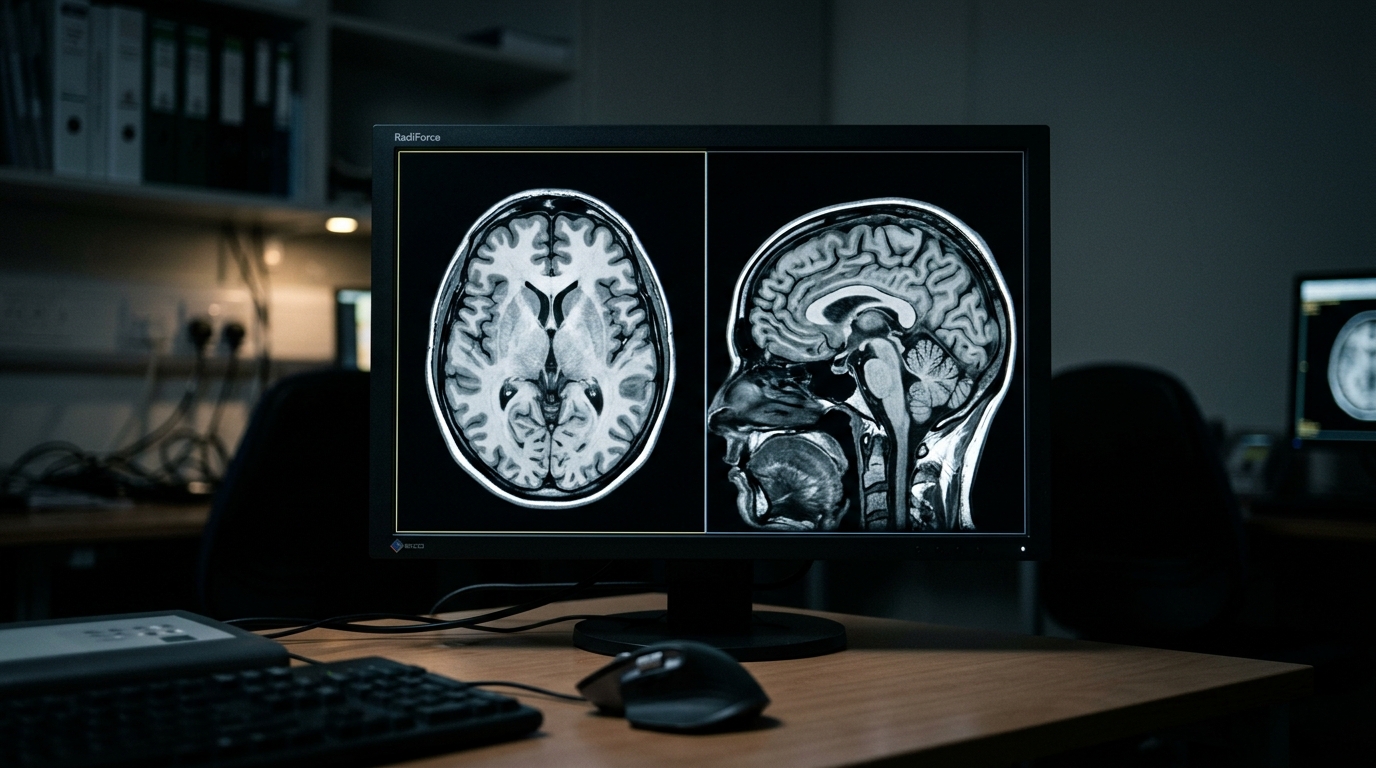
A systematic benchmarking study evaluating machine learning and deep learning methods on a curated brain-tumor magnetic resonance imaging dataset has revealed how dataset curation and model-specific training strategies substantially alter classification performance. Published in the Journal of Medical and Biological Engineering by researchers Catarina Bota, Maria Inês Barbosa, and Pedro Miguel Rodrigues, the investigation addressed longstanding interpretation challenges in medical image analysis. Performance comparisons in reported brain-tumor classification benchmarks have frequently been confounded by heterogeneous datasets, inconsistent train–test partitions, and unreported duplicate-image leakage across evaluation pipelines.
To establish a reliable baseline comparison, the researchers systematically evaluated major methodological families using a curated partition derived from the BRISC 2025 dataset. Following extensive dataset curation and image-level quality control procedures, 5,041 total magnetic resonance images remained viable for the benchmarking workflow. The curated framework allowed the researchers to directly compare diverse algorithmic architectures under a shared evaluation protocol, minimizing confounding factors that historically undermined comparative reproducibility in automated brain tumor identification.
The evaluation incorporated handcrafted-feature machine learning pipelines, a custom convolutional neural network trained entirely from scratch, transfer-learning backbone architectures, and deep-classical hybrid models. The established evaluation protocol relied on a dedicated 678-image test set that retained the dataset’s original filtering. The authors noted as a methodological consideration that the specific effect of this original filtering on the overall classification difficulty of the test partition remains unknown within the benchmark.
Standardized benchmarking demonstrated a clear progression in classification accuracy across algorithmic paradigms. The highest-performing classical machine learning pipeline achieved an accuracy of 90.7 percent. Performance increased when transitioning to deep architectures, with the custom convolutional neural network reaching an accuracy of 93.8 percent when trained from scratch. Transfer learning delivered the strongest standardized baseline, where the VGG16 backbone achieved an accuracy of 97.9 percent on the standardized test evaluation.
The researchers also evaluated hybrid modeling approaches that combined deep feature extraction with classical decision heads. An exploratory hybrid architecture pairing VGG16 with LightGBM achieved a top classification accuracy of 98.67 percent. However, the study highlighted an important methodological caveat regarding this result: the classification head was selected directly on the evaluation test set from among seven candidate configurations, qualifying the observed accuracy gains over strong softmax baselines as exploratory rather than definitively generalizable.
A separate exploratory optimization study focused on the EfficientNet architecture demonstrated that classification accuracy exhibits substantial sensitivity to the chosen training strategy, reaching accuracies of up to 98.82 percent under specialized configurations. Further experiments examined the behavior of ResNet50 across three random training seeds to evaluate sensitivity to training-set curation and training protocols, comparing uniform training protocols against adapted protocols across two complete pretraining-and-fine-tuning configurations that combined source-specific weights and preprocessing.
The ResNet50 evaluations showed marked sensitivity to procedural configurations. Under uniform training protocols, the two evaluated configurations yielded mean classification accuracies of 97.54 percent and 86.04 percent. When adapted training protocols were applied to accommodate model-specific requirements, the observed performance increased substantially, yielding mean accuracies of 98.57 percent and 98.43 percent across the training seeds, underscoring how procedural adjustments alter benchmark outcomes.
The investigators concluded that observed performance differences involving different pretraining sources reflect complete pretraining-and-fine-tuning configurations rather than isolated characteristics of pretraining corpora. The findings indicate that hybrid performance advantages over standardized softmax baselines remain exploratory, while model-specific tuning profoundly influences measured accuracy. Consequently, the authors emphasized that transparent dataset curation and standardized evaluation protocols are essential for drawing valid comparative conclusions in brain tumor magnetic resonance imaging classification.
Subject of Research: Benchmarking brain-tumor MRI classification methods on a curated dataset partition
Article Title: Benchmarking Brain-Tumor MRI Classification Methods on a Curated BRISC 2025 Partition
Article References: Bota, C., Barbosa, M. I., & Rodrigues, P. M. (2026). Benchmarking Brain-Tumor MRI Classification Methods on a Curated BRISC 2025 Partition. Journal of Medical and Biological Engineering. https://doi.org/10.1007/s40846-026-01065-3
Image Credits: AI Generated
DOI: 10.1007/s40846-026-01065-3
Keywords: brain tumor classification, magnetic resonance imaging, BRISC 2025, benchmarking, deep learning, convolutional neural networks, VGG16, ResNet50, EfficientNet, LightGBM, transfer learning, dataset curation, data leakage, medical image analysis, image classification, machine learning
News Source: Cassandra Pierce. (November 13, 2026). Curated Brain-Tumor MRI Benchmark Highlights Dataset Curation and Training Strategy Sensitivity. Scienmag.