


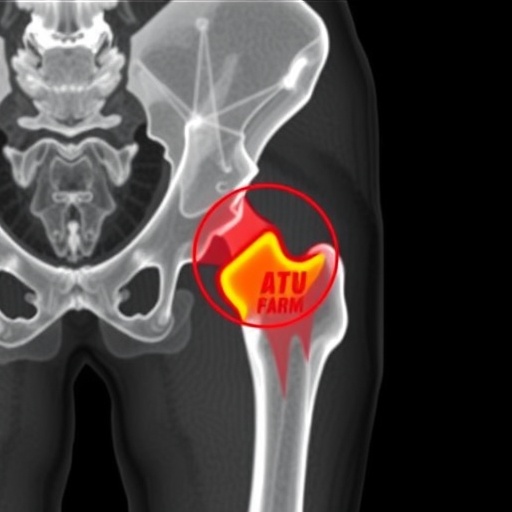
In a noteworthy advancement within orthopedic research, a recent study led by Ye, Hao, and Dong investigates the predictive capabilities of proximal femoral computed tomography (CT) attenuation in determining the risk of intramedullary fixation failure in patients suffering from intertrochanteric fractures. This retrospective cohort analysis, published in Archives of Osteoporosis in 2026, sheds light on the significant implications of imaging technology in the realm of fracture management and orthopedic surgery outcomes. The exploration of whether CT attenuation can serve as a reliable biomarker for postoperative complications is timely and critical, given the rising incidence of hip fractures due to increased longevity and aging populations.
Intertrochanteric fractures, commonly occurring in older adults, particularly those with osteoporosis, pose surgical challenges that can result in complications, including fixation failure. The management of these fractures typically involves intramedullary nailing, a technique that has become standard practice due to its minimally invasive nature and favorable outcomes. However, the risk of failure remains a concern, and medical professionals continuously seek to enhance predictive methods that could improve surgical success rates. The use of CT scans provides a detailed analysis of bone density and structural integrity, vital factors that may influence the stability of the fixation.
In their investigation, the researchers utilized a cadre of CT measurements to quantify the attenuation of cortical bone in the proximal femur. This CT attenuation, measured in Hounsfield units (HU), serves as a surrogate marker for bone quality and density. Astonishingly, the findings reveal that lower CT attenuation values correlate significantly with higher rates of fixation failure. These compelling data suggest that assessment of bone quality through CT imaging preoperatively can provide key insights into patient eligibility for surgery and potentially improve surgical planning.
It is essential to contextualize the study within the broader framework of existing literature linking bone quality to surgical outcomes. Previous studies have evaluated various modalities for assessing bone health, including dual-energy X-ray absorptiometry (DEXA) and ultrasonographic measures. However, the precision of CT imaging allows for an unparalleled three-dimensional evaluation of the proximal femur, thereby offering nuanced insights that two-dimensional imaging techniques may overlook. The retrospective nature of this study provides a strong foundation, leveraging existing clinical data to establish a correlation that can guide future prospective studies.
The significance of this research transcends academic interest; it harbors implications for clinical practices surrounding fracture management. Surgeons often rely on subjective measures and general assessments to determine the best course of action for patients with intertrochanteric fractures. However, the introduction of an objective measurement tool such as proximal femoral CT attenuation could revolutionize decision-making processes, effectively stratifying patients based on their fracture risk profiles and enabling tailored treatment plans.
Equally important is the potential economic impact of implementing CT attenuation measurements into preoperative evaluations. Decreasing fixation failures and improving surgical outcomes can lower the associated healthcare costs significantly. Repeat surgeries, extended hospital stays, and rehabilitation after failed fixations strain not only healthcare resources but also impact patient quality of life. By mitigating these risks through better preoperative assessments, healthcare systems could improve resource allocation and patient-centric care.
As is often the case in medical research, the findings raise further questions deserving examination. One area ripe for investigation is the interplay between CT attenuation and various demographic variables such as age, sex, and pre-existing conditions that affect bone metabolism, such as diabetes or chronic steroid use. Understanding how these factors interact with CT attenuation values could provide even more granular insight into patient risk stratification and foster personalized treatment approaches.
Moreover, there exists the tantalizing question of whether interventions aimed at improving bone density—such as pharmacotherapy, nutritional supplementation, and weight-bearing exercises—could translate into measurable changes in CT attenuation and, consequently, surgical outcomes. As bone health continues to gain attention in geriatric medicine, this could inspire a novel interdisciplinary approach that combines surgery with integrative therapeutics.
The study’s limitations, including its retrospective design and the absence of a multicenter component, prompt due caution in extrapolating the findings universally. It is imperative for subsequent studies to aim for larger sample sizes and varying populations to ascertain the robustness of CT attenuation as a predictive marker. A randomized controlled trial methodology could offer rigorous insights and validate these promising findings while exploring the applicability across diverse clinical settings.
In sum, the groundbreaking research by Ye et al. illuminates the value of proximal femoral CT attenuation in anticipating fixation failure in intertrochanteric fractures. As the surgical community evaluates novel avenues for enhancing patient outcomes, this study stands as a testament to the transformative role of technology in surgery. The integration of bone quality assessments into surgical planning is not merely a theoretical proposition; it is a practical innovation beckoning adoption in clinical practice. In a field where outcomes are paramount, embracing such advancements may well redefine standards of care moving forward.
As this significant body of work circulates within academic and clinical spheres, it creates fertile ground for further discussion about the implications of imaging science in orthopedic surgery. It challenges established paradigms while articulating the vital relationship between technological innovation and improved patient outcomes. The conversation surrounding CT attenuation will not only shape future research trajectories but also inspire changes in clinical approaches to fracture management, thus positioning it as a cornerstone of orthopedic care in the years to come.
Subject of Research: Proximal femoral CT attenuation and its predictive value in intramedullary fixation failure.
Article Title: The predictive value of proximal femoral CT attenuation in intramedullary fixation failure of intertrochanteric fractures: a retrospective cohort analysis.
Article References: Ye, K., Hao, Y., Dong, Y. et al. The predictive value of proximal femoral CT attenuation in intramedullary fixation failure of intertrochanteric fractures: a retrospective cohort analysis.
Arch Osteoporos 21, 15 (2026). https://doi.org/10.1007/s11657-025-01651-z
Image Credits: AI Generated
DOI: https://doi.org/10.1007/s11657-025-01651-z
Keywords: CT attenuation, intramedullary fixation, intertrochanteric fractures, bone density, orthopedic surgery.
Tags: aging populations and fracture incidenceCT attenuation in hip fracturesenhancing surgical success rates in elderly patientsevaluating bone density with CT scansintertrochanteric fracture managementintramedullary fixation failure riskminimally invasive hip fracture treatmentsorthopedic imaging technology advancementsosteoporosis and hip fracture implicationspostoperative complications in hip surgerypredictive biomarkers for surgical outcomesretrospective cohort analysis in orthopedics



