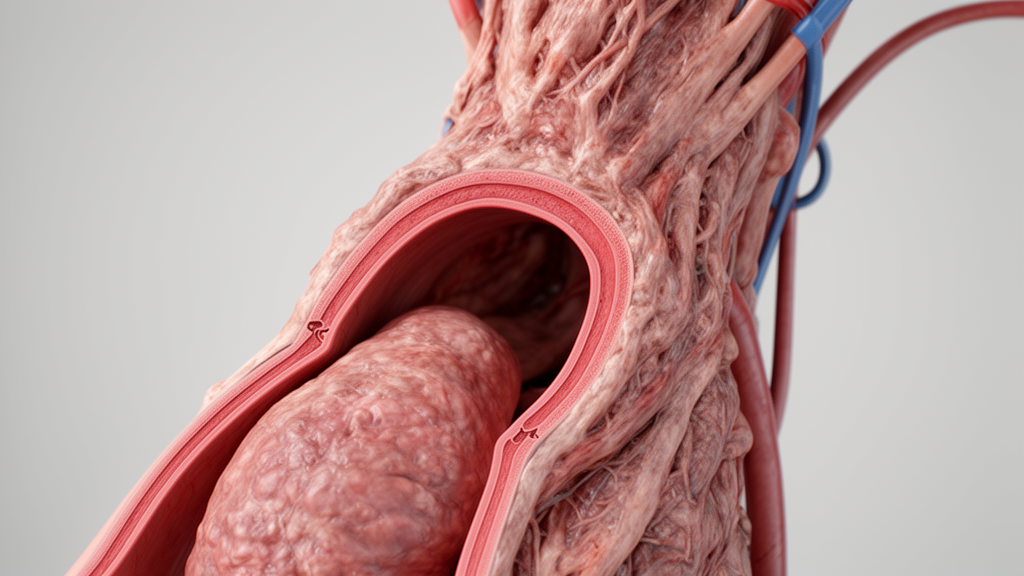
In a retrospective study analyzing 15 patients diagnosed with fibrosing mediastinitis at a single Chinese tertiary center, researchers found that computed tomography-derived pulmonary artery diameter did not predict hemodynamic severity, showing no statistically significant correlation with echocardiographic pulmonary artery systolic pressure measurements. The exploratory investigation, which examined patient records between January 2012 and December 2022, also identified cough and sputum production as prominent clinical manifestations that may be associated with bronchial anthracofibrosis.
Fibrosing mediastinitis is a rare disorder characterized by progressive fibrotic proliferation within the mediastinum, an abnormal tissue growth that leads to the compression of vital mediastinal structures. Because published clinical data from Asian populations remain limited, the researchers conducted this retrospective evaluation to clarify the clinical features, imaging findings, and treatment outcomes of patients treated for the condition at their medical institution.
The study cohort comprised 15 patients with an overall mean age of 58 years and an age range spanning from 3 to 82 years, with male individuals accounting for 46.7 percent of the group. Because of the small sample size available for evaluation, the study authors emphasized that all analytical assessments were exploratory and hypothesis-generating in nature, and they confirmed that no confirmatory hypothesis testing was conducted during the research.
Respiratory symptoms were widespread throughout the patient group, with dyspnea documented as the predominant complaint in 86.7 percent of individuals, corresponding to a 95 percent confidence interval of 59.5 to 98.3 percent. In addition, cough was recorded in 80.0 percent of the cohort with a 95 percent confidence interval of 51.9 to 95.7 percent, and sputum production was similarly documented in 80.0 percent of patients with an identical 95 percent confidence interval of 51.9 to 95.7 percent.
The clinical evaluations also revealed concurrent respiratory conditions among the analyzed cases, with bronchial anthracofibrosis identified in 33.3 percent of the patient cohort and active pulmonary infections documented in 40.0 percent of the individuals. The investigators noted that the prominent presentation of cough and sputum in this Chinese cohort may be associated with the presence of bronchial anthracofibrosis, highlighting the importance of noting these specific co-occurring airway findings.
Echocardiographic assessments suggested the presence of pulmonary hypertension, defined by an estimated pulmonary artery systolic pressure exceeding 25 mmHg, in 9 of the 11 patients who underwent the examination, representing 81.8 percent of that evaluated subgroup. However, when the authors evaluated the relationship between imaging parameters and hemodynamic indicators, no statistically significant correlation was identified between computed tomography-measured pulmonary artery diameter and echocardiographic pulmonary artery systolic pressure, yielding a Spearman rank correlation coefficient of 0.139 and a p-value of 0.702.
Among the 11 patients who had documented treatment outcomes in the medical records, one individual who received Selexipag reported symptom relief, while two individuals who received anticoagulation showed no observed clinical benefit. The researchers explicitly noted that these clinical observations are based on very limited patient numbers and do not support claims of treatment efficacy, concluding that their exploratory findings regarding imaging limitations and clinical presentations require validation in larger prospective studies.
Subject of Research: Clinical features and imaging correlations in fibrosing mediastinitis
Article Title: Clinical features, imaging findings, and treatment outcomes of fibrosing mediastinitis: a single-center retrospective analysis of 15 patients with narrative literature review
Article References: Dang, Y., Wang, C., Li, X., Li, Z., Chen, C., Luo, J., Wang, K., & Kong, J. (2026). Clinical features, imaging findings, and treatment outcomes of fibrosing mediastinitis: a single-center retrospective analysis of 15 patients with narrative literature review. Journal of Cardiothoracic Surgery. https://doi.org/10.1186/s13019-026-04709-2
Image Credits: AI Generated
DOI: 10.1186/s13019-026-04709-2
Keywords: fibrosing mediastinitis, pulmonary hypertension, pulmonary artery diameter, echocardiography, computed tomography, pulmonary artery systolic pressure, bronchial anthracofibrosis, dyspnea, cough, sputum, Selexipag, anticoagulation, mediastinal fibrosis, pulmonary infections, retrospective cohort study, hemodynamic severity, thoracic surgery
News Source: Ophelia Keating. (November 20, 2026). CT Artery Diameter Does Not Predict Hemodynamic Severity in Fibrosing Mediastinitis. Scienmag.