Washington, DC – August 31, 2018 – In an unexpected research finding infections with the intestinal parasite, Cryptosporidium parvum, worsened in mice that had been given a probiotic. The research was published in Applied and Environmental Microbiology, a journal of the American Society for Microbiology.
As compared to control mice, the probiotic-consuming mice excreted more parasites in their feces, and their intestinal microflora were different from those of the control mice. However, both sets of microflora were composed of genera that normally are present in the gut, and the mechanisms responsible for the observed probiotic effect are unclear, said corresponding author, Giovanni Widmer, PhD, whose graduate student, Bruno Oliveira, ran the experiments.
Contrary to expectations, "we found that consumption of a commercially available probiotic actually increased the severity of the infection," said Dr. Widmer, who is Professor of Infectious Disease & Global Health, Cummings School of Veterinary Medicine, Tufts University, North Grafton, MA.
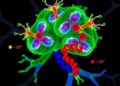
Cryptosporidiosis is a major cause of infant diarrhea in developing nations. It killed an estimated 48,000 people worldwide in 2016, and caused the loss of more than 4.2 million disability-adjusted life-years, according to The Lancet, a medical journal. There are neither drugs to treat cryptosporidiosis, nor vaccines to prevent it. (image: high magnification micrograph of cryptosporidium infection, Wikimedia Commons)
Antibiotics, which often perturb or even deplete the normal intestinal microbiota, can thus render individuals more vulnerable to intestinal infections. Conversely, a healthy microbiome can prevent such infections, or reduce their severity. Reasoning along these lines, the researchers posited that a probiotic containing live microorganisms that are found in healthy intestines could reduce the severity of cryptosporidiosis in a mouse model.
"Mitigating the disease's severity may be sufficient to prevent diarrhea, or shorten its duration, and enable the immune system to naturally control the infection," said Dr. Widmer.
Despite an outcome that was contrary to the working hypothesis, the results demonstrate that it may be possible to develop probiotics to mitigate cryptosporidiosis. Prior to the experiment, "we didn't know if cryptosporidium growth in the gut could be affected by diet," said Dr. Widmer. "The goal is now to find a mechanistic link between microflora and cryptosporidium proliferation, and ultimately design a simple nutritional supplement which helps the body fight the infection."
"Identifying specific mechanisms that alter pathogen virulence in response to diet may enable the development of simple pre- or probiotics capable of modifying the composition of the microbiota to reduce the severity of cryptosporidiosis," said Dr. Widmer.
###
The American Society for Microbiology is the largest single life science society, composed of more than 30,000 scientists and health professionals. ASM's mission is to promote and advance the microbial sciences.
ASM advances the microbial sciences through conferences, publications, certifications and educational opportunities. It enhances laboratory capacity around the globe through training and resources. It provides a network for scientists in academia, industry and clinical settings. Additionally, ASM promotes a deeper understanding of the microbial sciences to diverse audiences.
Media Contact
Aleea Khan
[email protected]
202-942-9365
@ASMnewsroom
http://www.asm.org