Owning cryptocurrency may be associated with certain personality and demographic characteristics as well as a reliance on alternative or fringe social media sources, according to a study published July 3, 2024 in the open-access journal PLOS ONE by Shane Littrell from the University of Toronto, Canada, along with colleagues from the University of Miami, USA.
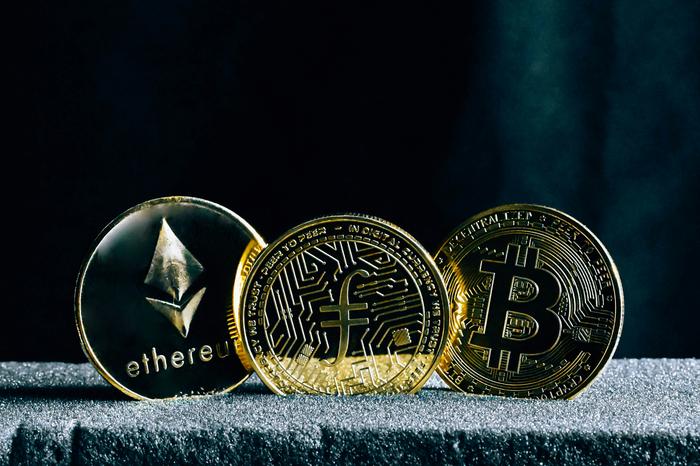
Credit: Traxer, Unsplash, CC0 (https://creativecommons.org/publicdomain/zero/1.0/)
Owning cryptocurrency may be associated with certain personality and demographic characteristics as well as a reliance on alternative or fringe social media sources, according to a study published July 3, 2024 in the open-access journal PLOS ONE by Shane Littrell from the University of Toronto, Canada, along with colleagues from the University of Miami, USA.
Anonymous trading and unregulated markets hallmark cryptocurrency’s unique subculture. While some consider the digital currency to be financially unreliable, hundreds of millions of global investors think otherwise.
This study identified various political, psychological, and social characteristics differentiating crypto investors from those who abstain. Existing studies (which generally include smaller sample sizes) profile crypto owners as psychologically non-normative and politically non-mainstream.
To test this, Littrell and colleagues polled 2,001 American adults in 2022, about 30% of whom responded “Yes” to owning or having owned crypto. Participants reported demographic information and other responses revealing their political, psychological, and social traits. The researchers conducted several bivariate (two-variable) correlational analyses, which measured how strongly crypto ownership is associated with other variables individually, as well as a multivariate (multi-variable) regression analysis, which attempts to identify the variables that are most important for predicting cryptocurrency ownership.
The correlational analyses showed that crypto ownership is associated with belief in conspiracy theories, support of political extremism, identification with non-left-right political orientations (e.g., Christian nationalism), and the “Dark Tetrad” of personality traits (narcissism, Machiavellianism, psychopathy, and sadism).
The more holistic analysis revealed which self-reported qualities are most likely to predict crypto ownership, the most strongly associated factor being a reliance on fringe social media sources for news. Other strongly associated characteristics included maleness, argumentativeness, higher income, and feelings of victimhood.
Across all survey data, crypto owners reported diverse political orientations and identities with a mix of left and right leanings.
The researchers acknowledge that the correlations they identified are limited by their sample of participants and the fact that they self-reported their characteristics, and cannot be interpreted as causal. Because of the strong correlation between social media and crypto ownership, they encourage future research into the influence of specific media or rhetoric on crypto ownership.
The authors add: “Though our results certainly do not apply to every crypto user out there, on average, we found that crypto investment and ownership tends to appeal to people who are more argumentative, anti-authoritarian, and prefer to get their news from non-mainstream social media sites. There is still much work to be done in this area, but we hope our study helps lay the groundwork for future research aimed at understanding the psychological, political, and behavioral factors associated with this growing financial movement.”
#####
In your coverage please use this URL to provide access to the freely available article in PLOS ONE: https://journals.plos.org/plosone/article?id=10.1371/journal.pone.0305178
Citation: Littrell S, Klofstad C, Uscinski JE (2024) The political, psychological, and social correlates of cryptocurrency ownership. PLoS ONE 19(7): e0305178. https://doi.org/10.1371/journal.pone.0305178
Author Countries: Canada, USA
Funding: This work was supported by the National Science Foundation (#2123635). The funders had no role in study design, data collection and analysis, decision to publish, or preparation of the manuscript.
Journal
PLoS ONE
DOI
10.1371/journal.pone.0305178
Method of Research
Survey
Subject of Research
Not applicable
Article Title
The political, psychological, and social correlates of cryptocurrency ownership
Article Publication Date
3-Jul-2024
COI Statement
The authors have declared that no competing interests exist.