• HOME
  • NEWS
  • EXPLORE
    • CAREER
      • Companies
      • Jobs
    • EVENTS
    • iGEM
      • News
      • Team
    • PHOTOS
    • VIDEO
    • WIKI
  • BLOG
  • COMMUNITY
    • FACEBOOK
    • INSTAGRAM
    • TWITTER
Sunday, November 8, 2026
BIOENGINEER.ORG
No Result
View All Result
  • Login
  • HOME
  • NEWS
  • EXPLORE
    • CAREER
      • Companies
      • Jobs
        • Lecturer
        • PhD Studentship
        • Postdoc
        • Research Assistant
    • EVENTS
    • iGEM
      • News
      • Team
    • PHOTOS
    • VIDEO
    • WIKI
  • BLOG
  • COMMUNITY
    • FACEBOOK
    • INSTAGRAM
    • TWITTER
No Result
View All Result
Bioengineer.org
No Result
View All Result
Home NEWS Science News Health

Cross-Validation Exposes Inflated Effect Size Estimates in Brain Association Studies

by
November 8, 2026
in Health
Reading Time: 2 mins read
0
Cross-Validation Exposes Inflated Effect Size Estimates in Brain Association Studies

Cross-Validation Exposes Inflated Effect Size Estimates in Brain Association Studies

Share on FacebookShare on TwitterShare on LinkedinShare on RedditShare on Telegram

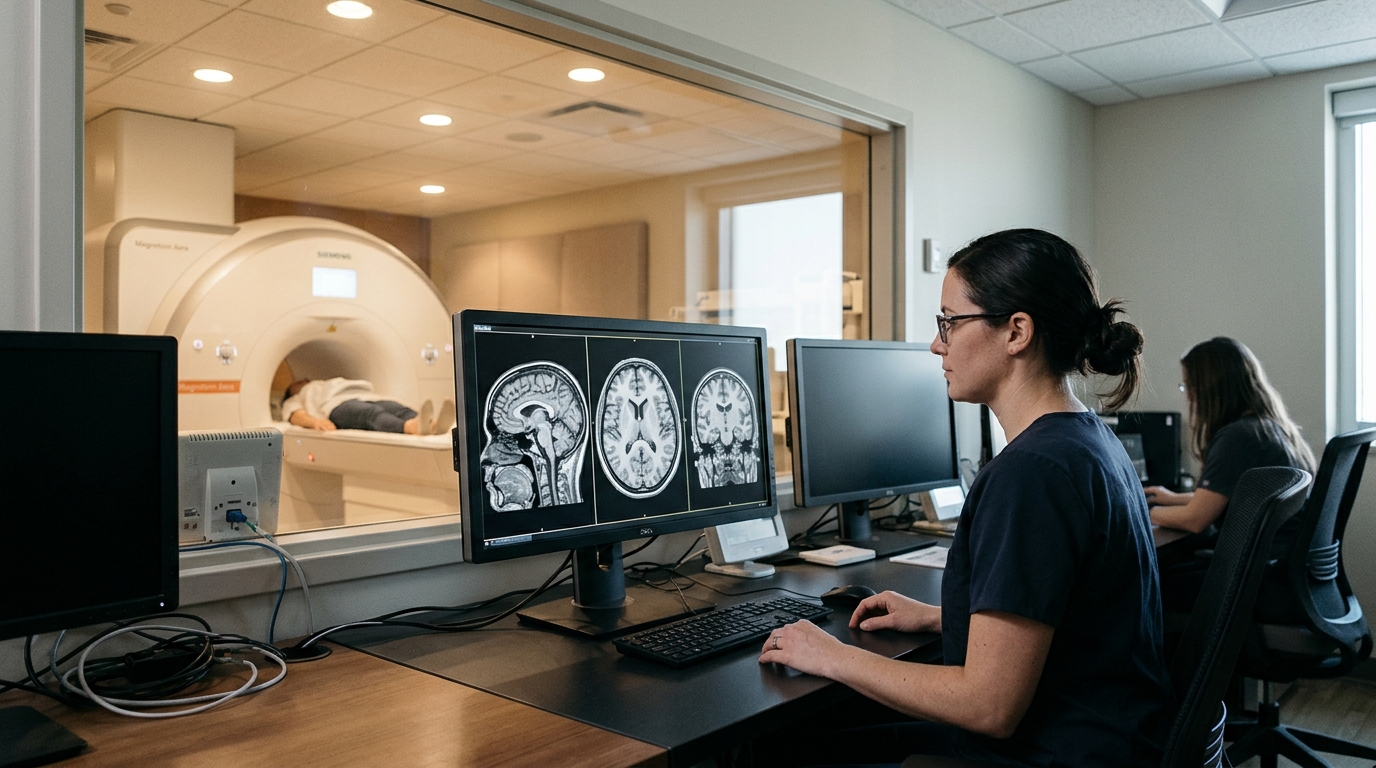
Applying cross-validation in mass-univariate voxel-based neuroimaging exposes substantially inflated effect size estimates in small samples, according to an evaluation published in Translational Psychiatry. Evaluating body mass index as a predictor for gray matter density across 3,401 magnetic resonance imaging scans from a psychiatric cohort, investigators found that small sample sizes without cross-validation produced severe effect size overestimations that failed to generalize to novel data.

In psychiatric neuroimaging research, brain-wide association effects are commonly overestimated, which contributes to poor replicability, limited generalizability, and compromised translation into clinical utility. Although cross-validation is not standardly employed in univariate neuroimaging analyses, the investigative team evaluated its implementation to systematically determine whether it could serve as a counteracting measure against inflated statistical estimates.

To assess the impact of cross-validation, the researchers analyzed magnetic resonance imaging data across different brain localizations and varied sample sizes with a spectrum of underlying pooled effect sizes. In the complete cohort of 3,401 scans, body mass index displayed a negative association with gray matter density, reaching a maximum underlying partial explained variance of R²p = 0.036.

When cross-validation was omitted, effect size estimates escalated sharply in smaller cohorts, reaching values as high as R²p = 0.535. Furthermore, in samples of n = 25 where the underlying condition was a null-effect, estimated effect sizes nonetheless reached up to R²p = 0.429 without cross-validation. Implementing a cross-validation framework demonstrated that these pronounced small-sample associations did not generalize when tested on unseen data.

The analysis established that a minimum sample size of n = 100 was necessary for the largest brain-wide association effects to begin generalizing, whereas detecting smaller effects required cohorts of at least n = 400. In contrast, underlying null effects never attained this point of initial generalizability, failing to generalize even within the full cohort of 3,401 scans. The authors concluded that cross-validation effectively highlights overestimations in small datasets to address replicability deficits, providing open-source code for practical implementation.

Subject of Research: Cross-validation of effect sizes in brain-wide association studies

Article Title: Counteracting the overestimation of effect size in mass-univariate brain-wide association studies using cross-validation

Article References: Goltermann, J., Winter, N. R., Gruber, M., Fisch, L., Richter, M., Grotegerd, D., Dohm, K., Meinert, S., Leehr, E. J., Böhnlein, J., Kraus, A., Thiel, K., Winter, A., Flinkenflügel, K., Leenings, R., Barkhau, C., Ernsting, J., Berger, K., Minnerup, H., … Dannlowski, U. (2026). Counteracting the overestimation of effect size in mass-univariate brain-wide association studies using cross-validation. Translational Psychiatry, 16(1), Article 612. https://doi.org/10.1038/s41398-026-04529-x

Image Credits: AI Generated

DOI: 10.1038/s41398-026-04529-x

Keywords: brain-wide association studies, neuroimaging, cross-validation, effect size, magnetic resonance imaging, gray matter density, sample size, replicability, Counteracting, overestimation, effect, size

News Source: Cassandra Pierce. (November 8, 2026). Cross-Validation Exposes Inflated Effect Size Estimates in Brain Association Studies. Scienmag.


Tags: brain-wide association studiesCounteractingcross-validationeffecteffect sizegray matter densitymagnetic resonance imagingneuroimagingoverestimationreplicabilitysample sizesize
Share12Tweet7Share2ShareShareShare1

Related Posts

Review Evaluates Aspirin Suitability for Stress-Related Headaches

Review Evaluates Aspirin Suitability for Stress-Related Headaches

November 8, 2026
Ocular Trauma Score Validated for Predicting Visual Recovery in Nigeria

Ocular Trauma Score Validated for Predicting Visual Recovery in Nigeria

November 8, 2026

Rising FeNO Trajectories Predict Poor Asthma Control in Children

November 8, 2026

Systolic Blood Pressure Fluctuations Linked to Glaucoma Vision Loss Progression

November 8, 2026

POPULAR NEWS

  • Two Rare C3 Gene Variants Show Complement Proteins Act Separately Inside and Outside Cells

    Two C3 Gene Variants Reveal Functional Independence Between Extracellular and Intracellular Forms of Complement C3

    29 shares
    Share 12 Tweet 7
  • Nearly Half of Stroke Patients in Africa and Asia Show Low HDL Cholesterol

    29 shares
    Share 12 Tweet 7
  • German heat-health plans rarely evaluated due to political and structural barriers, study finds

    29 shares
    Share 12 Tweet 7
  • Carb Quality Beats Glycemic Index in Sperm DNA Study

    29 shares
    Share 12 Tweet 7

About

We bring you the latest biotechnology news from best research centers and universities around the world. Check our website.

Follow us

Recent News

Review Evaluates Aspirin Suitability for Stress-Related Headaches

Trasgu Automates Exhaustive Vine Copula Fitting Across HPC Platforms

DOE Labs and NY Creates Launch Initiative for Next-Generation Semiconductor Chips

Subscribe to Blog via Email

Enter your email address to subscribe to this blog and receive notifications of new posts by email.

Join 86 other subscribers
  • Contact Us

Bioengineer.org © Copyright 2023 All Rights Reserved.

Welcome Back!

Login to your account below

Forgotten Password?

Retrieve your password

Please enter your username or email address to reset your password.

Log In
No Result
View All Result
  • Homepages
    • Home Page 1
    • Home Page 2
  • News
  • National
  • Business
  • Health
  • Lifestyle
  • Science

Bioengineer.org © Copyright 2023 All Rights Reserved.