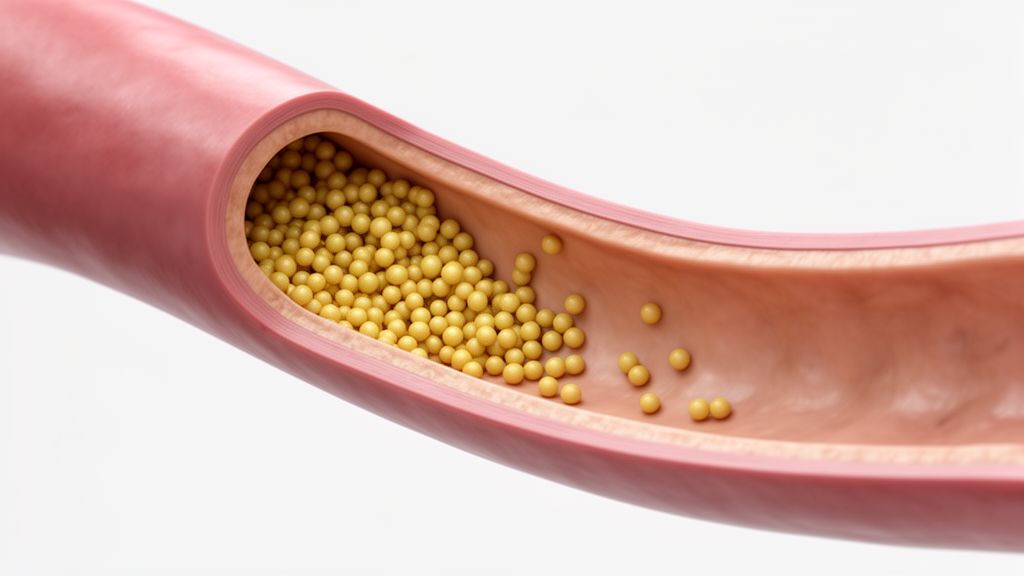
In a single-center cross-sectional study of physical examination participants, researchers found that small dense low-density lipoprotein cholesterol (sdLDL-C) was independently associated with hyperuricemia in a linear dose–response pattern. Published in BMC Endocrine Disorders by LingXia Xu, SiYu Wang, and Bing Cheng, the investigation examined the relationship between the lipid biomarker and hyperuricemia while developing a predictive nomogram model. While sdLDL-C is recognized as a cardio-cerebrovascular risk marker and lipid metabolism disorders are known to have a complex association with hyperuricemia, the independent correlation between sdLDL-C and hyperuricemia had remained unclarified.
The study was conducted among physical examination participants at Shulan (Hangzhou) Hospital between January 2024 and January 2025, enrolling a total of 650 participants. Among the cohort, 198 individuals (30.5%) were identified with hyperuricemia and compared with the non-hyperuricemia group. Baseline comparisons demonstrated that participants with hyperuricemia had a higher proportion of men, higher body mass index (BMI), elevated triglyceride and sdLDL-C levels, and lower high-density lipoprotein cholesterol (HDL-C) levels (all P < 0.05).
To evaluate independent associations, candidate covariates pre-specified on clinical knowledge were fitted into hierarchically nested multivariable logistic regression models. In the fully adjusted multivariable model, elevated sdLDL-C was independently associated with hyperuricemia (odds ratio [OR] = 2.827, 95% CI: 1.607–4.972, P < 0.001). Additional independent covariates included hypertension (OR = 1.921, 95% CI: 1.213–3.042, P = 0.005), BMI (OR = 1.077, 95% CI: 1.005–1.155, P = 0.036), age (OR = 0.973, 95% CI: 0.950–0.996, P = 0.020), and serum creatinine (OR = 1.046, 95% CI: 1.027–1.066, P < 0.001). Restricted cubic spline analysis supported a linear dose–response relationship between sdLDL-C and hyperuricemia, with a P-value for overall association of 0.002 and a P-value for non-linearity of 0.639.
The researchers constructed a risk nomogram incorporating sdLDL-C, which achieved an area under the receiver operating characteristic curve (AUC) of 0.788 (95% CI: 0.751–0.826), a sensitivity of 78.8%, and a specificity of 68.1%. Model assessment and internal validation also utilized calibration, decision curve analysis, and 1000 bootstrap resamples with optimism correction. Calibration was adequate with a Hosmer–Lemeshow P-value of 0.328, while the bootstrap-corrected AUC was 0.781 and the bootstrap-corrected calibration slope was 0.962. The authors concluded that the nomogram demonstrated adequate discrimination and calibration, indicating potential utility as an auxiliary tool for hyperuricemia risk prediction and preliminary cardiometabolic risk assessment in the general population within the scope of this single-center cohort.
Subject of Research: Association of small dense LDL cholesterol with hyperuricemia and nomogram development
Article Title: Analysis of the association between small dense low-density lipoprotein cholesterol and hyperuricemia and development of a nomogram model
Article References: Xu, L., Wang, S., & Cheng, B. (2026). Analysis of the association between small dense low-density lipoprotein cholesterol and hyperuricemia and development of a nomogram model. BMC Endocrine Disorders. https://doi.org/10.1186/s12902-026-02702-3
Image Credits: AI Generated
DOI: 10.1186/s12902-026-02702-3
Keywords: hyperuricemia, small dense LDL cholesterol, sdLDL-C, lipid metabolism, nomogram model, cross-sectional study, cardiometabolic risk, biomarkers, Analysis, association, between, small
News Source: Ophelia Keating. (November 8, 2026). Cross-Sectional Study Links Small Dense LDL Cholesterol to Hyperuricemia Risk. Scienmag.