• HOME
  • NEWS
  • EXPLORE
    • CAREER
      • Companies
      • Jobs
    • EVENTS
    • iGEM
      • News
      • Team
    • PHOTOS
    • VIDEO
    • WIKI
  • BLOG
  • COMMUNITY
    • FACEBOOK
    • INSTAGRAM
    • TWITTER
Saturday, February 7, 2026
BIOENGINEER.ORG
No Result
View All Result
  • Login
  • HOME
  • NEWS
  • EXPLORE
    • CAREER
      • Companies
      • Jobs
        • Lecturer
        • PhD Studentship
        • Postdoc
        • Research Assistant
    • EVENTS
    • iGEM
      • News
      • Team
    • PHOTOS
    • VIDEO
    • WIKI
  • BLOG
  • COMMUNITY
    • FACEBOOK
    • INSTAGRAM
    • TWITTER
  • HOME
  • NEWS
  • EXPLORE
    • CAREER
      • Companies
      • Jobs
        • Lecturer
        • PhD Studentship
        • Postdoc
        • Research Assistant
    • EVENTS
    • iGEM
      • News
      • Team
    • PHOTOS
    • VIDEO
    • WIKI
  • BLOG
  • COMMUNITY
    • FACEBOOK
    • INSTAGRAM
    • TWITTER
No Result
View All Result
Bioengineer.org
No Result
View All Result
Home NEWS Science News Health

Crocodile bite sparks 30+ year project to create pain relief gel

Bioengineer by Bioengineer
November 13, 2023
in Health
Reading Time: 2 mins read
0
John Watson and Ronald Quinn
Share on FacebookShare on TwitterShare on LinkedinShare on RedditShare on Telegram

In 1986, John Watson’s finger was bitten off by a crocodile. A Nyikina Mangala man from the Jarlmadangah Burru Aboriginal Community of the Kimberley, John turned to the bark of the Mudjala mangrove tree seeking pain relief. He chewed on a strip of bark and applied it as a dressing to his wound.  
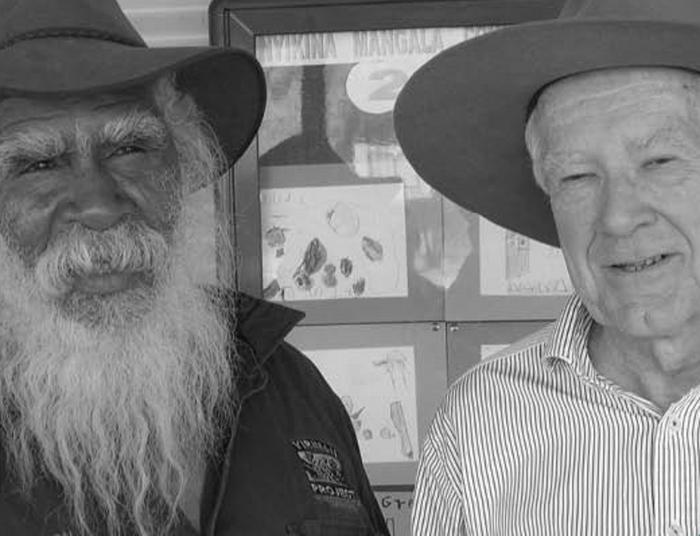
John Watson and Ronald Quinn

Credit: Australian Academy of Technological Sciences & Engineering

In 1986, John Watson’s finger was bitten off by a crocodile. A Nyikina Mangala man from the Jarlmadangah Burru Aboriginal Community of the Kimberley, John turned to the bark of the Mudjala mangrove tree seeking pain relief. He chewed on a strip of bark and applied it as a dressing to his wound.  

When Professor Ron Quinn AM from Griffith University heard of John’s ordeal, and his use of the Mudjala bark, he was intrigued.  

An enduring partnership eventuated between the Nyikina Mangala people and Griffith University under the leadership of John and Professor Quinn, seeking to identify what active compounds could be present in the bark. 

Combining thousands of years of Traditional Knowledge with western science has revealed a novel, natural remedy for the treatment of severe pain.  

As a result, John and Professor Quinn have been named as the inaugural recipients of the Australian Academy of Technological Sciences & Engineering’s Traditional Knowledge Innovation Award. 

The bark contains two classes of compound: one is effective for inflammatory pain and the other mitigates sciatic nerve injury.  

The resulting product – a possible topical gel – will be based on the complex mixtures present within the bark paste. John and Ron hope that this gel could be supplied to athletes at the 2032 Brisbane Olympics, and heralds widespread application for Traditional Knowledge, while maintaining Aboriginal ownership. 

Weaving Traditional Knowledge with western science for a new approach to pain relief, tapping into green energy using recycling byproducts, and a revolutionary new approach to sustainability for the beef and lamb industry, are all being celebrated at the Australian Academy of Technological Sciences and Engineering’s annual national Awards tonight.  

ATSE’s winning engineers and technologists were recognised for their groundbreaking work on Australia’s toughest issues, spanning climate change, mining, plastic waste, battery tech and food security among others, during a ceremony at the National Arboretum in Canberra on Thursday October 26.  

ATSE President, Dr Katherine Woodthorpe AO FTSE, said the winners’ innovation, drive, and impact were exemplars for the game-changing application of Australian research.   



Share12Tweet8Share2ShareShareShare2

Related Posts

Succinate Receptor 1 Limits Blood Cell Formation, Leukemia

February 7, 2026

Palmitoylation of Tfr1 Drives Platelet Ferroptosis and Exacerbates Liver Damage in Heat Stroke

February 7, 2026

Oxygen-Enhanced Dual-Section Microneedle Patch Improves Drug Delivery and Boosts Photodynamic and Anti-Inflammatory Treatment for Psoriasis

February 7, 2026

Scientists Identify SARS-CoV-2 PLpro and RIPK1 Inhibitors Showing Potent Synergistic Antiviral Effects in Mouse COVID-19 Model

February 7, 2026

POPULAR NEWS

  • Robotic Ureteral Reconstruction: A Novel Approach

    Robotic Ureteral Reconstruction: A Novel Approach

    82 shares
    Share 33 Tweet 21
  • Digital Privacy: Health Data Control in Incarceration

    63 shares
    Share 25 Tweet 16
  • Study Reveals Lipid Accumulation in ME/CFS Cells

    57 shares
    Share 23 Tweet 14
  • Breakthrough in RNA Research Accelerates Medical Innovations Timeline

    53 shares
    Share 21 Tweet 13

About

We bring you the latest biotechnology news from best research centers and universities around the world. Check our website.

Follow us

Recent News

Succinate Receptor 1 Limits Blood Cell Formation, Leukemia

Palmitoylation of Tfr1 Drives Platelet Ferroptosis and Exacerbates Liver Damage in Heat Stroke

Oxygen-Enhanced Dual-Section Microneedle Patch Improves Drug Delivery and Boosts Photodynamic and Anti-Inflammatory Treatment for Psoriasis

Subscribe to Blog via Email

Enter your email address to subscribe to this blog and receive notifications of new posts by email.

Join 73 other subscribers
  • Contact Us

Bioengineer.org © Copyright 2023 All Rights Reserved.

Welcome Back!

Login to your account below

Forgotten Password?

Retrieve your password

Please enter your username or email address to reset your password.

Log In
No Result
View All Result
  • Homepages
    • Home Page 1
    • Home Page 2
  • News
  • National
  • Business
  • Health
  • Lifestyle
  • Science

Bioengineer.org © Copyright 2023 All Rights Reserved.