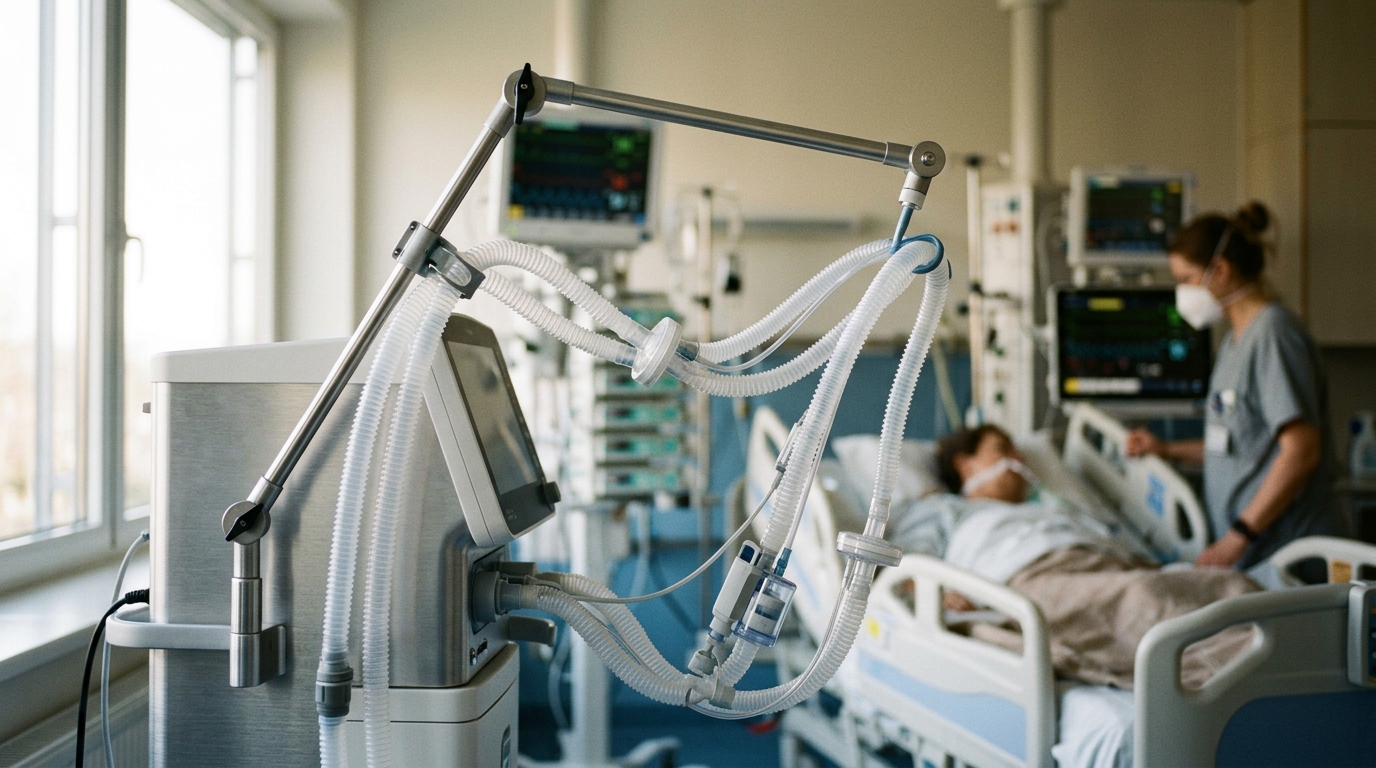
In a letter published in Anesthesiology and Perioperative Science, researchers Xintong Zou, Suwen Hu, and Liangrong Wang offer a detailed critique of a recent randomized controlled trial by Fei et al. The original study investigated whether synchronized intermittent mandatory ventilation (SIMV) during anesthetic emergence could reduce early postoperative atelectasis in patients undergoing laparoscopic abdominal surgery. The authors of the comment acknowledge that the trial provides valuable preliminary evidence for optimizing emergence ventilation, specifically noting that pooled SIMV modes significantly reduced the incidence of lung ultrasound-diagnosed atelectasis. However, they argue that several methodological and clinical considerations warrant discussion to properly contextualize these findings and guide future research directions in perioperative care.
The first major point of contention involves the use of lung ultrasound (LUS) as the primary diagnostic tool for atelectasis. The original trial assessed lung collapse at a single, fixed time point, specifically 30 minutes post-extubation. Zou and colleagues describe this approach as capturing only an early snapshot of lung collapse. They emphasize that atelectasis is a dynamic process that may evolve or resolve after patients are transferred from the post-anesthesia care unit. Factors such as mobility, positioning, and analgesia can influence the progression of lung collapse, meaning a single assessment cannot reflect the true clinical burden or duration of the condition. Furthermore, the clinical relevance of the specific LUS diagnostic threshold used in the trial, defined as a score of 2 or higher in any lung zone, remains uncertain. The critics note that this imaging surrogate may lack a validated link to meaningful patient-centered outcomes, such as hypoxemia requiring intervention or hospital length of stay.
Despite the significant reduction in this imaging-based measure, the original study did not find a significant difference in secondary clinical outcomes. This disconnect underscores a key challenge in perioperative research: the need to better correlate LUS-defined atelectasis with core clinical recovery endpoints. The commenters suggest that future research must prioritize patient-centered endpoints to determine if the observed imaging improvements translate into tangible clinical benefits for patients. They argue that without this correlation, the practical utility of the findings remains limited to hypothesis generation rather than immediate practice change.
A second significant limitation highlighted by the critics is the exclusion of patients with a body mass index greater than 30 kg/m². Obesity is identified as a major independent risk factor for postoperative atelectasis and pulmonary complications, particularly in the context of laparoscopic surgery. By excluding this prevalent and high-risk population, the results of the trial cannot be extrapolated to a significant segment of the clinical population that might benefit most from optimized ventilation strategies. The commenters point out that this restriction limits the generalizability of the findings, as the study effectively evaluates a non-obese cohort, which may not represent the broader surgical population.
The authors also critique the lack of stratified analysis regarding surgery-specific factors. While the original study acknowledged in its limitations that surgical position might have heterogeneous effects on atelectasis development, no subgroup analysis was performed to test this possibility. Given that patient position, degree of diaphragmatic impairment, and surgical duration could differentially influence atelectasis risk, pooling these procedures without subgroup analysis may obscure differential treatment effects. Consequently, the conclusion that SIMV uniformly reduces atelectasis across all included procedures remains unsubstantiated according to the commenters.
Methodological concerns also extend to the control group, which utilized intermittent manual assistance ventilation. This technique is described as highly operator-dependent, raising questions about the consistency of the comparison. During apnea, manual ventilation inevitably exhibits significant breath-to-breath tidal volume variability, whereas SIMV delivers fixed, consistent volumes. This structural difference is argued to bias the comparison systematically in favor of SIMV, independent of operator skill. Additionally, the role of positive end-expiratory pressure (PEEP) is highlighted as a potential confounder. Protective ventilation strategies rely on PEEP to prevent alveolar collapse and improve perioperative oxygenation. In the original study, the SIMV group received a fixed PEEP of 5 cm H2O, while the manual protocol included no measures to maintain PEEP, effectively leaving end-expiratory pressure at zero. The absence of PEEP in the control group may confound the observed reduction in atelectasis, potentially overestimating the true benefit of SIMV.
Finally, the commenters address the lack of direct physiological data to substantiate the proposed mechanism of action. While the hypothesis that SIMV maintains alveolar recruitment and improves oxygenation is plausible, the study did not provide measurements of respiratory system compliance or driving pressure during emergence. Such data would help clarify how SIMV mechanically preserves alveolar stability. The authors also note the missed opportunity to explore which patient factors, such as age, risk score, or preoperative lung function, might predict a greater benefit from SIMV. Identifying these high-responder subgroups is essential for moving toward personalized ventilation management. Furthermore, the study did not link LUS-diagnosed atelectasis with systemic inflammatory biomarkers, which could help connect local lung collapse to potential systemic postoperative complications. In conclusion, the letter suggests that the original study should be interpreted as hypothesis-generating rather than practice-changing, urging future trials to prioritize high-risk populations and patient-centered endpoints.
Subject of Research: Critique of a randomized controlled trial on ventilation strategies for postoperative atelectasis
Article Title: Comment on: effect of synchronized intermittent mandatory versus manual assistance ventilation during anesthetic emergence on postoperative atelectasis in patients undergoing laparoscopic abdominal surgery: a randomized controlled trial
Article References: Zou, X., Hu, S., & Wang, L. (2026). Comment on: effect of synchronized intermittent mandatory versus manual assistance ventilation during anesthetic emergence on postoperative atelectasis in patients undergoing laparoscopic abdominal surgery: a randomized controlled trial. Anesthesiology and Perioperative Science, 4(1), Article 27. https://doi.org/10.1007/s44254-026-00178-x
Image Credits: AI Generated
DOI: 10.1007/s44254-026-00178-x
Keywords: SIMV, atelectasis, laparoscopic surgery, anesthetic emergence, lung ultrasound, perioperative care, randomized controlled trial, postoperative complications, Comment, effect, synchronized, intermittent
News Source: Ophelia Keating. (November 7, 2026). Critics Question Clinical Value of SIMV Ventilation Trial. Scienmag.