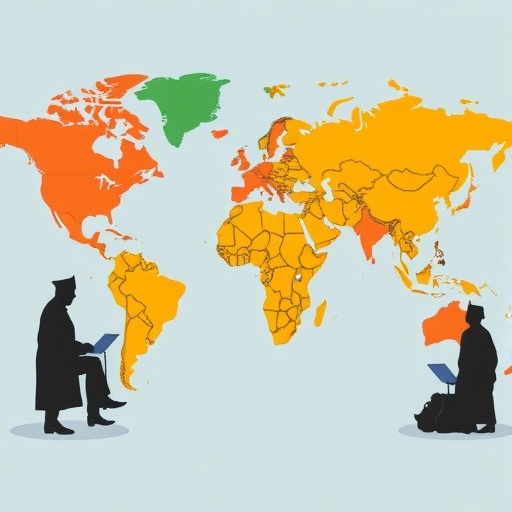
In an era marked by a significant emphasis on global collaboration in the fields of health and research, the need to facilitate access for researchers and practitioners from historically marginalized regions has never been more critical. A recent initiative highlighted at the Canadian Conference on Global Health 2024 sheds light on the innovative strategies adopted to enhance participation from the Global South. This endeavor not only seeks to bridge the gaps in representation but also aims to foster a diverse exchange of ideas critical to addressing global health challenges.
The Canadian Conference on Global Health, a notable gathering in the health sector, has begun addressing an essential aspect of its operations: the equitable distribution of conference grants. As scientific communities evolve, so too does the understanding of who is included within these conversations. The authors of a pivotal paper, Gauhar et al., discuss their experiences and insights regarding the establishment of criteria and processes for the distribution of these much-needed funds, specifically targeting participants from the Global South.
One of the primary motivations behind the distribution of conference grants is the recognition of the disparities in funding and resource availability that exist between the Global North and South. Researchers from the Global South often grapple with limited access to financial backing, which restricts their ability to engage fully in international discourse. By focusing on fostering inclusivity through funding opportunities, conferences like the Canadian Conference on Global Health are not merely enriching their participant base but also enhancing the quality of discussions and innovations that arise from such diverse inputs.
The experience shared by Gauhar and colleagues underscores the complexities involved in creating equitable criteria for grant distribution. They detail a process that took into consideration various factors, including the socio-economic status of participants, their research impact, and their potential contributions to the global health dialogue. This holistic approach serves as a model for other conferences looking to implement similar systems—a blend of compassion, strategic thought, and an understanding of the larger implications of representation in scientific discussions.
Equally important is the engagement of local communities and researchers in the development of these criteria. The authors emphasize that consultations with stakeholders from the Global South were pivotal in ensuring that the criteria were not just top-down impositions. Instead, they were crafted with input from those who would be most directly impacted, aligning the goals of the conference with the real-world challenges faced by these researchers. This practice not only enhances ownership of the process but also elevates the relevance of the discussions taking place.
Much of the discourse surrounding global health tends to focus heavily on challenges without sufficient attention to local innovations and solutions crafted within these regions. The Canadian Conference on Global Health serves as a platform where these local narratives can not only be shared but celebrated. By enabling participants from the Global South to present their findings, the conference is helping to shift the narrative from one that is predominantly centered on Western research paradigms to a more balanced view that acknowledges the contributions and expertise that reside within these communities.
Moreover, the significance of this initiative extends beyond the immediate benefits of participation; it also sets a precedent for future conferences and research. As more discussions emerge on the necessity of inclusive practices within academic and professional gatherings, the model proposed by Gauhar and colleagues offers valuable insights into how grant distribution can be effectively managed. Their experiences may prompt other organizations to re-evaluate their own funding strategies, ensuring that they are also taking steps toward fostering inclusivity and representativity.
The implications of such efforts are profound. When researchers from the Global South are given access to share their work on international stages, it enriches the global health landscape with diverse approaches to problem-solving. It also allows for the pooling of resources, knowledge, and experiences, ultimately leading to more innovative and contextually relevant health solutions. This cultural exchange can generate ideas that might be overlooked in homogeneous academic settings, fostering a greater understanding of health issues from multiple vantage points.
Another noteworthy aspect of the conference is its potential to inspire future generations of researchers from the Global South. By witnessing the participation and success of their peers on an international stage, young scientists and health practitioners may be motivated to pursue their research ambitions. This can have a multiplier effect, leading to a new wave of talent eager to contribute to global health challenges with fresh perspectives stemming from their unique experiences.
As discussions about equitable access and representation within scientific circles continue to gain momentum, the lessons learned from the Canadian Conference on Global Health illustrate how collective action can lead to meaningful change. The commitment to establish fair criteria for conference grants not only addresses immediate financial barriers but also symbolizes a shift toward prioritizing diversity in academic settings. This evolution amplifies the voices that have long been marginalized.
In the wake of these transformative conversations, it is important for conferences and organizations globally to reflect on their own practices. How can their platforms become more inclusive? What changes need to be made to ensure that voices from the Global South are not just included but are integral to the fabric of global health discussions? The insights derived from the experiences of Gauhar and his colleagues at the conference are crucial for making strides toward these goals.
In conclusion, as the global health landscape continues to evolve, initiatives like the one highlighted at the Canadian Conference on Global Health showcase the potential for change when prioritizing inclusivity. This concerted effort to provide financial support to participants from the Global South is not merely about supporting individual researchers but is about enriching the global health discourse as a whole. The ongoing commitment to dismantle barriers and enable diverse voices will ultimately shape a more equitable future for global health research and policy.
Subject of Research: Conference grants for participants from the Global South in global health discussions.
Article Title: Establishing criteria and distributing conference grants for participants from the Global South: experiences from the Canadian Conference on Global Health 2024.
Article References:
Gauhar, A., Mutumba-Nakalembe, M.J., Davison, C.M. et al. Establishing criteria and distributing conference grants for participants from the Global South: experiences from the Canadian Conference on Global Health 2024. Health Res Policy Sys (2025). https://doi.org/10.1186/s12961-025-01436-3
Image Credits: AI Generated
DOI:
Keywords: Global South, conference grants, inclusivity, global health, participation, diversity.
Tags: addressing global health challengesbridging representation gaps in health sectorCanadian Conference on Global Health 2024criteria for conference grant allocationenhancing participation from marginalized regionsequitable distribution of health research fundsfostering diverse exchange of ideas in healthfunding disparities between Global North and SouthGlobal South conference grantsinnovative strategies for researcher inclusionpromoting global collaboration in health researchsupporting underrepresented health practitioners