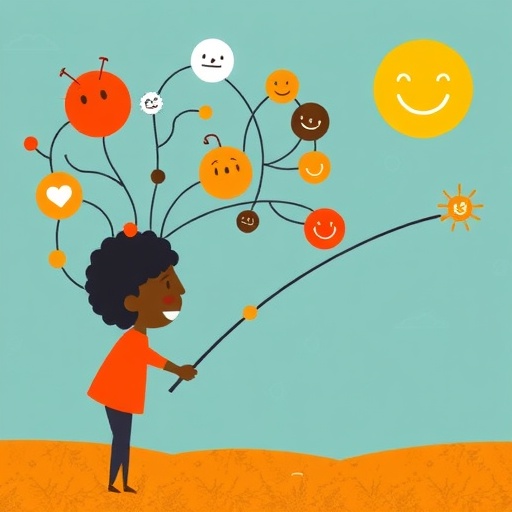
The intricate interplay between creativity, depression, and emotional regulation has long fascinated researchers in the psychological sciences. A study conducted by Bellaiche, Faul, and LaBar offers groundbreaking insights into how these factors converge to influence divergent thinking and idea generation in relation to emotion regulation. This research, set to be published in Scientific Reports in 2025, potentially reshapes our understanding of cognitive processes tied to emotional states. The researchers leveraged nuanced methodologies to dissect the characteristics of creative and depressive profiles, leading to profound implications for psychological theory and practical applications in mental health.
The concept of divergent thinking, a key focus of the research, refers to the ability to generate multiple unique solutions to a problem. It is considered an essential component of creativity and has significant implications for problem-solving and innovation. The study postulates that individuals with varying levels of creativity and depression exhibit distinct patterns in their capacity for divergent thinking. The implications of these findings extend beyond pure psychology; they touch upon educational frameworks, workplace dynamics, and therapeutic practices.
Importantly, the team utilized a combination of quantitative assessments and qualitative analyses to explore how creative and depressive profiles could shape the ideation process during emotional regulation tasks. By employing standardized scales to measure participants’ creative potential and depressive symptoms, the researchers systematically analyzed the correlation between these dimensions and the participants’ performance in tasks designed to elicit divergent thinking.
A striking finding from the study indicated that individuals with higher creativity scores tend to approach emotion regulation tasks with a unique lens, demonstrating greater flexibility in thinking. This cognitive flexibility allowed them to ideate more novel solutions during scenarios designed to challenge their emotional state. Conversely, while depressive profiles displayed a more constrained approach, often getting stuck in negative thought patterns, this rigidity also sometimes led to unexpected beneficial insights.
The duality of these profiles presents an intriguing paradigm. It raises questions about the societal perceptions of creativity and emotional struggle. Could it be that what we often label as ‘negative’—such as depressive episodes—also holds the potential for unique cognitive advantages? The interplay suggests that emotional struggles could catalyze creativity in certain contexts, thereby inviting a reevaluation of mental health narratives that overwhelmingly associate depression with impairment rather than as a complex contributor to emotional depth and insight.
A methodological spotlight reveals that the study employed various techniques to ensure comprehensive data collection. Group workshops were organized to stimulate discussions among participants about their emotional experiences, feeding into the divergent thinking tasks. Detailed interviews were also conducted, adding qualitative depth to the quantitative findings. This triangulation of methods emphasizes the complexity of the relationship between emotional states and creativity.
Furthermore, the implications of these insights stretch into educational settings where fostering creativity could sometimes necessitate a nuanced understanding of emotional hardships. Educators may benefit from recognizing the different cognitive profiles and leveraging them to cultivate environments that embrace emotional diversity. Creating spaces that allow for both divergent and convergent thinking could maximize students’ creative potential, recognizing the dualities within emotional experiences.
In therapeutic contexts, understanding the connection between creativity and depression can inform intervention strategies. Practitioners might employ creative techniques as therapeutic modalities, providing clients with opportunities to express their emotional struggles through artistic means while simultaneously nurturing their cognitive flexibility. This holistic approach could revolutionize mental health care, paving the way for a new wave of therapies that embrace the complexity of the human experience.
As mental health stigma continues to be a pressing issue, studies like this one hold the potential to shift perceptions. By illustrating that emotional struggles can coexist with, and even enhance, cognitive creativity, we can promote a more balanced view of mental health. It becomes crucial to advocate for systems that appreciate emotional diversity as a strength rather than a weakness, encouraging individuals to explore their emotional landscapes and the insights they can yield.
In academia, the findings are likely to spark further interdisciplinary dialogue, garnering interest not just from psychologists but also from educational theorists, artists, and entrepreneurs. The crossroads of creativity and emotional regulation may represent fertile ground for innovative research avenues, combining aspects of cognitive psychology, neuroscience, and artistic expression. As researchers continue to unpack these intricate relationships, they risk entering unchartered territory that could yield significant advancements in various fields.
The broader societal implications also cannot be ignored. As we grapple with rising mental health issues globally, particularly among youth, understanding the duality of depression and creativity could empower initiatives aimed at prevention and resilience. By fostering environments that celebrate both emotional authenticity and creative expression, society stands to benefit from more holistic approaches to mental health and wellbeing.
In conclusion, the findings profiled in this research underline an essential shift in our approach to understanding creativity and depression. Instead of viewing these experiences as strictly dichotomous, the study encourages us to embrace a perspective that welcomes complexity and fosters empathy. This complex understanding could serve not only as a beacon for mental health discourse but also as a guiding light for practical applications across various fields.
As the dialogue surrounding creativity and emotional health continues to evolve, the landmark insights from Bellaiche, Faul, and LaBar’s study will undoubtedly play a role in shaping future research and practical applications. Their work emphasizes that nurturing creativity is not merely an academic pursuit but a vital aspect of enhancing emotional wellbeing, resilience, and ultimately, the human experience.
Subject of Research: The interplay of creative and depressive profiles in divergent thinking and emotion regulation.
Article Title: Creative and depressive profiles shape divergent thinking in emotion regulation idea generation.
Article References:
Bellaiche, L., Faul, L. & LaBar, K.S. Creative and depressive profiles shape divergent thinking in emotion regulation idea generation.
Sci Rep (2025). https://doi.org/10.1038/s41598-025-32365-4
Image Credits: AI Generated
DOI: 10.1038/s41598-025-32365-4
Keywords: Creativity, Depression, Divergent Thinking, Emotional Regulation, Psychological Science.
Tags: cognitive processes in creativitycreativity and depression relationshipeducational implications of creativityemotional regulation and divergent thinkingimplications for psychological theoryinnovative problem-solving strategiesmental health and emotional innovationpsychological impact of creativityqualitative and quantitative research methodsstudy on creativity in emotional statestherapeutic applications of creativityworkplace creativity dynamics