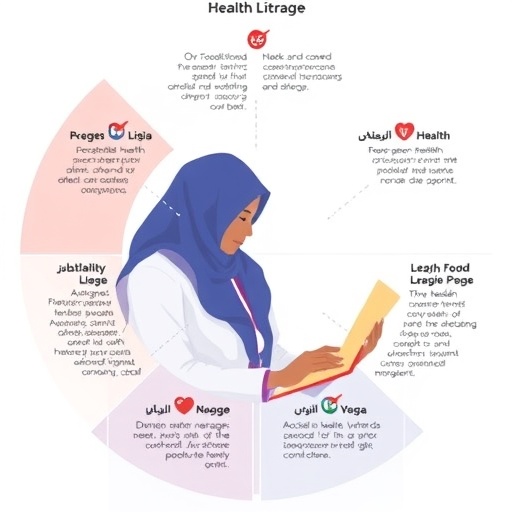
In a groundbreaking study, researchers have unveiled a new framework intended to enhance health literacy among primary healthcare service users in Qatar. This innovative approach is particularly pertinent given the increasing recognition of health literacy as a critical component of effective healthcare delivery and patient engagement. The research, which employs a mixed-methods methodology, delves into the diverse health literacy needs of the Qatari population, aiming to not only identify existing gaps but also provide actionable solutions for bridging them.
Health literacy, defined as the ability of individuals to access, comprehend, and apply health-related information, is essential in empowering patients to make informed health decisions. In Qatar, substantial demographic shifts and evolving healthcare paradigms highlight the urgent need for a well-structured health literacy framework. By contextualizing health literacy within the unique cultural and socio-economic landscape of Qatar, the researchers proposed strategies that are both culturally sensitive and practically applicable.
The study’s methodology involved a comprehensive mixed-methods approach, combining qualitative interviews with quantitative surveys. This dual approach not only allowed for the collection of rich, nuanced data but also enabled researchers to quantify health literacy levels across different demographics. Through interviews with healthcare professionals and focus groups with patients, a deeper understanding of the barriers to effective communication and understanding in healthcare settings emerged.
Findings from the research indicated significant disparities in health literacy levels among various population segments. Certain groups, particularly those with low educational attainment or limited language proficiency, exhibited marked difficulties in navigating the healthcare system. This lack of understanding often resulted in poor adherence to medical advice, ultimately jeopardizing patient health outcomes. Such critical insights have catalyzed the researchers to advocate for targeted interventions designed to address these challenges directly.
One of the study’s pivotal contributions is the proposed health literacy framework, which emphasizes several core elements. These include the development of educational materials that are tailored to meet the cultural needs of the population, the training of healthcare providers in effective communication strategies, and the establishment of community outreach programs. By fostering an environment where health information is both accessible and comprehensible, the framework aims to empower individuals to take charge of their health.
The implications of this research extend beyond academic interest; they carry significant potential to transform healthcare delivery in Qatar. Improved health literacy is associated with better health outcomes, increased patient satisfaction, and reduced healthcare costs. By implementing the proposed framework, healthcare providers can enhance their quality of care and foster a more engaged patient population, ultimately impacting public health positively.
Moreover, the study does not shy away from acknowledging the challenges involved in promoting health literacy. Resistance to change, limited resources, and entrenched cultural perceptions regarding healthcare communication are outlined as potential barriers. Nevertheless, the researchers remain optimistic, underscoring the necessity of collaboration between stakeholders, including healthcare providers, policymakers, and community organizations, to overcome these hurdles.
The researchers’ commitment to a culturally nuanced approach is particularly noteworthy. In a multicultural society like Qatar, understanding the diverse backgrounds of patients is crucial for effective communication. By integrating cultural competence into health literacy initiatives, the framework seeks not only to educate but also to respect the values and beliefs of different communities. This sensitivity to cultural diversity can help mitigate misunderstandings and foster stronger patient-provider relationships.
Furthermore, technology plays a vital role in this new health literacy framework. The use of digital platforms and mobile applications is encouraged to disseminate health information widely and effectively. Given the growing digital landscape, leveraging technology can enhance accessibility, allowing individuals to engage with health resources conveniently. However, the researchers emphasize the importance of ensuring that digital content is designed to be user-friendly and understandable, particularly for populations with varying levels of technological proficiency.
As the study progresses toward implementation, the researchers have outlined a phased approach to roll out the health literacy framework. This includes pilot programs in select healthcare facilities, followed by extensive evaluation methods to assess effectiveness. Continuous feedback loops involving healthcare staff and patients are essential to iteratively refine the framework based on real-world experiences and outcomes.
Importantly, the researchers have also called for ongoing research to monitor the long-term impacts of the health literacy initiatives. Establishing metrics to evaluate improvements in health literacy and patient engagement will allow for continuous improvement and adaptation of the framework. Such reflective practices are vital as healthcare landscapes evolve, ensuring that health literacy initiatives remain relevant and effective.
In conclusion, the development of a health literacy framework in Qatar represents a significant stride towards enhancing patient empowerment and engagement in healthcare. By focusing on culturally sensitive approaches and utilizing innovative methods of communication, this research holds the promise of fostering a more informed patient population. The potential ripple effects could lead to improved health outcomes, greater satisfaction, and an overall healthier society, underscoring the importance of health literacy in modern healthcare systems.
This study is not just a scholarly contribution; it is a call to action for all stakeholders in the healthcare system to prioritize health literacy as a critical component of quality care. Engaging patients as informed partners in their health will pave the way for a healthier future in Qatar and beyond.
Subject of Research: Health literacy framework development in Qatar’s primary healthcare system.
Article Title: Development of a health literacy framework for primary health care service users in Qatar: a mixed methods study.
Article References:
Syed, M.A., Alnuaimi, A.S. & Syed, M.A. Development of a health literacy framework for primary health care service users in Qatar: a mixed methods study. BMC Health Serv Res (2026). https://doi.org/10.1186/s12913-025-13919-8
Image Credits: AI Generated
DOI: 10.1186/s12913-025-13919-8
Keywords: Health literacy, Qatar, primary healthcare, mixed-methods study, patient engagement, socio-economic factors.
Tags: actionable solutions for health literacycultural sensitivity in health educationdemographic shifts in Qatar’s healthcare systemempowering patients through health informationhealth literacy framework in Qatarhealthcare delivery in Qataridentifying health literacy gaps in populationsimproving health literacy in primary caremixed-methods research in health literacypatient engagement strategies in healthcarequalitative and quantitative research in healthcaresocio-economic factors affecting health literacy