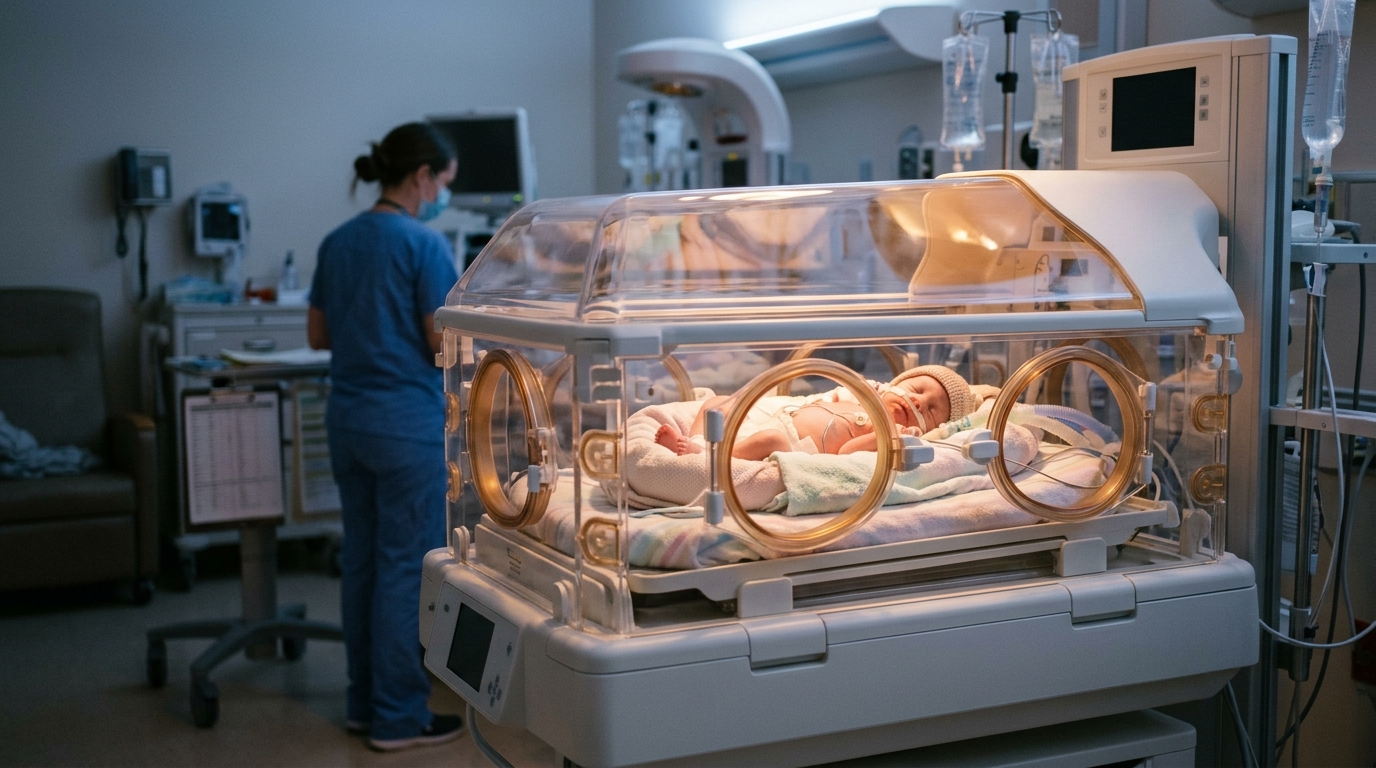
The study, published in Pediatric Research, demonstrates that urinary creatine levels drop precipitously at the time of necrotizing enterocolitis diagnosis, while related metabolic intermediates remain stable. This finding suggests that creatine depletion may represent a previously unrecognized metabolic vulnerability in the pathogenesis of the disease, offering a potential target for preventive strategies in vulnerable neonatal populations.
Necrotizing enterocolitis remains a leading cause of morbidity and mortality in preterm infants, with mortality rates persisting at approximately 25 to 30 percent despite improvements in neonatal intensive care. Among very low birthweight infants, 7 to 10 percent develop the condition, and approximately 42 percent require surgical intervention. The etiology of the disease is poorly understood, though a combination of risk factors including prematurity, formula feeding, and dysbiosis is thought to induce intestinal inflammation that often progresses to multi-organ failure. Recent work has implicated metabolic dysfunction in the disease’s pathogenesis, specifically suggesting that necrotizing enterocolitis induces epithelial mitochondrial dysfunction alongside immune and microbial vulnerabilities.
Creatine is an organic acid formed from glycine and arginine that plays a central role in cellular energetics. It supports adenosine triphosphate buffering, oxidative phosphorylation, and protection against hypoxic injury. In the intestine, dietary creatine is taken up by a specific transporter, while intracellular enzymes reversibly phosphorylate creatine to phosphocreatine, generating a rapid system that stabilizes ATP availability for energetically demanding conditions such as barrier maintenance and hypoxia. Preterm infants are particularly vulnerable to creatine insufficiency because they receive little dietary creatine, and the enzymes critical to de novo synthesis are likely immature due to hepatic and renal immaturity.
To investigate the role of creatine in necrotizing enterocolitis, the research team analyzed human necrotizing enterocolitis bulk and single-cell RNA-sequencing datasets to characterize intestinal creatine metabolism. They also performed targeted metabolomics on longitudinal urine samples from preterm infants collected before and at necrotizing enterocolitis diagnosis. The study utilized enterocyte scratch wound healing assays, Seahorse metabolic assays, and hypoxia-induced apoptosis assays in human preterm ileal enteroids to assess the physiological effects of creatine supplementation on intestinal epithelial cells.
Transcriptomic analyses revealed that genes involved in creatine synthesis, transport, and metabolism were significantly downregulated in necrotizing enterocolitis tissue compared with age-matched controls. Specifically, expression of creatine kinase brain, creatine kinase mitochondrial subunits, and the creatine transporter was reduced in both bulk tissue and epithelial cell populations. Single-cell sequencing of enteroids derived from preterm infants with necrotizing enterocolitis confirmed a persistent loss of these genes, including guanidinoacetate methyltransferase and arginine:glycine amidinotransferase, across epithelial cell types. This downregulation was consistent with findings in other intestinal inflammatory diseases, such as Crohn’s disease, where reduced creatine transporter and creatine kinase expression have been observed.
Targeted metabolomics of urine samples from seven self-matched preterm infants who developed necrotizing enterocolitis indicated a specific disruption in creatine homeostasis. Urinary creatine levels declined significantly from baseline to necrotizing enterocolitis diagnosis, with a p-value of less than 0.0001. In contrast, related metabolites, including phosphocreatine, guanidinoacetate, arginine, and glycine, did not show significant changes between baseline and diagnosis. Phosphocreatine was largely undetectable in preterm infant urine, likely due to its instability and tendency to degrade into creatinine prior to urinary excretion. The selective decline in creatine suggests a specific metabolic vulnerability rather than a global amino acid or metabolic depletion.
Experimental assays demonstrated that creatine supplementation could reverse deficits associated with low intracellular creatine levels. In rat small intestinal enterocytes, creatine concentrations of 1 to 10 millimolar significantly accelerated intestinal wound healing compared to vehicle controls. In human preterm ileal enteroids, supplementation with 10 millimolar creatine induced a significant increase in both oxidative phosphorylation and glycolysis, as measured by oxygen consumption rate and extracellular acidification rate. These results indicate that both the creatine transporter and creatine kinase are active and responsive within the preterm ileal epithelium, supporting the potential for creatine to enhance bioenergetic capacity in this population.
Furthermore, creatine supplementation protected preterm human ileal enteroids from hypoxia-associated apoptosis. When enteroids were pretreated with 10 millimolar creatine prior to a 24-hour hypoxic challenge, they exhibited protection against apoptosis at a level comparable to that of normoxic controls. This protective effect was dose-dependent, with 10 millimolar creatine providing maximal benefit in hypoxia assays without causing noticeable toxicity or loss of cell viability. These in vitro findings provide support for the safety of creatine supplementation at fairly high doses and suggest that creatine may mitigate physiological tenets of necrotizing enterocolitis pathogenesis, such as hypoxia and apoptosis.
The study acknowledges several limitations, including the modest sample size of the pilot urine metabolomics study, which reflects the difficulty in obtaining pre- and post-diagnosis rare disease samples in initially asymptomatic infants. Urinary metabolites were normalized to creatinine levels to control for variability associated with hydration and kidney function, although a consensus on the optimal reference marker for preterm urine metabolite studies has not yet been reached. The study primarily emphasized the effects of creatine on the epithelium of the preterm distal ileum, the most common site of necrotizing enterocolitis injury, but creatine insufficiency may also negatively influence immune populations, such as macrophages, which are integral to necrotizing enterocolitis pathogenesis.
These findings establish creatine depletion as a novel and modifiable metabolic feature associated with necrotizing enterocolitis development during the greatest window of infant susceptibility. The research provides scientific rationale for considering creatine repletion as a practical, enteral preventative strategy in the vulnerable preterm population. Future clinical trials directly testing creatine supplementation during the developmental window in which necrotizing enterocolitis risk peaks could help determine its efficacy in reducing disease incidence and improving outcomes for preterm infants.
The investigation combined transcriptomic analysis of publicly available datasets with targeted metabolomics of longitudinal urine samples from preterm infants. Urine samples were collected from infants admitted to the University of North Carolina and St. Louis Children’s Hospital NICUs, with a subset of seven infants developing the condition after baseline sampling. The study excluded infants with inborn errors of metabolism related to creatine or arginine, comorbid congenital heart disease, urinary tract or kidney infections, or gestational ages of 37 weeks or older. This design allowed the researchers to compare metabolic profiles before and at the time of diagnosis within the same individuals, providing a self-matched assessment of metabolic changes associated with the onset of the disease.
Preterm infants face a unique metabolic challenge regarding creatine availability because premature birth occurs before the third-trimester surge in fetal creatine accretion. As a result, these infants are born with markedly lower circulating and tissue creatine levels compared to those born at term. Postnatal factors further exacerbate this deficit, as parenteral nutrition lacks creatine and phosphocreatine entirely, and enteral feeds are often delayed or interrupted due to clinical instability. While colostrum and early human milk provide small amounts of creatine, levels stabilize at approximately 8 mg/L by two weeks postpartum, a concentration likely well below estimated metabolic demand. This period coincides with rising incidence of necrotizing enterocolitis, suggesting that the developmental window of greatest intestinal vulnerability overlaps with a period of potential creatine insufficiency.
The study’s findings align with prior observations in other intestinal inflammatory diseases, such as Crohn’s disease and colitis, where reduced expression of creatine transporter and creatine kinase has been documented. In these conditions, creatine deficiency is associated with insufficient mitochondrial respiration and hyperpermeability of the intestinal barrier. The current research extends these observations to the neonatal population, demonstrating that the preterm intestinal epithelium exhibits a persistent loss of key creatine metabolism genes. This downregulation includes not only transport and kinase enzymes but also synthesis enzymes such as guanidinoacetate methyltransferase and arginine:glycine amidinotransferase. The consistency of these findings across bulk tissue and single-cell enteroid models suggests a broad disruption of the creatine metabolic pathway in the context of necrotizing enterocolitis.
While the study focuses on epithelial cells, the authors note that creatine insufficiency may also influence immune populations. Intracellular creatine depletion has been shown to drive proinflammatory polarization of macrophages, a cell type that is hyperinflammatory in preterm infants and integral to the pathogenesis of necrotizing enterocolitis. Although the current experiments emphasized the effects of creatine on the distal ileum, the most common site of injury, the potential impact on immune cells represents an important area for future investigation. The study also highlights the safety profile of creatine monohydrate, which has demonstrated high chemical stability, excellent oral bioavailability, and a favorable safety record across more than 30 years of use in pediatric and adult populations. These characteristics make it a practical candidate for further clinical evaluation as a preventive strategy.
The authors emphasize that these findings provide scientific rationale for considering creatine repletion as a potential intervention, but they do not claim that supplementation has been proven effective in preventing necrotizing enterocolitis. The study identifies a metabolic vulnerability and demonstrates that creatine supplementation can mitigate specific physiological tenets of the disease in vitro, such as hypoxia-induced apoptosis and impaired wound healing. However, the translation of these in vitro findings to clinical outcomes requires further investigation through direct clinical trials. The research underscores the need for novel, low-risk therapies targeting necrotizing enterocolitis prevention, particularly given the lack of FDA-approved products for this condition and the limited efficacy of current interventions beyond human milk feeding.
Subject of Research: Creatine metabolism is dysregulated in necrotizing enterocolitis
Article Title: Creatine metabolism is dysregulated in necrotizing enterocolitis
Article References: Franca, A. P., Wilson, A. P., Bogie, B. C., Wang, S., Stephenson, D., Zhong, H., Rizzuto, C. R., Sklar, D. E., Reisz, J. A., Good, M., Chaaban, H., & Burge, K. Y. (2026). Creatine metabolism is dysregulated in necrotizing enterocolitis. Pediatric Research. https://doi.org/10.1038/s41390-026-05627-8
Image Credits: AI Generated
DOI: 10.1038/s41390-026-05627-8
Keywords: Creatine, metabolism, dysregulated, necrotizing, enterocolitis, scientific research
News Source: Harold Sullivan. (November 7, 2026). Creatine Depletion Linked to Necrotizing Enterocolitis in Preterm Infants. Scienmag.