

• HOME
  • NEWS
  • EXPLORE
    • CAREER
      • Companies
      • Jobs
    • EVENTS
    • iGEM
      • News
      • Team
    • PHOTOS
    • VIDEO
    • WIKI
  • BLOG
  • COMMUNITY
    • FACEBOOK
    • INSTAGRAM
    • TWITTER
Friday, December 19, 2025
BIOENGINEER.ORG
No Result
View All Result
  • Login
  • HOME
  • NEWS
  • EXPLORE
    • CAREER
      • Companies
      • Jobs
        • Lecturer
        • PhD Studentship
        • Postdoc
        • Research Assistant
    • EVENTS
    • iGEM
      • News
      • Team
    • PHOTOS
    • VIDEO
    • WIKI
  • BLOG
  • COMMUNITY
    • FACEBOOK
    • INSTAGRAM
    • TWITTER
  • HOME
  • NEWS
  • EXPLORE
    • CAREER
      • Companies
      • Jobs
        • Lecturer
        • PhD Studentship
        • Postdoc
        • Research Assistant
    • EVENTS
    • iGEM
      • News
      • Team
    • PHOTOS
    • VIDEO
    • WIKI
  • BLOG
  • COMMUNITY
    • FACEBOOK
    • INSTAGRAM
    • TWITTER
No Result
View All Result
Bioengineer.org
No Result
View All Result
Home NEWS Science News Health

Could suppression of Gαq/11 signaling be a promising target for treating bone loss?

Bioengineer by Bioengineer
August 9, 2016
in Health
Reading Time: 2 mins read
0
Share on FacebookShare on TwitterShare on LinkedinShare on RedditShare on Telegram

Jane Mitchell

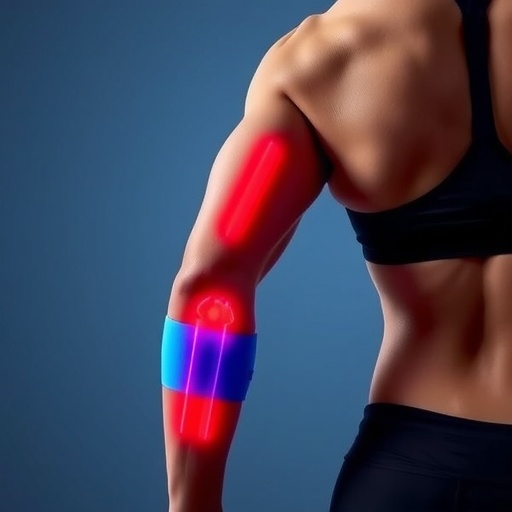
Intermittent parathyroid hormone treatment (iPTH) and mechanical loading through exercise have both been shown to stimulate bone formation. These osteoanabolic stimuli are partially mediated by G protein-coupled receptors. Previous studies have suggested that enhanced signalling through the Gαq/11 pathway inhibits the bone-building actions of PTH, however the influence of enhanced Gαq/11 pathway on exercise has not been reported in vivo.

In a new study published in the journal ‘Calcified Tissue International and Musculoskeletal Research’, investigators used transgenic mice that specifically overexpress Gα11 to compare in vivo the effects of intermittent PTH and treadmill exercise on bonearchitecture, strength and histology. They also investigated how osteoblastic elevation of Gα11 (without constitutive Gαq/11 activity) in these mice influences the skeletal response to anabolic bone therapies.

Professor Jane Mitchell, Associate Chair, Department of Pharmacology and Toxicology. University of Toronto, stated, “In summary, our studies demonstrate that elevated Gα11 in osteoblast lineage cells inhibits the osteoanabolic effects of intermittent PTH and inclined treadmill exercise. That Gα11 mediates these functions in the bone microenvironment may indicate that inhibition of Gα11 signaling can augment the responses to PTH and exercise in increasing bone mass and strength, and may be a suitable candidate to target for treating bone loss.”

###

Reference:

Dela Cruz, A., Grynpas, M.D. & Mitchell, J. Overexpression of Gα11 in Osteoblast Lineage Cells Suppresses the Osteoanabolic Response to Intermittent PTH and Exercise Calcif Tissue Int (2016). doi:10.1007/s00223-016-0158-y
https://link.springer.com/article/10.1007/s00223-016-0158-y

About Calcified Tissue International & Musculoskeletal Research:

Calcified Tissue International & Musculoskeletal Research is a peer-reviewed journal which publishes original preclinical, translational and clinical research, and reviews concerning the structure and function of bone, and other musculoskeletal tissues in living organisms, as well as clinical studies of musculoskeletal disease. It includes studies of cell biology, molecular biology, intracellular signaling, and physiology, as well as research into the hormones, cytokines and other mediators that influence the musculoskeletal system. The journal also publishes clinical studies of relevance to bone disease, mineral metabolism, muscle function, and musculoskeletal interactions. Editors in Chief: Stuart Ralston and René Rizzoli; Musculoskeletal Research Section Editor: Roger Fielding.

> Get free or low-cost access to International Osteoporosis Foundation (IOF) scientific journals via the IOF website: become a member at http://www.iofbonehealth.org/become-member

Media Contact

L. Misteli
[email protected]
41-229-940-100
@iofbonehealth

http://www.iofbonehealth.org

Photo: Professor Jane Mitchell, Associate Chair, Department of Pharmacology and Toxicology. University of Toronto

The post Could suppression of Gαq/11 signaling be a promising target for treating bone loss? appeared first on Scienmag.

Share12Tweet8Share2ShareShareShare2

Related Posts

Healthy Behaviors, Social Ties Reduce Veteran Suicide Risk

December 19, 2025

Forceps Use Linked to Neonatal Bleeding Risks

December 19, 2025

Preoperative Nutrition Boosts Outcomes in Hirschsprung Kids

December 19, 2025

Bone Healing: Strain Effects from Loading Timing

December 19, 2025
Please login to join discussion

POPULAR NEWS

  • Nurses’ Views on Online Learning: Effects on Performance

    Nurses’ Views on Online Learning: Effects on Performance

    70 shares
    Share 28 Tweet 18
  • NSF funds machine-learning research at UNO and UNL to study energy requirements of walking in older adults

    70 shares
    Share 28 Tweet 18
  • Unraveling Levofloxacin’s Impact on Brain Function

    53 shares
    Share 21 Tweet 13
  • MoCK2 Kinase Shapes Mitochondrial Dynamics in Rice Fungal Pathogen

    72 shares
    Share 29 Tweet 18

About

We bring you the latest biotechnology news from best research centers and universities around the world. Check our website.

Follow us

Recent News

Healthy Behaviors, Social Ties Reduce Veteran Suicide Risk

Streptococcus Protein Triggers PBP1a for Cell Division

Nanostructured LiMPO4 Cathodes: Synthesis and Properties

Subscribe to Blog via Email

Success! An email was just sent to confirm your subscription. Please find the email now and click 'Confirm' to start subscribing.

Join 70 other subscribers
  • Contact Us

Bioengineer.org © Copyright 2023 All Rights Reserved.

Welcome Back!

Login to your account below

Forgotten Password?

Retrieve your password

Please enter your username or email address to reset your password.

Log In
No Result
View All Result
  • Homepages
    • Home Page 1
    • Home Page 2
  • News
  • National
  • Business
  • Health
  • Lifestyle
  • Science

Bioengineer.org © Copyright 2023 All Rights Reserved.
