• HOME
  • NEWS
  • EXPLORE
    • CAREER
      • Companies
      • Jobs
    • EVENTS
    • iGEM
      • News
      • Team
    • PHOTOS
    • VIDEO
    • WIKI
  • BLOG
  • COMMUNITY
    • FACEBOOK
    • INSTAGRAM
    • TWITTER
Monday, December 29, 2025
BIOENGINEER.ORG
No Result
View All Result
  • Login
  • HOME
  • NEWS
  • EXPLORE
    • CAREER
      • Companies
      • Jobs
        • Lecturer
        • PhD Studentship
        • Postdoc
        • Research Assistant
    • EVENTS
    • iGEM
      • News
      • Team
    • PHOTOS
    • VIDEO
    • WIKI
  • BLOG
  • COMMUNITY
    • FACEBOOK
    • INSTAGRAM
    • TWITTER
  • HOME
  • NEWS
  • EXPLORE
    • CAREER
      • Companies
      • Jobs
        • Lecturer
        • PhD Studentship
        • Postdoc
        • Research Assistant
    • EVENTS
    • iGEM
      • News
      • Team
    • PHOTOS
    • VIDEO
    • WIKI
  • BLOG
  • COMMUNITY
    • FACEBOOK
    • INSTAGRAM
    • TWITTER
No Result
View All Result
Bioengineer.org
No Result
View All Result
Home NEWS Science News Biology

Could sharks help save shipping industry billions?

Bioengineer by Bioengineer
July 20, 2017
in Biology
Reading Time: 2 mins read
0
Share on FacebookShare on TwitterShare on LinkedinShare on RedditShare on Telegram
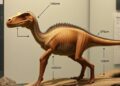
IMAGE

Credit: University of Portsmouth, UK

Whales, sharks, butterflies and lotus leaves might together hold the secret to saving the shipping industry millions and help save the planet, according to a marine biologist at the University of Portsmouth, UK.

Environmental microbiologist Dr Maria Salta is examining how on land and at sea, nature's ability to self-clean might give scientists a window into solutions which could be used on manmade objects at sea.

Dr Salta has been invited to talk about her work at three events across the globve this summer — she will present her work at a science festival in the UK, at a marine biotechnology conference in Brazil. She has also been invited to talk with her collaborator in Oman, Dr Sergey Dobretsov (Sultan Qaboos University) on how and why biofilms attach on artificial surfaces in the Gulf of Oman in comparison to UK waters.

In addition to her expertise in marine biofilms, Dr Salta specialises in environmentally friendly anti-fouling coatings which mimic natural systems to stop marine growth on ship hulls.

Dr Salta will speak at all three events about her extensive work on biofilms and her new work on biomimetics, technologies inspired by nature.

She will discuss how scientists have studied in microscopic detail what makes the skin of whales, sharks and some other marine creatures capable of sloughing off the slime (biofilms) and barnacles, mussels and algae which attach to manmade structures left in the sea for long period.

Scientists have also seen similar ability to shrug off 'piggybackers' on land, with the leaves of lotus and rice and butterfly wings particularly resilient.

It is estimated that the cost associated with hull fouling for the US Navy alone is $US56m a year, and anti-fouling coatings contribute to greenhouse emission reductions of 384 million and 3.6 million tonnes per year for carbon dioxide and sulphur dioxide, respectively. The International Maritime Organisation estimates that without corrective action and the introduction of new antifouling technologies, greenhouse gas emissions could increase from 38 per cent to 72 per cent by 2020.

###

LINKS:

Winchester, UK, science festival event: http://winchesterscifest.org/

Brazil event: http://xiibioinc.com.br/

Media Contact

Kate Daniell
[email protected]
0239-284-3743

http://www.port.ac.uk
Share12Tweet7Share2ShareShareShare1

Related Posts

blank

New Nuclei Isolation Unveils Litopenaeus vannamei Cell Atlas

December 28, 2025
blank

Unlocking Rice Quality: GWAS Sheds Light on Traits

December 28, 2025

Chloroplast Genome of Ecklonia maxima: A Comparative Study

December 27, 2025

Tissue-Specific Gene Expression Variance in Mice

December 27, 2025
Please login to join discussion

POPULAR NEWS

  • Robotic Waist Tether for Research Into Metabolic Cost of Walking

    NSF funds machine-learning research at UNO and UNL to study energy requirements of walking in older adults

    71 shares
    Share 28 Tweet 18
  • Exploring Audiology Accessibility in Johannesburg, South Africa

    51 shares
    Share 20 Tweet 13
  • Nurses’ Views on Online Learning: Effects on Performance

    70 shares
    Share 28 Tweet 18
  • SARS-CoV-2 Subvariants Affect Outcomes in Elderly Hip Fractures

    44 shares
    Share 18 Tweet 11

About

We bring you the latest biotechnology news from best research centers and universities around the world. Check our website.

Follow us

Recent News

ChatGPT Excels in Forensic Pathology Exam Insights

HiSTaR: Mapping Spatial Domains with Hierarchical Transcriptomics

Evaluating Economic Strategies for Maternal-Neonatal Sepsis Solutions

Subscribe to Blog via Email

Enter your email address to subscribe to this blog and receive notifications of new posts by email.

Join 71 other subscribers
  • Contact Us

Bioengineer.org © Copyright 2023 All Rights Reserved.

Welcome Back!

Login to your account below

Forgotten Password?

Retrieve your password

Please enter your username or email address to reset your password.

Log In
No Result
View All Result
  • Homepages
    • Home Page 1
    • Home Page 2
  • News
  • National
  • Business
  • Health
  • Lifestyle
  • Science

Bioengineer.org © Copyright 2023 All Rights Reserved.