Indigenous aquaculture systems in Hawaiʻi, known as loko iʻa or fishponds, can increase the amount of fish and fisheries harvested both inside and outside of the pond. This is the focus of a study published by a team of researchers at the University of Hawaiʻi at Mānoa Hawaiʻi Institute of Marine Biology (HIMB). Today, aquaculture supplies less than 1% of Hawaiʻi’s 70 million pounds of locally available seafood, but revitalization of loko i‘a has the potential to significantly increase locally available seafood.
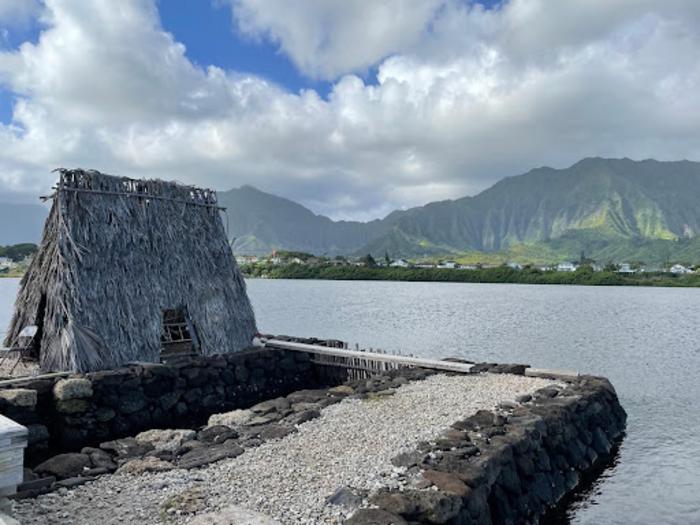
Credit: Anne Innes-Gold
Indigenous aquaculture systems in Hawaiʻi, known as loko iʻa or fishponds, can increase the amount of fish and fisheries harvested both inside and outside of the pond. This is the focus of a study published by a team of researchers at the University of Hawaiʻi at Mānoa Hawaiʻi Institute of Marine Biology (HIMB). Today, aquaculture supplies less than 1% of Hawaiʻi’s 70 million pounds of locally available seafood, but revitalization of loko i‘a has the potential to significantly increase locally available seafood.
According to historical accounts, loko i‘a can create surplus fish inside the pond, but their role as a nursery ground seeding surrounding fish populations has received less attention.
“We have demonstrated the ability of Indigenous aquaculture systems to produce a surplus of fish as well as supplement fisheries in the surrounding estuary,” said lead author and marine biology PhD candidate Anne Innes-Gold. “We have heard people voice the idea that historically, loko iʻa provided nursery grounds that may have supplemented fish populations in the estuary. Our study is the first that we are aware of to demonstrate this idea in academic literature.”
Hawaiʻi’s unique aquaculture system
The Indigenous aquaculture systems found in Hawaiʻi boast a design found nowhere else in the world, and are among the most productive and diverse of their kind. Loko i‘a historically yielded nearly 2 million pounds of fish annually, and hoaʻāina (land tenants) and kiaʻi (caretakers) initially managed them with a “take what you need” mentality to ensure the resource persisted. Most loko i‘a were destroyed in the 20th century, and by 1994 only six of 500 historical loko i‘a were still operating.
“As aquaculture continues to provide a growing proportion of our seafood globally, revival of Indigenous aquaculture systems will be beneficial to sustainably maintain and increase our seafood supply,” said Innes-Gold.
Restoration success story
One success story of loko iʻa restoration is the Heʻeia Fishpond, located in Windward O‘ahu and stewarded by Native Hawaiian nonprofit, Paepae o He‘eia. Their mission is to link Indigenous knowledge with contemporary management to promote cultural sustainability and restore and maintain a loko i‘a for the local community. The benefits of restoring loko i‘a and related systems can help boost local food production, and provide community members with a space to nourish their bodies and minds, connect with ‘āina, practice reciprocity and promote cultural education.
This work was funded by Hawaiʻi Sea Grant, the Heʻeia National Estuarine Research Reserve, and the National Marine Fisheries Service-Sea Grant Fellowship in Population and Ecosystem Dynamics. With their foundational work complete, Innes-Gold and her team plan to simulate potential climate change impacts in a loko iʻa system.
Journal
Ecosphere
DOI
10.1002/ecs2.4797
Method of Research
Computational simulation/modeling
Article Title
Restoration of an Indigenous aquaculture system can increase reef fish density and fisheries harvest in Hawai‘i
Article Publication Date
18-Mar-2024
COI Statement
The authors declare no conflicts of interest.