• HOME
  • NEWS
  • EXPLORE
    • CAREER
      • Companies
      • Jobs
    • EVENTS
    • iGEM
      • News
      • Team
    • PHOTOS
    • VIDEO
    • WIKI
  • BLOG
  • COMMUNITY
    • FACEBOOK
    • INSTAGRAM
    • TWITTER
Monday, September 28, 2026
BIOENGINEER.ORG
No Result
View All Result
  • Login
  • HOME
  • NEWS
  • EXPLORE
    • CAREER
      • Companies
      • Jobs
        • Lecturer
        • PhD Studentship
        • Postdoc
        • Research Assistant
    • EVENTS
    • iGEM
      • News
      • Team
    • PHOTOS
    • VIDEO
    • WIKI
  • BLOG
  • COMMUNITY
    • FACEBOOK
    • INSTAGRAM
    • TWITTER
  • HOME
  • NEWS
  • EXPLORE
    • CAREER
      • Companies
      • Jobs
        • Lecturer
        • PhD Studentship
        • Postdoc
        • Research Assistant
    • EVENTS
    • iGEM
      • News
      • Team
    • PHOTOS
    • VIDEO
    • WIKI
  • BLOG
  • COMMUNITY
    • FACEBOOK
    • INSTAGRAM
    • TWITTER
No Result
View All Result
Bioengineer.org
No Result
View All Result
Home NEWS Science News Health

Coping strategies, a matter of neuron

Bioengineer by Bioengineer
March 2, 2020
in Health
Reading Time: 2 mins read
0
IMAGE
Share on FacebookShare on TwitterShare on LinkedinShare on RedditShare on Telegram

IMAGE

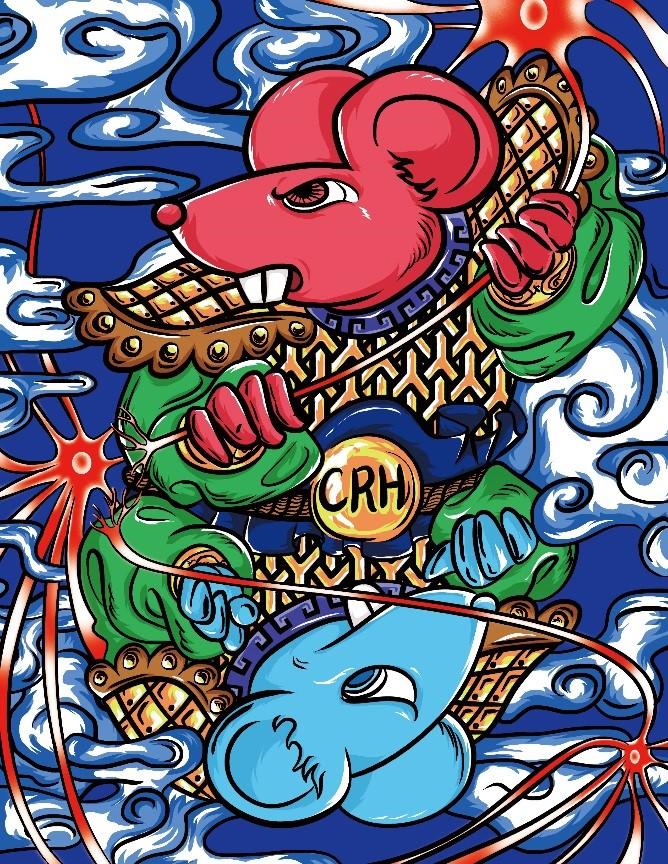
Credit: WANG Jing, CHEN Xiaodong and XU Qizhi


In response to stressors, individuals exhibit different coping styles, each characterized by a set of behavioural, physiological, and psychological responses. The active behavioural style refers to efforts to blunt the impact of stressors and is related to resilience to stress, whereas the passive behavioural style refers to efforts to avoid confronting stressors and is associated with vulnerability to psychopathology. This is a well-known scientific question, shortly called the “fight or flight”. However, the biological basis of the brain has not been fully understood.

Recently, the research team led by Prof. ZHOU Jianging from University of Science and Technology of China (USTC) of Chinese Academy of Science (CAS) found that prefrontal corticotropin-releasing factor (CRF) neurons are recruited during behavioural challenges, and manipulation of CRF neurons motivates the selection of behavioural styles under challenges. They also demonstrated that activation of CRF neurons promotes persistent stress-resistant behaviours. The study was published in Neuron.

By using calcium imaging in vivo and cell-specific targeted viral-mediated gain- or loss-of-function tools, such as pharmacogenetic designer receptors exclusively activated by designer drugs (DREADD) approaches, the researchers investigated how mPFC CRF neurons regulate behavioural style selection during various stress in CRF transgenic mice.

The results showed that genetic ablation or chemogenetic inhibition of dorsal mPFC (dmPFC) CRF neurons increased immobility under the tail-suspension and forced-swimming challenges and induced social avoidance behaviour, whereas activation had the opposite effect on the same measures.

Furthermore, they found that increasing CRF neuronal activity promoted durable resilience to repeated social defeat stress.

These results uncover a critical role of mPFC CRF interneurons in bidirectionally controlling motivated behavioural style selection under stress. This study may point to novel therapeutic targets such as neural circuit modulation for treatment of major depression and post-traumatic stress disorder.

###

Media Contact
Jane FAN Qiong
[email protected]
86-551-636-07280

Original Source

http://english.cas.cn/newsroom/research_news/life/202002/t20200227_230252.shtml

Related Journal Article

http://dx.doi.org/10.1016/j.neuron.2020.01.033

Tags: Biologyneurobiology
Share12Tweet8Share2ShareShareShare2

Related Posts

Trunk Control May Hold a Key to Balance and Fall Risk in Older Adults

September 27, 2026

AI Tells Doctors When It Is Unsure About Cancer Treatment Success

September 27, 2026

When Autism Diagnoses Fade: Early Intervention and Milder Symptoms Mark Children Who Lose the Label

September 27, 2026

Weight-Loss Drugs Are Redrawing the Map of Sleep Medicine

September 27, 2026
Please login to join discussion

POPULAR NEWS

  • Trunk Control May Hold a Key to Balance and Fall Risk in Older Adults

    29 shares
    Share 12 Tweet 7
  • AI Tells Doctors When It Is Unsure About Cancer Treatment Success

    29 shares
    Share 12 Tweet 7
  • Engineered mini CRISPR enzyme gets a 60-fold power boost for gene editing

    29 shares
    Share 12 Tweet 7
  • When Autism Diagnoses Fade: Early Intervention and Milder Symptoms Mark Children Who Lose the Label

    29 shares
    Share 12 Tweet 7

About

We bring you the latest biotechnology news from best research centers and universities around the world. Check our website.

Follow us

Recent News

Trunk Control May Hold a Key to Balance and Fall Risk in Older Adults

AI Tells Doctors When It Is Unsure About Cancer Treatment Success

Engineered mini CRISPR enzyme gets a 60-fold power boost for gene editing

Subscribe to Blog via Email

Enter your email address to subscribe to this blog and receive notifications of new posts by email.

Join 85 other subscribers
  • Contact Us

Bioengineer.org © Copyright 2023 All Rights Reserved.

Welcome Back!

Login to your account below

Forgotten Password?

Retrieve your password

Please enter your username or email address to reset your password.

Log In
No Result
View All Result
  • Homepages
    • Home Page 1
    • Home Page 2
  • News
  • National
  • Business
  • Health
  • Lifestyle
  • Science

Bioengineer.org © Copyright 2023 All Rights Reserved.