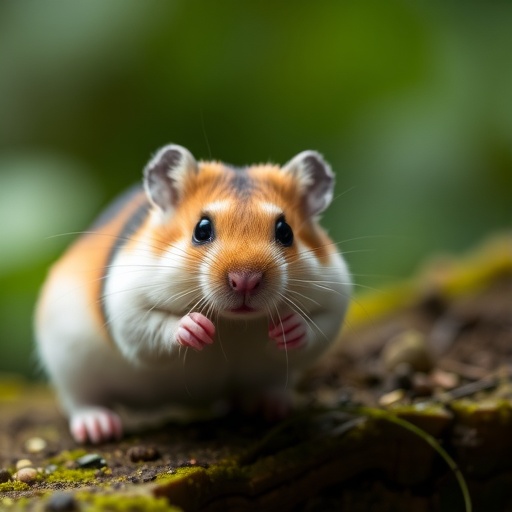
In a groundbreaking study published in Frontiers in Zoology, researchers have revealed fascinating insights into the optional hunting behavior of Cricetinae hamsters. This comprehensive analysis, led by Levenets et al., employs a data compression approach to unveil the intricacies and adaptations of these small mammals. The study has stirred up interest in the field of ethology, sparking discussions about animal behavior and cognition.
Cricetinae, commonly known as hamsters, are small rodents that exhibit a wide range of behaviors in the wild and captivity. The research team recognized the importance of understanding these behaviors, particularly regarding how these creatures hunt for food. Unlike some of their larger counterparts, Cricetinae engage in unique foraging strategies that are both opportunistic and strategic. The application of data compression methodologies allowed researchers to sift through vast amounts of observational data, providing a clearer picture of these behavioral patterns.
One of the key findings of the study is the ability of Cricetinae to adapt their hunting strategies based on environmental cues and availability of resources. The research indicates that these hamsters possess a remarkable level of flexibility in their foraging tactics, demonstrating an understanding of their surroundings and the behavior of their prey. This adaptability is crucial for survival, particularly in habitats where food scarcity may occur.
The investigators employed advanced statistical techniques and algorithms to analyze the data collected during numerous observational studies. This approach not only increased the reliability of the findings but also showcased the potential of data compression methods in behavioral studies. By reducing the complexity of data interpretation, the research team could draw more accurate conclusions about the hunting behaviors exhibited by the hamsters.
Moreover, the study highlights the significance of social interactions among Cricetinae hamsters while hunting. The findings suggest that these rodents can benefit from group dynamics, particularly in terms of knowledge sharing about resource locations. Such behaviors point towards an emerging understanding of social learning within this species, which has traditionally been viewed as solitary foragers.
Additionally, the research sheds light on the cognitive processes that influence hunting behavior in hamsters. Cricetinae exhibit problem-solving abilities when faced with obstacles or changes in their environments. Understanding these cognitive aspects opens the door to further inquiries into the intelligence of small mammals, challenging the perception that only larger animals exhibit complex behavioral patterns.
The implications of this research extend beyond the study of hamsters; they could inform conservation strategies for various rodent species facing habitat loss. By understanding how these animals adapt their hunting behavior, conservationists can better tailor interventions that support their populations in changing environments.
The study also raises additional questions about the evolutionary advantages of such flexible foraging strategies among small mammals. It prompts a reevaluation of the role that intelligence and adaptability play in the survival of species in a rapidly changing world. As human impacts on ecosystems grow, understanding these dynamics becomes increasingly important.
In terms of methodology, the data compression approach proved invaluable. It allowed researchers to handle large datasets without losing essential information, ensuring that subtle behavioral nuances were not overlooked. The innovative use of technology in this context illustrates how modern tools can enhance our understanding of animal behavior.
With the study’s release, it has attracted attention not only from biologists but also from ecologists and conservationists, creating a multidisciplinary dialogue around the findings. The research team’s conclusions resonate with broader discussions about ethical considerations in wildlife conservation, emphasizing how important it is to consider animal behavior in our approaches to environmental stewardship.
Anticipation builds as the scientific community looks forward to future studies inspired by Levenets et al.’s work. Their findings open up avenues for more in-depth research on not just Cricetinae, but also other small mammals that share their habitats and behavioral traits. Collaborative efforts across various fields may lead to even more exciting discoveries about animal behavior and ecology.
In conclusion, the comparative analysis conducted by Levenets and colleagues presents a remarkable convergence of advanced methodologies and behavioral ecology. Their work not only enriches our understanding of Cricetinae hamsters but also encourages a renewed appreciation for the intricate behaviors exhibited by small mammals. As researchers continue to explore these dimensions, the potential for new revelations about the natural world remains limitless.
Subject of Research: Optional hunting behavior in Cricetinae hamsters
Article Title: Comparative analysis of optional hunting behavior in Cricetinae hamsters using the data compression approach
Article References:
Levenets, J., Panteleeva, S., Reznikova, Z. et al. Comparative analysis of optional hunting behavior in Cricetinae hamsters using the data compression approach.Front Zool 21, 19 (2024). https://doi.org/10.1186/s12983-024-00540-4
Image Credits: AI Generated
DOI: https://doi.org/10.1186/s12983-024-00540-4
Keywords: Cricetinae hamsters, hunting behavior, data compression, ethology, animal cognition, social learning, conservation, behavioral ecology.
Tags: animal behavior and cognitionCricetinae hamster hunting behaviordata compression in animal studiesenvironmental adaptability in small mammalsethology of Cricetinaeforaging tactics of hamstersinsights into hamster foraging strategiesobservational data analysis in ethologyoptional hunting strategies in hamstersresearch on hamster behaviorsmall mammal hunting adaptationsunique behaviors of Cricetinae