The study, published in Chemical and Biological Technologies in Agriculture, addresses the growing concern that this common antidepressant contaminates aquatic ecosystems and food products due to incomplete removal during wastewater treatment. The team utilized a computationally guided approach to design haptens, which are small molecules used to generate antibodies, thereby overcoming a significant bottleneck in the development of high-specificity immunoassays for small molecules.
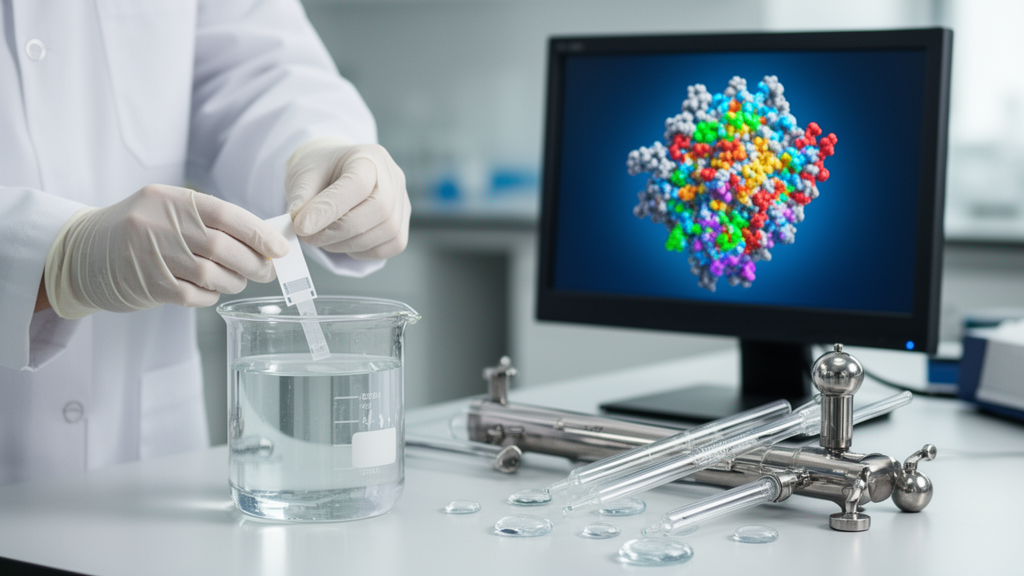
The central challenge in detecting citalopram has been the difficulty in designing haptens that preserve the molecular characteristics of the target drug while enabling the production of highly specific antibodies. To solve this, the research team applied a rational in silico strategy to screen potential hapten candidates. This computational process involved systematically evaluating conformational similarity, charge distribution, physicochemical properties, and electrostatic potential. By maximizing the preservation of the core epitope and molecular features of citalopram, the researchers aimed to ensure that the resulting antibodies would bind specifically to the target compound without reacting to similar substances.
Following the computational screening, the optimal hapten candidates were selected for animal immunization. This process successfully yielded a high-specificity monoclonal antibody designated as mAb12H. The performance of this antibody was rigorously characterized, revealing a half maximal inhibitory concentration (IC50) of 0.88 ng/mL.
The study reported that mAb12H showed no appreciable cross-reactivity toward ten structural and functional analogs of citalopram. This lack of cross-reactivity was observed even at the highest tested concentration of 1000 ng/mL for these analogs.
To further understand the interaction between the antibody and citalopram, the researchers performed molecular docking simulations. These computational models elucidated the specific recognition mechanism governing the binding process. The results revealed that the stable and selective binding of citalopram is dominated by a combination of forces, including π-π stacking, hydrophobic microenvironment confinement, and auxiliary hydrogen bonding.
The assay achieved a cut-off value of 5.0 ng/mL in environmental water samples. In dietary supplements, the cut-off values ranged from 40 to 45 ng/g.
The accuracy and reliability of the assay were evaluated through recovery studies and precision tests. The coefficients of variation, which measure the precision of the results, ranged from 3.44% to 9.85%.
This work provides a practical paradigm for rational hapten design, demonstrating how computational tools can enhance the specificity of small-molecule immunoassays. By integrating in silico screening with experimental validation, the researchers overcame traditional limitations in antibody generation. The resulting colloidal gold immunochromatographic assay offers a viable tool for on-site screening of citalopram in water and dietary supplements, contributing to the broader effort to monitor pharmaceutical contaminants in the environment and food supply.
Subject of Research: Development of a colloidal gold immunochromatographic assay for citalopram detection using computationally designed haptens
Article Title: Computationally guided hapten design enables a colloidal gold immunochromatographic assay for rapid citalopram detection in water and dietary supplements
Article References: Xia, Y., Lei, H., Yuan, Z., Huang, J., Tan, H., Kuang, Y., Liu, K., & Guo, C. (2026). Computationally guided hapten design enables a colloidal gold immunochromatographic assay for rapid citalopram detection in water and dietary supplements. Chemical and Biological Technologies in Agriculture. https://doi.org/10.1186/s40538-026-01094-9
Image Credits: AI Generated
DOI: 10.1186/s40538-026-01094-9
Keywords: citalopram, immunochromatographic assay, hapten design, computational screening, water quality, dietary supplements, monoclonal antibody, pharmaceutical contaminants, Computationally, guided, hapten, design
News Source: Gregory Coleman. (November 10, 2026). Computational Design Yields Rapid Citalopram Water Test. Scienmag.