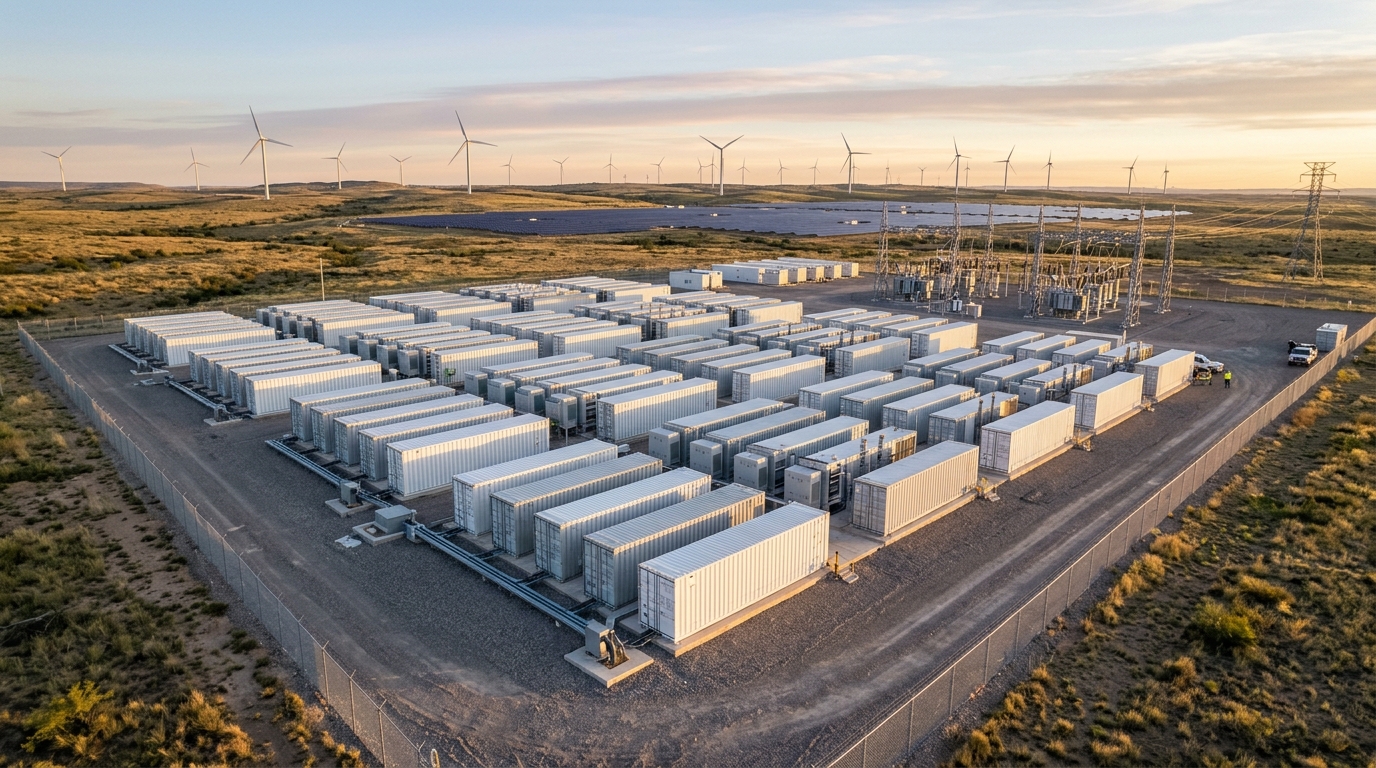
A comprehensive technological review has systematically evaluated the global landscape of energy storage systems, detailing how mechanical, electrochemical, chemical, and thermal technologies must integrate to stabilize renewable power grids. Worldwide electricity demand expanded by 4.3 percent in 2024, nearly doubling the 1.3 percent annual growth rate observed across the previous decade, while projections indicate continued annual growth between 3 and 4 percent through 2026. Concurrently, international climate agreements established at COP28 committed governments to tripling installed renewable generation from approximately 3400 gigawatts in 2022 to at least 11000 gigawatts by 2030. Although a record-breaking addition of nearly 700 gigawatts occurred worldwide in 2024, primarily driven by utility-scale solar photovoltaics and onshore wind installations, current national targets fall roughly 30 percent short of the required COP28 milestone. Modeling from the International Renewable Energy Agency projects that renewables must supply over 90 percent of total electricity generation by 2050 to maintain a 1.5 degree Celsius warming limit.
The rapid expansion of weather-dependent generation introduces acute operational difficulties across electricity networks, because solar irradiance and wind velocity fluctuate across timescales ranging from milliseconds to seasonal transitions. These inherent variations generate severe grid integration problems, including voltage and frequency instability, reduced synchronous inertia, and reverse power flows through transmission infrastructure. In several leading renewable markets, average curtailment rates already exceed 10 percent of total clean electricity production due to local transmission bottlenecks and demand mismatches. Mitigating these systemic vulnerabilities requires flexible energy storage capacity capable of decoupling power generation from real-time electrical consumption. The review stresses that storage applications span diverse operational horizons, encompassing millisecond-level frequency regulation, multi-hour daily peak shifting, and multi-day or seasonal energy balancing. Furthermore, as modern power grids increasingly link with heating systems, electrified transport fleets, and industrial hydrogen facilities, storage infrastructure acts as the indispensable connective foundation necessary to maintain absolute network reliability and decarbonize broader economic activities.
Mechanical energy storage systems currently provide the vast majority of worldwide operational capacity, led predominantly by pumped hydro storage facilities. Operating by transferring water between two reservoirs situated at different elevations, pumped hydro stores surplus energy as gravitational potential during low-demand periods and discharges it through hydraulic turbines during peak demand. Pumped hydro represents approximately 94 percent of global installed storage capacity by power rating and over 99 percent in terms of total stored energy capacity, encompassing roughly 179 gigawatts across more than 160 operational facilities worldwide. It exhibits high round-trip efficiencies between 70 and 80 percent, minimal degradation, and operational lifespans exceeding 50 years. China leads global implementation with more than 50 gigawatts operational and 89 gigawatts under construction, featuring landmark projects like the 3.6 gigawatt Fengning facility with 40 gigawatt-hours of storage capability. Other major installations include the 3.003 gigawatt Bath County station in the United States and the 1.728 gigawatt Dinorwig facility in Wales.
Beyond pumped hydro, compressed air energy storage and flywheels offer distinct mechanical mechanisms for balancing network loads. Conventional diabatic compressed air storage injects ambient air into underground geological formations or salt caverns using off-peak electricity, later reheating the released air with natural gas to drive expansion turbines. This traditional process achieves moderate round-trip efficiencies between 40 and 70 percent, though gas combustion introduces localized carbon dioxide emissions. Modern advancements in adiabatic and isothermal designs capture and store the thermal energy generated during compression, reinjecting this heat during discharge to eliminate fossil fuel combustion and elevate round-trip efficiency beyond 50 percent. In contrast, flywheel energy storage systems harness rotational kinetic energy by spinning massive composite rotors supported by magnetic bearings inside vacuum enclosures. Flywheels achieve exceptional round-trip efficiencies between 80 and 90 percent and rotational speeds reaching 50000 revolutions per minute, delivering instantaneous response within seconds to minutes for primary frequency stabilization and power-quality management.
Electrochemical storage technologies provide modular, highly scalable solutions that support residential, commercial, and utility-scale deployments across modern power systems. Lead-acid batteries remain widely deployed due to mature manufacturing ecosystems and low initial capital expenditures ranging from 100 to 200 dollars per kilowatt-hour, but their limited cycle life and environmental handling issues constrain utility expansion. Lithium-ion batteries have established commercial dominance across portable electronics, electric vehicles, and stationary grid facilities, supported by an 80 percent decline in levelized storage costs over the preceding decade. Delivering high energy density and superior round-trip efficiency, utility-scale four-hour lithium-ion installations now operate with levelized costs between 130 and 300 dollars per megawatt-hour. Meanwhile, emerging sodium-ion chemistries utilizing earth-abundant materials and Prussian blue analogue cathodes offer promising, lower-cost alternatives with reduced supply-chain vulnerabilities, despite currently demonstrating lower energy densities. Additionally, electrochemical supercapacitors operate effectively across wide temperature windows from minus 40 to 70 degrees Celsius, supplying rapid charge-discharge bursts for transient stabilization.
For intermediate and long-duration stationary requirements, redox flow batteries and chemical carriers decouple total energy capacity from instantaneous power ratings. Vanadium-redox flow systems store active chemical species in external electrolyte tanks, allowing independent scaling of energy volume while achieving levelized storage costs between 200 and 400 dollars per megawatt-hour for discharge durations spanning 6 to 10 hours. On seasonal timescales, chemical energy storage through hydrogen conversion provides substantial capacity for multi-day grid balancing. Hydrogen boasts a high gravimetric lower heating value of 120 to 142 megajoules per kilogram, though its low ambient volumetric density necessitates high-pressure compression up to 700 bar, cryogenic liquefaction at minus 253 degrees Celsius, or absorption into metal hydrides and liquid organic carriers. The full power-to-hydrogen-to-power cycle currently demonstrates round-trip efficiencies between 30 and 45 percent, resulting in elevated levelized storage costs from 500 to 1500 dollars per megawatt-hour, which future electrolyzer advancements may reduce below 200 dollars per megawatt-hour by 2030.
Synthetic fuel synthesis and thermal energy storage systems broaden the functional scope of clean energy shifting across industrial sectors. Power-to-gas and power-to-liquid pathways combine electrolytic green hydrogen with captured carbon dioxide to manufacture carbon-neutral methane, methanol, and synthetic hydrocarbons that utilize established distribution infrastructure. Pilot electrofuel facilities currently demonstrate conversion efficiencies exceeding 50 percent, yielding synthetic liquid fuels with gravimetric energy densities near 10 kilowatt-hours per kilogram to decarbonize aviation and maritime shipping. In parallel, thermal energy storage captures excess heat across sensible, latent, and thermochemical media. Sensible storage using molten salts or high-temperature concrete achieves thermal retention efficiencies of 90 percent, while latent heat materials such as salt hydrates attain storage densities up to 200 kilowatt-hours per cubic meter. Advanced thermochemical systems exploiting reversible chemical reactions achieve energy densities exceeding 250 kilowatt-hours per cubic meter, providing cost-effective thermal balancing with levelized costs between 60 and 180 dollars per megawatt-hour.
Techno-economic evaluations show that no solitary storage technology can optimally address every operational regime across modern electrical networks. Pumped hydro and compressed air systems maintain the lowest levelized storage costs for bulk grid management, typically ranging between 150 and 250 dollars per megawatt-hour over multi-decade operational lifetimes. Conversely, lead-acid installations incur higher levelized costs of 280 to 450 dollars per megawatt-hour due to accelerated degradation and frequent replacement cycles. Flywheels and supercapacitors exhibit levelized costs exceeding 500 dollars per megawatt-hour under energy-intensive duty cycles, making them economically viable exclusively for rapid, short-duration power quality and frequency regulation rather than bulk energy arbitrage. Selecting an optimal storage configuration therefore requires comprehensive system-level accounting of capital expenditures, anticipated cycle frequency, required discharge durations, and geographical site constraints, confirming that distinct operational duty cycles demand tailored technological pairings.
A rigorous evaluation of storage sustainability requires comprehensive cradle-to-grave life-cycle assessment encompassing raw material extraction, manufacturing, operation, and decommissioning. Lithium-ion production generates substantial upstream environmental burdens, as extracting one ton of lithium from South American brines consumes an estimated 1.9 to 2.2 million liters of water, exacerbating regional hydrological stress. Furthermore, mining cobalt and nickel causes notable land disturbance, groundwater contamination, and documented socio-economic concerns. Life-cycle assessments report cradle-to-gate greenhouse gas emissions between 61 and 106 kilograms of carbon dioxide equivalent per kilowatt-hour of manufactured lithium-ion capacity, while global commercial recycling rates remain below 5 percent. Lead-acid batteries achieve industrial recovery rates exceeding 95 percent, yet informal recycling in developing regions poses severe toxic lead exposure risks. Thermal storage systems require careful mineral sourcing for molten salts, while hydrogen yields meaningful environmental benefits only when produced via renewable electrolysis rather than unabated fossil methane reforming.
To overcome individual technological boundaries, hybrid energy storage systems and cross-sector coupling strategies integrate complementary assets under unified supervisory control. Hybrid configurations combine high-power devices like lithium-ion batteries or supercapacitors with high-energy media such as flow batteries or hydrogen storage, utilizing predictive energy management algorithms to allocate transient and bulk demands. Operational validation appears in landmark deployments, including Norway’s Utsira Island wind-hydrogen system, Corsica’s MYRTE photovoltaic platform, Japan’s Oshima Island microgrid, the European HYBRIS flow-battery project, and the United Kingdom’s 50-megawatt Highview Power liquid-air facility. Expanding beyond electricity networks, sector coupling frameworks like Germany’s Energiewende systematically link power, heating, transport, and heavy industry to absorb surplus renewable generation. These integrated architectures consistently achieve renewable penetrations exceeding 90 percent while reducing curtailment, demonstrating that interdisciplinary coordination across materials science, engineering, and regulatory policy remains essential for realizing resilient decarbonized energy systems.
Subject of Research: Comparative review of renewable energy storage technologies and grid integration
Article Title: A comparative and technological review of energy storage technologies for renewable power systems
Article References: Ali, M. F., Sheikh, M. R. I., Musha, A., Sanvi, A. H., Ferdous, A. H. M. I., & Obaidi, O. (2026). A comparative and technological review of energy storage technologies for renewable power systems. Discover Energy, 6(1), Article 78. https://doi.org/10.1007/s43937-026-00166-z
Image Credits: AI Generated
DOI: 10.1007/s43937-026-00166-z
Keywords: energy storage, renewable energy, pumped hydro storage, lithium-ion batteries, compressed air energy storage, hydrogen storage, flow batteries, grid stability, thermal energy storage, levelized cost of storage, comparative, technological
News Source: Faith Mcneil. (November 9, 2026). Comprehensive Review Evaluates Global Energy Storage Technologies for Renewable Grid Integration. Scienmag.