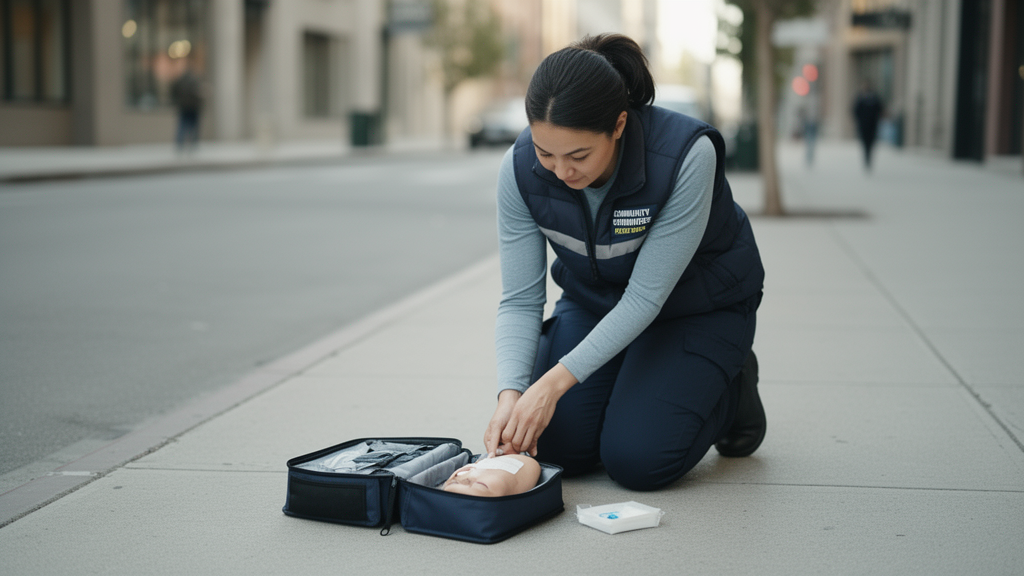
A qualitative study examining real-world overdose reversals has found that community responders rely on adaptive improvisation and embodied knowledge rather than simple standardized procedures. Researchers investigated the emergency practices of 74 people who use drugs across Pennsylvania, Michigan, and California, observing that peer overdose response remains poorly understood despite overdoses increasingly occurring outside medical settings.
The research team conducted semi-structured interviews that explored participants’ overdose response experiences across hundreds of community reversals. To examine these qualitative accounts, the researchers employed reflexive thematic analysis informed by the Critical Decision Method, organizing their empirical findings into four overarching themes that describe how responders navigate real-world emergencies.
The first theme identified an ongoing interplay between preparation and adaptation, with responders regularly departing from standardized approaches during critical events. Study participants described modifying their actions according to specific contextual factors, including the suspected drug type involved in the overdose event as well as the individual physical characteristics of the person overdosing.
The second theme highlighted perceptual and material precarity encountered during community interventions. Responders reported navigating acute conditions of time distortion, operating with incomplete situational information, and managing sudden device failures during emergency events, all of which added substantial complexity to their reversal efforts.
The third theme documented the physical, spatial, and interpersonal demands of managing bodies, spaces, and social dynamics. Responders routinely addressed difficult physical environments, such as breaking down locked doors to access individuals in danger, while simultaneously taking active measures to control panicked bystanders gathered at the scene.
Ethical tensions formed the fourth theme, particularly regarding personal dignity, individual autonomy, and the risk of precipitated withdrawal. Responders carefully weighed these ethical considerations while managing critical situations, with the researchers noting that most study participants had personal experience with withdrawal themselves.
To navigate these operational complexities, peer responders relied on pattern recognition, situational improvisation, and experientially developed heuristics. Despite encountering multiple simultaneous overdoses, hostile environments, and severe material constraints, few participants reported unsuccessful reversals, illustrating that effective community overdose response defies simple procedural steps and requires embodied knowledge built over time.
Based on these qualitative accounts, the authors suggested significant value in designing overdose trainings that actively build adaptive expertise rather than teaching only rigid procedural rules. The findings also highlight the importance of establishing dedicated support systems for community responders, accounting for legal barriers that complicate response, and ensuring the availability of multiple naloxone formulations, including intramuscular options.
Subject of Research: Community overdose response practices among people who use drugs
Article Title: Beyond protocol: the complex choreography of community overdose response
Article References: Sibley, A. L., Colston, D. C., Joniak-Grant, E., Coleman, B., McAninch, J., Dezman, Z. D. W., Bell, A., Visnich, M., Alsum, S., Jama, S., Doe-Simkins, M., Wheeler, E. J., & Dasgupta, N. (2026). Beyond protocol: the complex choreography of community overdose response. Harm Reduction Journal. https://doi.org/10.1186/s12954-026-01586-9
Image Credits: AI Generated
DOI: 10.1186/s12954-026-01586-9
Keywords: overdose response, harm reduction, naloxone, intramuscular naloxone, peer responders, people who use drugs, precipitated withdrawal, qualitative research, reflexive thematic analysis, critical decision method, adaptive expertise, overdose reversals, community health, experiential heuristics, emergency response, drug overdose
News Source: Glenn Wilkins. (November 24, 2026). Community Overdose Responders Rely on Adaptive Improvisation Over Rigid Protocols. Scienmag.