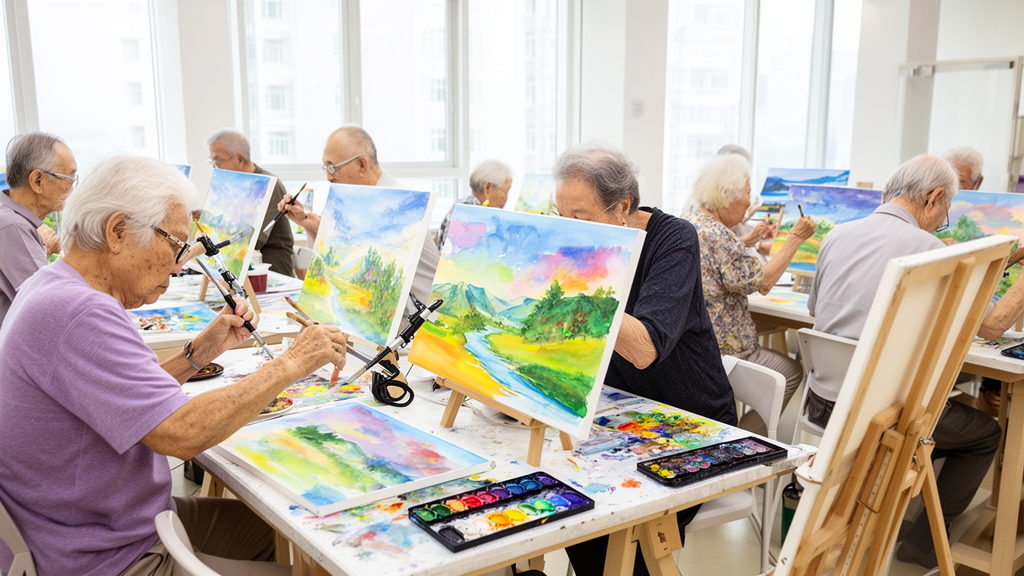
A mixed-methods process evaluation conducted in Macao found that a visual arts-based intervention designed to promote psychosocial health among community-dwelling stroke survivors achieved high implementation fidelity and positive participant evaluations. Across 60 group sessions, the interventionist delivered 100 percent of the scheduled intervention activity, while adherence to core intervention components reached 94.3 percent.
The intervention had previously been developed and evaluated for its effectiveness in supporting psychosocial health among community-dwelling stroke survivors, but its implementation process had not yet been assessed. Researchers sought to evaluate the delivery process to understand how to improve implementation quality in community settings.
Investigators Mimi Wai Man Chan, Janet Wing Hung Sit, and Suzanne Hoi Shan Lo integrated quantitative and qualitative approaches for the evaluation. Quantitatively, the team examined program reach, participant attendance, dose delivered, and session duration using descriptive statistics, alongside post-session fidelity checklists and participant satisfaction surveys.
For the qualitative evaluation, the researchers reviewed intervention delivery records and conducted semi-structured interviews to gather participants’ perspectives regarding the program. These qualitative records and interview transcripts were analyzed using narrative analysis and iterative categorization.
Quantitative findings revealed an average reach of 5.7 percent of the stroke population within community settings in Macao. Participants attended an average of 88.2 percent of sessions, and the average session duration was 82.5 minutes across the 60 delivered group sessions. Furthermore, almost 80 percent of participants reported being satisfied with the intervention and satisfied with the psychosocial benefits contributed by the intervention.
Analysis of participant interviews and delivery records identified inclusive environments, the professional literacy of interventionists, and cross-sectoral collaboration across community services as crucial factors affecting implementation. The authors noted that the program could be further optimized by incorporating inclusive art activities with varied activity levels, offering adaptive tools for survivors who lost function in one upper limb, and integrating the intervention into broader healthcare and rehabilitation systems.
Subject of Research: Process evaluation of a community visual arts intervention for stroke survivors
Article Title: A mixed-methods process evaluation of the implementation of a visual arts-based intervention to promote psychosocial health among stroke survivors in the community
Article References: Chan, M. W. M., Sit, J. W. H., & Lo, S. H. S. (2026). A mixed-methods process evaluation of the implementation of a visual arts-based intervention to promote psychosocial health among stroke survivors in the community. BMC Health Services Research. https://doi.org/10.1186/s12913-026-16149-8
Image Credits: AI Generated
DOI: 10.1186/s12913-026-16149-8
Keywords: stroke survivors, visual arts intervention, process evaluation, mixed-methods research, psychosocial health, community health services, implementation fidelity, participant attendance, session length, dose delivered, satisfaction surveys, semi-structured interviews, iterative categorisation, narrative analysis, Macao healthcare, adaptive art tools, cross-sectoral collaboration, upper limb impairment
News Source: Cassandra Pierce. (November 14, 2026). Community Arts Program for Stroke Survivors Achieves High Implementation Fidelity in Macao. Scienmag.