Credit: Neil Paprocki, HawkWatch International
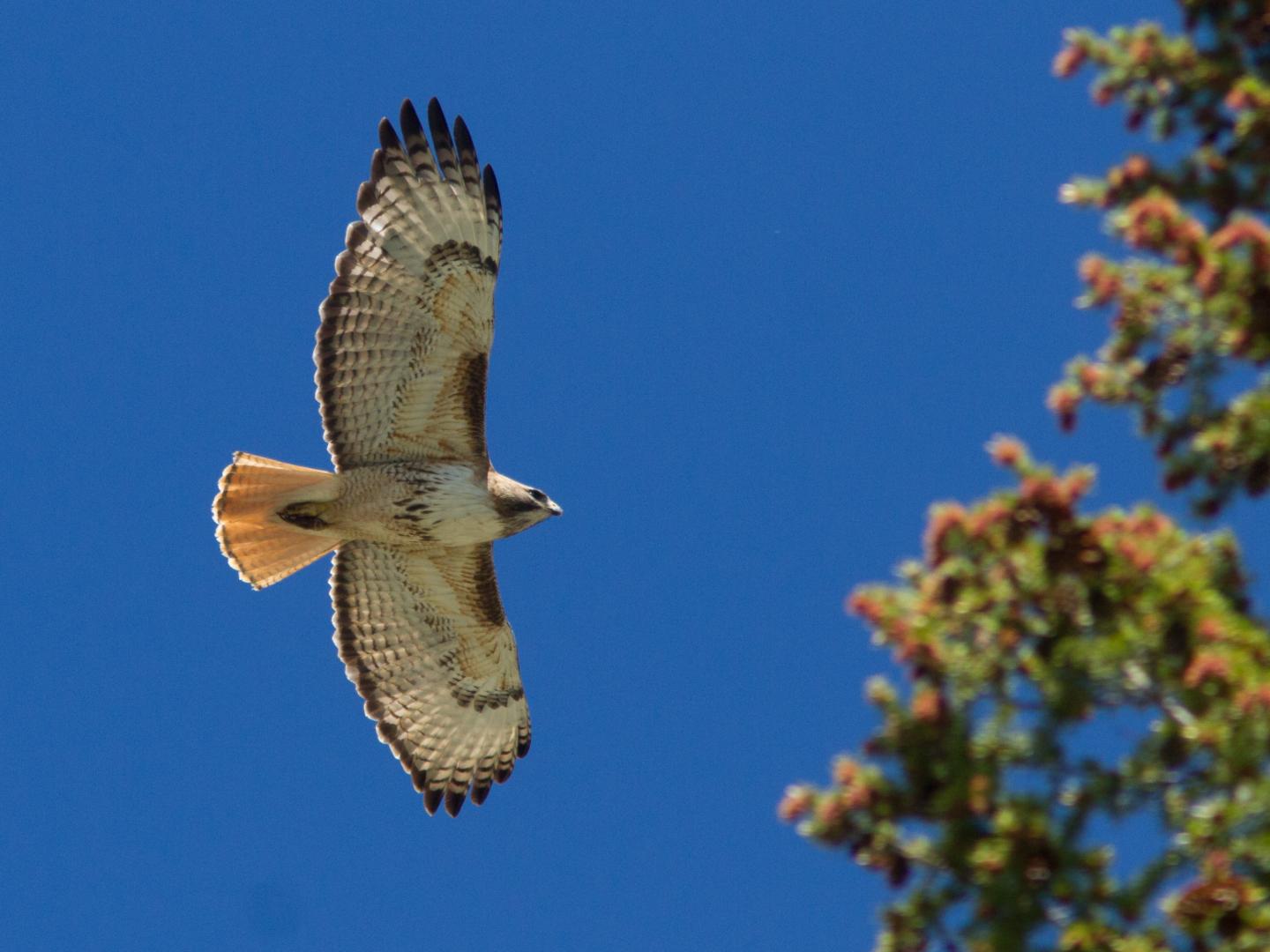
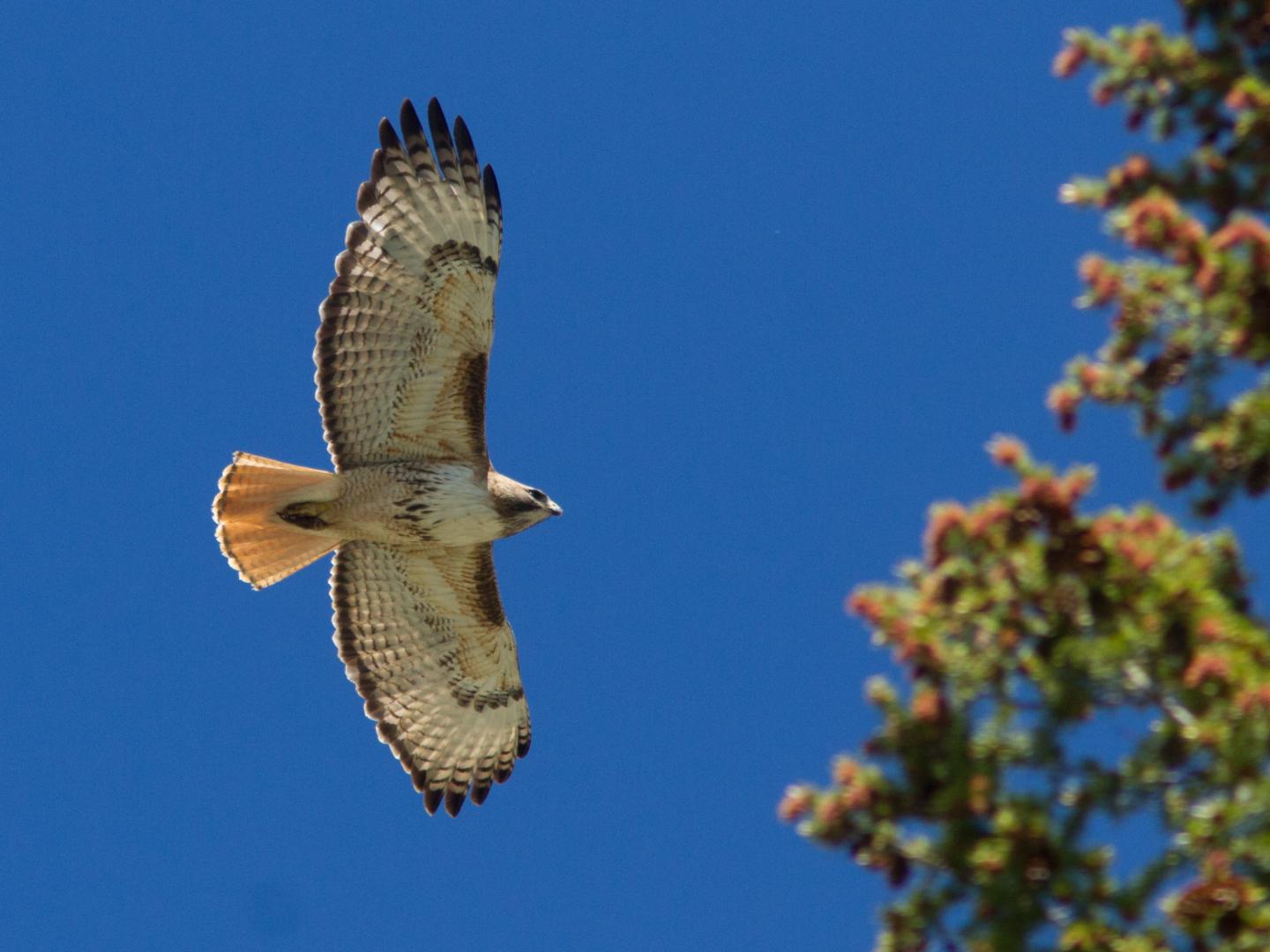
Bird species' distributions and migratory behavior are shifting in response to changes in climate and land-use, but surveys that focus on a particular season can cause scientists to miss trends in the bigger picture. A new study from The Condor: Ornithological Applications tackles this problem by combining Red-tailed Hawk counts from both migration and winter, and finds that while the hawks' numbers are stable overall, their migratory behavior is undergoing a change.
To get a more complete picture of Red-tailed Hawks' population status, Neil Paprocki of HawkWatch International and his colleagues compared data from the Raptor Population Index, which is based on counts of raptors during migration, with Christmas Bird Counts, which are carried out by amateur birdwatchers in December and January. They found declining hawk numbers at 43% of the migration count sites, with increases at only a few sites located in the western flyway. Among the winter counts, however, 67% showed increases, spread across all regions surveyed. The greatest increases were reported from northern latitudes.
The migration data alone would suggest that Red-tailed Hawks are on the decline in North America — but the full picture actually indicates stable to increasing populations, with an ongoing shift in migratory behavior. The hawks appear to be wintering farther north than they have in the past, explaining the lower numbers seen on migration. "We wanted to develop a more comprehensive view of raptor population change, using data from multiple stages of the annual cycle," says Paprocki. "What does this study tell us about how Red-tailed Hawks are adapting to environmental change? It doesn't tell us anything directly, but the results suggest that Red-tailed Hawks may be responding to climate change, land use change, or other environmental changes by migrating shorter distances or becoming year-round residents."
Hawks breed at low densities, including at high latitudes where they can be difficult to survey. This makes migration and winter surveys especially important for monitoring these species. "Many North American hawks, eagles, and falcons are counted at watch sites during migration, and monitoring programs use counts as an index of population size. The interpretation that trends or lack thereof in count data are indicative of changes in populations assumes that the proportion of the population passing by the migration site remains consistent over time. Unfortunately, this assumption may be at risk, as there is strong evidence that raptor migration strategies are changing in response to climate and land use change," according to Julie Heath of Boise State University, a raptor biologist who was not involved with the study. "Paprocki et al. do an excellent job highlighting how changes in annual cycles could affect our ability to monitor raptors and how the use of additional information can provide insight to trends in migration counts."
###
"Combining migration and wintering counts to enhance understanding of population change in a generalist raptor species, the North American Red-tailed Hawk" will be available February 8, 2017, at http://americanornithologypubs.org/doi/full/10.1650/CONDOR-16-132.1 (issue URL http://americanornithologypubs.org/toc/cond/119/1).
About the journal: The Condor: Ornithological Applications is a peer-reviewed, international journal of ornithology. It began in 1899 as the journal of the Cooper Ornithological Club, a group of ornithologists in California that became the Cooper Ornithological Society, which merged with the American Ornithologists' Union in 2016 to become the American Ornithological Society.
Media Contact
Rebecca Heisman
[email protected]
http://americanornithologypubs.org/