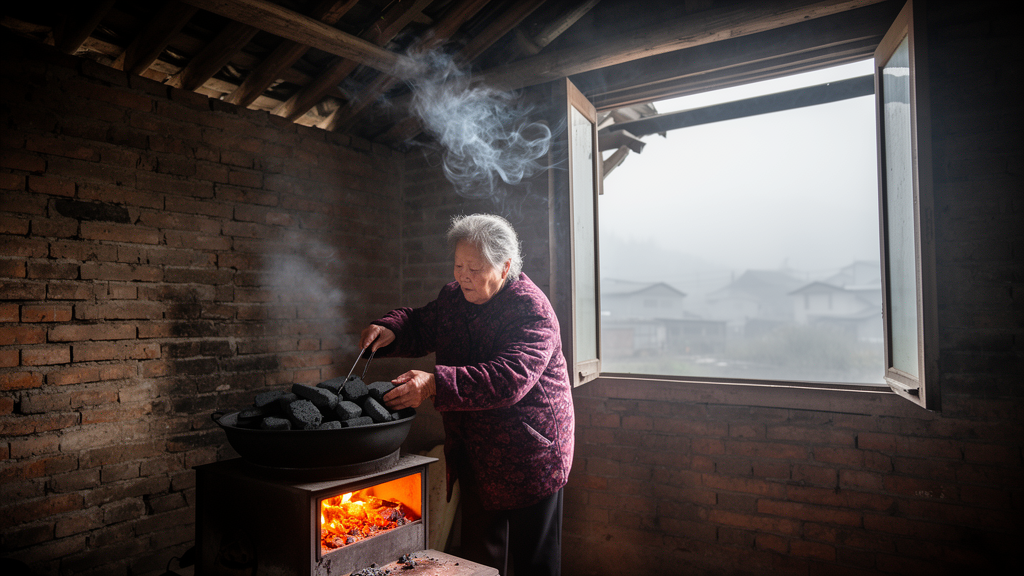
A prospective longitudinal investigation tracking thousands of community-dwelling middle-aged and older adults across China has revealed that concurrent exposure to ambient fine particulate matter and household solid fuel combustion is associated with a significantly elevated risk of incident stroke. Drawing upon multi-year records from the China Health and Retirement Longitudinal Study, researchers examined how individual and joint exposures to outdoor air pollution and domestic fuel use influenced stroke incidence over an extended follow-up period. The investigation established that participants who routinely relied on solid fuels such as coal, crop residue, or wood for cooking and domestic heating exhibited higher hazards of developing a first-ever physician-diagnosed stroke compared to those utilizing clean energy sources. Furthermore, residing in regions characterized by high levels of ambient fine particulate matter measuring 2.5 micrometers or smaller correlated with an increased stroke risk, highlighting how environmental exposures across outdoor and indoor domains jointly compound cerebrovascular vulnerability.
The public health context motivating the study centers on the massive national and global burden imposed by cerebrovascular disorders, which represent a leading cause of death and long-term disability in China. As detailed in background data referenced by the research team, cardiovascular disease crude mortality is projected to experience substantial increases in upcoming decades, while stroke alone currently accounts for millions of annual hospitalizations, incident events, and fatalities across the country. Although an estimated 84 percent of the stroke burden is attributable to modifiable environmental, behavioral, and metabolic risk factors, ambient particulate matter and household air pollution remain among the most ubiquitous yet inadequately controlled exposures. While previous literature has independently linked long-term ambient particulate concentration to cardiovascular morbidity and separately tied household solid fuel smoke to adverse respiratory and circulatory outcomes, few prospective studies have rigorously characterized the combined and potentially interacting hazards of both pollution sources within the same cohort.
To evaluate these overlapping environmental factors, the investigators utilized a study sample drawn from the China Health and Retirement Longitudinal Study, a nationally representative survey that initiated baseline assessments between 2011 and 2012 across 28 Chinese provinces. Following the application of rigorous exclusion criteria that eliminated individuals with a baseline history of stroke, those lacking follow-up data between 2013 and 2020, and participants with incomplete environmental or household fuel records, the analytical cohort comprised 13,917 adults with an average baseline age of 58.90 years. Incident stroke events were systematically identified during subsequent biennial and triennial interview waves completed in 2013, 2015, 2018, and 2020. The primary study outcome was defined as a first-ever stroke diagnosed by a physician, verified through structured questionnaire responses, documented diagnosis dates, or corroborating medical records reflecting active clinical intervention for acute cerebrovascular events.
Assessment of ambient air pollution exposure relied on high-resolution annual ground-level concentration data generated by the China High Air Pollutants dataset, which synthesizes ground-based monitoring networks, atmospheric reanalysis simulations, and multi-source satellite remote sensing via artificial intelligence algorithms. For each participant, long-term ambient particulate exposure was calculated as the county-level mean concentration during the 12-month period preceding the baseline survey. The cohort was stratified into three exposure tiers using cutoff points established by X-tile software: a low-exposure reference group experiencing annual levels below 41.12 micrograms per cubic meter, an intermediate tier exposed to concentrations between 41.12 and 74.09 micrograms per cubic meter, and a high-exposure cohort residing in counties with average concentrations reaching or exceeding 74.10 micrograms per cubic meter. Concurrently, household energy profiles were classified based on standardized personal interviews inquiring about primary cooking and heating fuels, separating clean energy options from solid fuels comprising coal, wood, and biomass residues.
Over the course of the observational follow-up period through 2020, a total of 1,060 participants developed an incident stroke. In multivariable Cox proportional hazards models adjusting for comprehensive demographic, behavioral, and clinical covariates—including age, sex, educational attainment, urban versus rural residence, body mass index, smoking habits, alcohol intake, physical activity levels, estimated glomerular filtration rate, and pre-existing chronic conditions—both pollution metrics demonstrated independent associations with stroke risk. Participants utilizing household solid fuels experienced a 38 percent higher risk of incident stroke relative to clean fuel users, yielding an adjusted hazard ratio of 1.38 with a 95 percent confidence interval spanning from 1.18 to 1.62. Similarly, residing in areas with high ambient particulate levels was associated with a 25 percent increase in stroke risk compared to low-exposure environments, reflected by a hazard ratio of 1.25 and a 95 percent confidence interval between 1.04 and 1.51.
When examining joint exposures across six discrete categorical combinations, the researchers identified an overall positive trend indicating that cumulative pollution burdens corresponded to progressively higher incident stroke rates. Absolute incidence proportions ranged from 4.04 percent among participants in the low ambient pollution and clean domestic fuel category up to 9.51 percent among individuals experiencing both high ambient particulate matter and household solid fuel use. In fully adjusted multivariable models using the doubly unexposed group as the baseline reference, the hazard ratio for individuals exposed to high ambient particulate matter while using clean household fuels was 1.77. For participants residing in low ambient pollution zones but utilizing solid domestic fuels, the hazard ratio reached 1.95, while the combined high ambient exposure and solid fuel cohort demonstrated the greatest vulnerability, exhibiting an adjusted hazard ratio of 2.14 with a 95 percent confidence interval of 1.54 to 2.97.
Statistical modeling revealed a significant multiplicative interaction between ambient particulate levels and household solid fuel combustion, evidenced by a interaction p-value of 0.022. Ordinal trend scoring across the combined exposure categories confirmed a continuous upward relationship, demonstrating a 10 percent increase in relative hazard per ordinal step with a trend p-value below 0.001. Tests evaluating interaction on an additive scale indicated positive synergy within the intermediate particulate exposure bracket, yielding a Relative Excess Risk due to Interaction of 0.361 and an Attributable Proportion of 0.490. Furthermore, secondary analyses examining fuel stacking patterns demonstrated that while relying on solid fuels for either cooking or heating alone conferred a 29 percent higher stroke risk, dual dependence on solid fuels for both domestic functions elevated stroke risk by 45 percent, reaching a peak hazard ratio of 2.22 when paired with high ambient particulate concentrations.
Subgroup analyses indicated that the heightened risks associated with domestic solid fuel use were broadly consistent across demographic lines, demonstrating elevated point estimates among both male and female participants, rural inhabitants, and individuals living with two or more pre-existing chronic medical conditions. For ambient particulate exposure alone, statistically significant independent associations were observed predominantly among men, rural residents, and multimorbid participants. When evaluated jointly, the combined exposure pattern consistently elevated stroke hazards across rural communities and vulnerable patient groups, though formal statistical interaction tests between demographic subgroups did not achieve statistical significance, indicating that these exploratory variations should be interpreted without inferring definitive effect modification. Sensitivity checks excluding individuals who developed stroke within the initial two years of observation, as well as models employing alternative two-year exposure averaging windows, yielded virtually identical risk estimates, underscoring the statistical stability of the primary findings.
The biological pathways potentially underlying these epidemiological observations involve complex physiological cascades triggered by particulate inhalation. As reviewed by the study authors, experimental and clinical literature indicates that toxic combustion products and fine particulates can induce systemic oxidative stress, upregulate inflammatory cytokines, and stimulate endothelial adhesion molecules such as ICAM-1, VCAM-1, and selectins. These molecular alterations contribute to vascular inflammation, endothelial dysfunction, uncoupled nitric oxide synthase activity, and enhanced vasoconstrictor sensitivity, which together promote atherogenesis and acute cerebrovascular occlusions. The authors emphasized that individuals coping with underlying conditions such as hypertension and metabolic disease may exhibit heightened susceptibility to these oxidative mechanisms, explaining why participants presenting with multiple comorbidities appeared particularly vulnerable to simultaneous indoor and outdoor air contamination.
The authors noted several methodological limitations that warrant careful contextualization when interpreting the findings. Because the study maintained an observational cohort design, unmeasured residual confounding from unrecorded dietary habits, domestic ventilation differences, or healthcare accessibility could not be completely ruled out, preventing definitive conclusions regarding biological causality. Stroke diagnoses relied partly on self-reported physician assessments within survey interviews, and ambient particulate metrics were assigned at the county level based on baseline addresses, which may not capture micro-level neighborhood spatial gradients or residential relocations during follow-up. Furthermore, baseline fuel classifications could not capture dynamic transitions toward cleaner energy that occurred in subsequent years. Despite these caveats, the authors concluded that public health frameworks targeting stroke prevention must simultaneously address ambient emissions and domestic heating and cooking sources, especially among aging rural populations.
Subject of Research: Epidemiological study of ambient PM2.5, household solid fuel combustion, and incident stroke risk in Chinese adults
Article Title: Associations of PM2.5 Exposure and Solid Fuel Use With Incident Stroke: Evidence From a Longitudinal Chinese Cohort
Article References: Liu, X., He, R., Liu, L., Qin, X., Zhao, S., Hu, P., Li, Q., Zhao, R., Chen, D., & Li, H. (2026). Associations of PM2.5 Exposure and Solid Fuel Use With Incident Stroke: Evidence From a Longitudinal Chinese Cohort. Journal of Epidemiology and Global Health, 16(1), Article 141. https://doi.org/10.1007/s44197-026-00623-x
Image Credits: AI Generated
DOI: 10.1007/s44197-026-00623-x
Keywords: PM2.5, stroke risk, solid fuel use, indoor air pollution, ambient air pollution, prospective cohort, CHARLS, cardiovascular health, environmental epidemiology, China High Air Pollutants, household energy, cerebrovascular disease, public health, particulate matter, hazard ratios, coal combustion, biomass fuels
News Source: Russell Cooper. (November 19, 2026). Combined Air Pollution and Solid Fuels Linked to Elevated Stroke Risk in China. Scienmag.