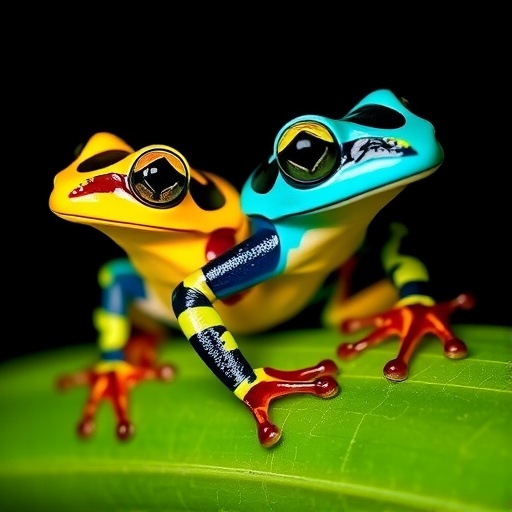
In a groundbreaking study that merges the fields of genetics, ecology, and evolutionary biology, researchers have unveiled crucial insights into how dietary components influence coloration in the mimic poison frog, scientifically known as Ranitomeya imitator. This small amphibian, known for its eye-catching colors, serves as a fascinating model organism to understand the relationship between nutrition and phenotypic expression. The research highlights an intriguing connection between carotenoid and retinol availability and the expression of color-related genes, which may have far-reaching implications for both evolutionary biology and conservation efforts.
The study deploys a multifaceted approach to analyze the variables that influence the coloration of Ranitomeya imitator. Carotenoids, the pigments responsible for yellow, orange, and red hues in many organisms, play a crucial role in coloration and are also linked to various physiological processes. Retinol, or vitamin A, is vital for numerous biological functions, including vision and immune response. The authors meticulously examined how variations in the availability of these two vital nutrients affect the expression of certain genes responsible for pigmentation.
One of the key findings of this research is the role of carotenoid intake in shaping the phenotypic traits of these amphibians. Carotenoids are not synthesized by most animals and must be obtained through diet, making the study of their distribution and accessibility in the environment particularly significant. The researchers hypothesized that a diet rich in carotenoids could lead to more vibrant coloration, which might be advantageous for species that rely on visual signals for mate attraction or warning predators. This notion aligns with the broader evolutionary theory, which posits that sexual selection may favor individuals with brighter colors, as they signal good health and genetic fitness.
Alongside carotenoids, the availability of retinol was also scrutinized in this study. The researchers noted that retinol’s role extends beyond pigmentation, impacting overall vitality and development in frogs. Its crucial involvement in vision suggests that there may be trade-offs between color brightness and the functionality of other physiological processes. The investigation thus provides a nuanced perspective on how dietary factors may create a balance in the competing demands between color expression and survival functions.
The study employed sophisticated genomic techniques to map the expression of various color-related genes in response to dietary composition. Next-generation sequencing technologies were integral to revealing how alterations in nutrient availability directly influence gene expression pathways critical to pigment production. By leveraging these advanced methodologies, the researchers were able to pinpoint specific genes that responded favorably to increased carotenoid and retinol intake, thereby providing empirical support for their hypotheses regarding the dietary influences on coloration.
Furthermore, the research has significant implications for understanding ecological dynamics and evolutionary pressures faced by Ranitomeya imitator. The findings suggest that fluctuations in the availability of carotenoids and retinol, due to environmental changes or habitat degradation, could have deleterious effects on the populations of these frogs. This interdependence between diet and coloration underscores the fragile balance of ecosystems, wherein any disruption could threaten the intricate fabric of species interactions and ecosystem stability.
As conservationists look for ways to protect vulnerable species like the Ranitomeya imitator, understanding the ecological context behind dietary availability becomes increasingly important. The insights derived from this study may inform conservation strategies that prioritize the preservation of natural habitats, ensuring that the necessary resources for these frogs to thrive remain intact. By sustaining the ecosystems that nurture these vibrant organisms, it may be possible to maintain not only their populations but also the intricate interactions that characterize their environments.
Moreover, the implications of dietary influences extend beyond Ranitomeya imitator. The principles uncovered in this study may be relevant across multiple taxa, including birds, reptiles, and other amphibians. The evolutionary significance of coloration as a trait shaped by nutritional availability broadens our understanding of how species can adapt to their environments based on available resources. It also raises intriguing questions about the evolutionary trade-offs faced by other species as they navigate the complex web of ecological relationships.
In light of these revelations, future research endeavors may benefit from exploring the genetic mechanisms underlying carotenoid metabolism and retinol synthesis across different species. By comparing the genetic and biochemical pathways involved in pigment production among various organisms, scientists can uncover how these mechanisms evolve and adapt in response to environmental pressures. This comparative approach could foster a deeper comprehension of the evolutionary forces at play in shaping biodiversity.
The study serves as a testament to the power of interdisciplinary collaboration, fusing genetics, ecology, and evolutionary biology. It sheds light on the intricate relationships between diet, genetic expression, and phenotypic outcomes. Furthermore, it reinforces the importance of integrated research efforts in addressing pressing ecological and evolutionary questions, ultimately contributing to a more comprehensive understanding of life’s complexities on our planet.
As the scientific community continues to investigate the nuanced interactions between nutrition and phenotype, it becomes clear that studies such as this are pivotal. They not only advance our knowledge of specific species but also encourage critical discourse on broader ecological principles and conservation methodologies. The link between diet and coloration has opened an avenue for future exploration, inspiring new questions and potential research trajectories that can further enrich our understanding of biological diversity and its conservation.
In conclusion, the illuminating findings from this research highlight an often-overlooked aspect of evolutionary biology: the importance of environmental factors, particularly dietary components, in shaping phenotypic traits such as coloration. With implications for both scientific understanding and conservation action, the study invites us to consider how our management of natural ecosystems may impact the delicate balance of evolutionary forces. As we delve deeper into the complexities of life, studies like these guide us in our quest to uncover the hidden connections that define the natural world.
Subject of Research: Dietary Effects on Coloration in Mimic Poison Frog
Article Title: Consuming your colors: carotenoid and retinol availability affects expression of color related genes in the mimic poison frog (Ranitomeya imitator)
Article References:
Rubio, A., de Araujo Miles, M., Dye, A.M. et al. Consuming your colors: carotenoid and retinol availability affects expression of color related genes in the mimic poison frog (Ranitomeya imitator). BMC Genomics (2025). https://doi.org/10.1186/s12864-025-12381-4
Image Credits: AI Generated
DOI: 10.1186/s12864-025-12381-4
Keywords: Carotenoids, Retinol, Ranitomeya imitator, Coloration, Gene Expression, Evolutionary Biology, Conservation, Nutritional Ecology
Tags: amphibian coloration and dietcarotenoid and retinol in amphibianscarotenoid pigments in animalsColor genes in mimic poison frogsconservation implications of frog colorationdietary influence on frog colorationecological factors in amphibian geneticsevolutionary biology of mimicrynutritional impact on colorationphenotypic expression in frogsRanitomeya imitator geneticsvitamin A and gene expression