• HOME
  • NEWS
  • EXPLORE
    • CAREER
      • Companies
      • Jobs
    • EVENTS
    • iGEM
      • News
      • Team
    • PHOTOS
    • VIDEO
    • WIKI
  • BLOG
  • COMMUNITY
    • FACEBOOK
    • INSTAGRAM
    • TWITTER
Tuesday, November 10, 2026
BIOENGINEER.ORG
No Result
View All Result
  • Login
  • HOME
  • NEWS
  • EXPLORE
    • CAREER
      • Companies
      • Jobs
        • Lecturer
        • PhD Studentship
        • Postdoc
        • Research Assistant
    • EVENTS
    • iGEM
      • News
      • Team
    • PHOTOS
    • VIDEO
    • WIKI
  • BLOG
  • COMMUNITY
    • FACEBOOK
    • INSTAGRAM
    • TWITTER
No Result
View All Result
Bioengineer.org
No Result
View All Result
Home NEWS Science News Technology

Collaborative Neural Network Enhances Bridge Defect Detection at Low Computational Cost

by
November 8, 2026
in Technology
Reading Time: 2 mins read
0
Collaborative Neural Network Enhances Bridge Defect Detection at Low Computational Cost

Collaborative Neural Network Enhances Bridge Defect Detection at Low Computational Cost

Share on FacebookShare on TwitterShare on LinkedinShare on RedditShare on Telegram

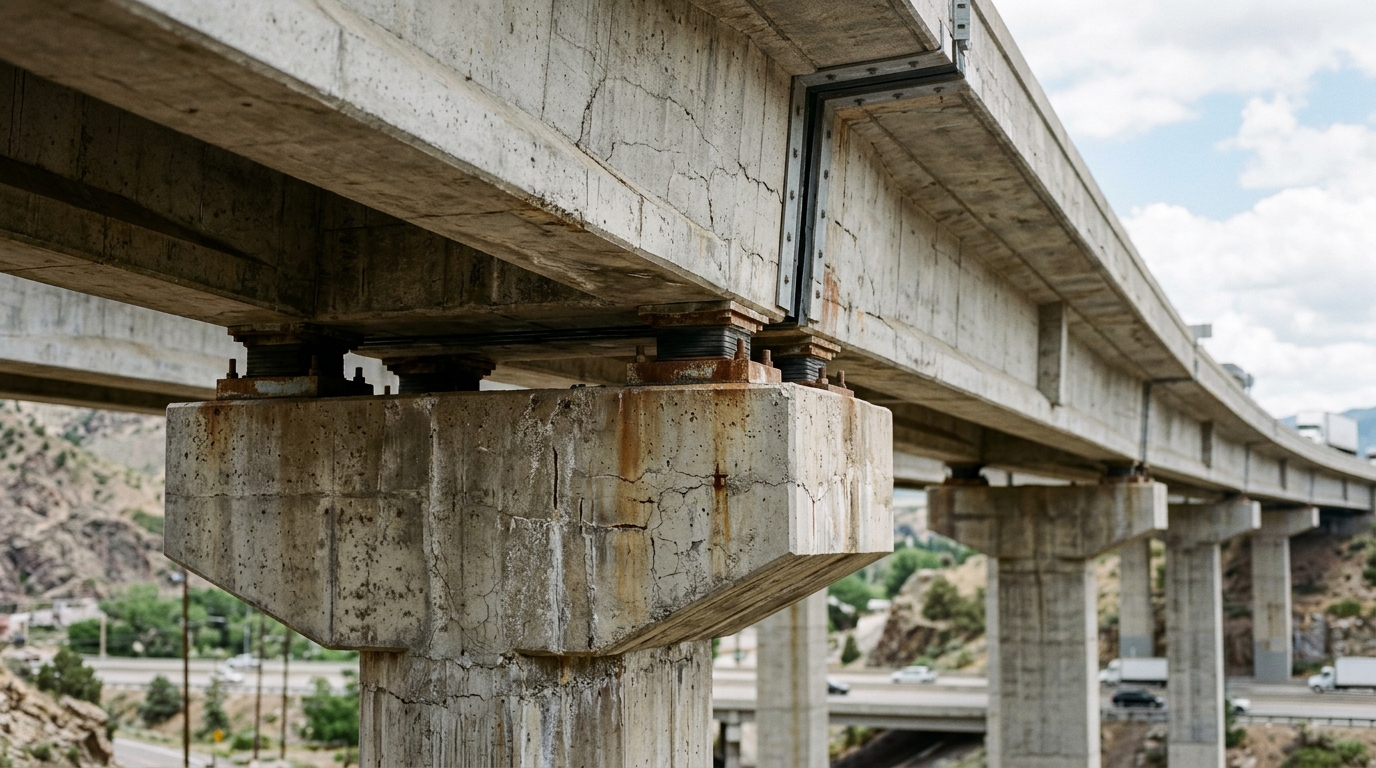
A multi-dimensional collaborative detection network based on the YOLOv10n architecture achieves comparable or better defect detection performance than several state-of-the-art detectors on the public bridge-bkqxz/2 dataset while maintaining low computational cost. Reported by researchers from China Harbour Engineering Company, Qingdao University of Science and Technology, and Hainayun IoT Technology in Frontiers in Artificial Intelligence, the model is designed to support structural safety assessments and intelligent ocean engineering tasks.

Accurate defect detection in underwater and cross-domain marine infrastructure, including bridge piers, submarine pipelines, and subsea equipment, is critical for structural safety assessment and intelligent ocean engineering. However, existing detection methods face substantial performance degradation in complex underwater environments due to large scale variations, dense small targets, severe class imbalance, and texture loss.

To mitigate these challenges, the researchers developed a multi-dimensional collaborative network incorporating targeted modifications to the YOLOv10n backbone. Specifically, switchable dilated convolutions, designated as SAConv, adaptively adjust receptive fields to handle targets across different scales, while a spatial-channel downsampling module, termed SCDown, operates to preserve fine-grained structural and visual details during downsampling.

At the backbone output, the network incorporates a Partial Spatial Attention and Multi-layer Latent Linear Attention module, abbreviated as PSAMLLA. This attention mechanism is designed to capture global contextual information with linear computational complexity, utilizing rotary and local position encoding to maintain spatial relationships efficiently.

Within the feature pyramid, the architecture utilizes a Conditional Identity Block Feature Fusion module, designated as C2fCIB, to enhance multi-scale feature fusion through deep large-kernel convolutions coupled with structural re-parameterization. For final prediction, the model employs a Dynamic Detection Head, or DyHead, which integrates scale-aware, spatial-aware, and task-aware attention mechanisms to achieve adaptive inference across diverse defect types.

Extensive experimental testing on the public bridge-bkqxz/2 benchmark demonstrated that the framework delivers comparable or superior performance against established baseline detectors with low computational cost, demonstrating its applicability for bridge inspection. The authors noted that their experimental validation is currently limited to bridge surface defect detection, but emphasized that the underlying techniques for managing texture degradation and multi-scale object variability provide a potential foundation for future expansion to underwater vision systems.

Subject of Research: Deep learning architectures for bridge defect detection

Article Title: Dynamic receptive field and feature enhanced network for bridge defect detection

Article References: Tang, Z., Ji, Y., Chen, B., Huang, S., Jin, Y., Liu, J., & Li, H. (2026). Dynamic receptive field and feature enhanced network for bridge defect detection. Frontiers in Artificial Intelligence, 9, Article 1952072. https://doi.org/10.3389/frai.2026.1952072

Image Credits: AI Generated

DOI: 10.3389/frai.2026.1952072

Keywords: bridge defect detection, YOLOv10n, computer vision, marine infrastructure, switchable dilated convolutions, dynamic detection head, linear attention, structural safety, Dynamic, receptive, field, feature

News Source: Blake Davidson. (November 8, 2026). Collaborative Neural Network Enhances Bridge Defect Detection at Low Computational Cost. Scienmag.


Tags: bridge defect detectionComputer VisionDynamicdynamic detection headfeaturefieldlinear attentionmarine infrastructurereceptivestructural safetyswitchable dilated convolutionsYOLOv10n
Share12Tweet7Share2ShareShareShare1

Related Posts

Hybrid Decision Framework Combines Topology and Neural Networks for Industrial Safety

Hybrid Decision Framework Combines Topology and Neural Networks for Industrial Safety

November 10, 2026
SieveJoin Accelerates Database Multi-Way Joins by Pruning Intermediate Query Data

SieveJoin Accelerates Database Multi-Way Joins by Pruning Intermediate Query Data

November 10, 2026

Single-Cell Gene Network Models Identify Disease Mechanisms Across Specific Cell Types

November 10, 2026

Forensic Study Reveals Miskhal Mosque’s Climate-Responsive Timber Design

November 10, 2026

POPULAR NEWS

  • Systematic review identifies barriers to TIVA use

    Systematic review identifies barriers to TIVA use

    29 shares
    Share 12 Tweet 7
  • Early Functional Deterioration Frequent During First-Line Therapy in Advanced Lung Cancer

    29 shares
    Share 12 Tweet 7
  • Metabolomic Signatures Link Cardiovascular Risk in Autoimmune Diseases

    29 shares
    Share 12 Tweet 7
  • Surgical Antibiotic Prophylaxis Nonadherence in Iran Driven by Workflow and Culture

    29 shares
    Share 12 Tweet 7

About

We bring you the latest biotechnology news from best research centers and universities around the world. Check our website.

Follow us

Recent News

Researchers Propose Translation Matrix to Validate AI Cancer Biomarkers and Targets

Most Registered Meniscus Trials Prioritize Short-Term Relief Over Long-Term Joint Preservation

Workplace Health Research in Japan Diverges From National Policy Priorities

Subscribe to Blog via Email

Enter your email address to subscribe to this blog and receive notifications of new posts by email.

Join 87 other subscribers
  • Contact Us

Bioengineer.org © Copyright 2023 All Rights Reserved.

Welcome Back!

Login to your account below

Forgotten Password?

Retrieve your password

Please enter your username or email address to reset your password.

Log In
No Result
View All Result
  • Homepages
    • Home Page 1
    • Home Page 2
  • News
  • National
  • Business
  • Health
  • Lifestyle
  • Science

Bioengineer.org © Copyright 2023 All Rights Reserved.