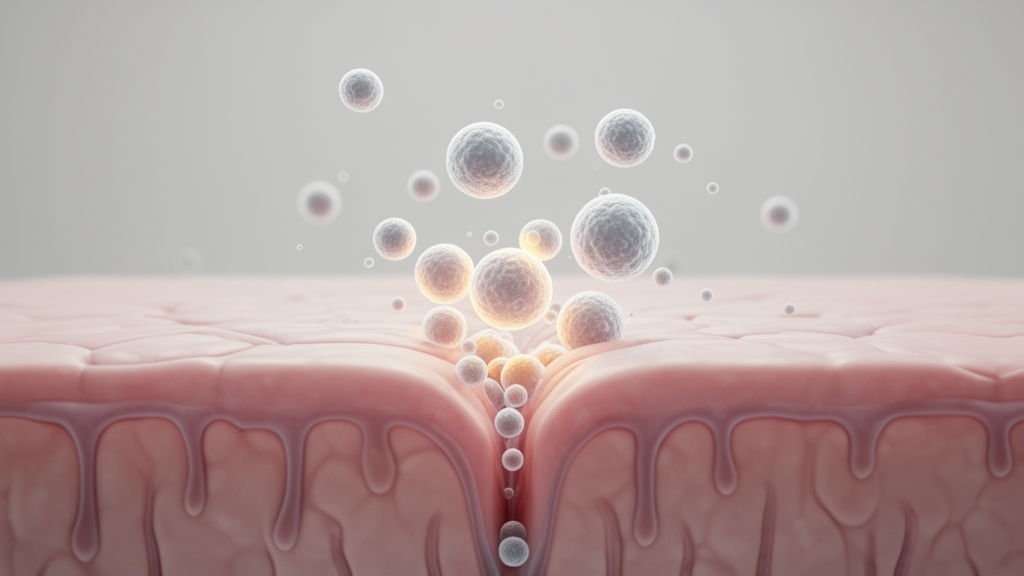
Membrane vesicles produced by Clostridioides difficile can trigger programmed cell death in human intestinal epithelial cells and macrophages in laboratory models, according to an in vitro investigation published in Molecular Biology Reports. The laboratory study revealed that exposure to these bacterial vesicles produces modest, cell type-dependent apoptotic responses while altering several key molecular markers associated with cellular apoptosis.
During Clostridioides difficile infection, complex interactions occur between bacterial virulence factors and host tissues. While many aspects of bacterial pathogenesis have been described, the precise role played by C. difficile membrane vesicles in driving host cell death has remained unclear. To address this knowledge gap, the research team designed an in vitro study to evaluate the specific pro-apoptotic actions exerted by these extracellular structures on human gut epithelial models and immune cells.
The experimental setup compared extracellular vesicles harvested from two distinct bacterial backgrounds: a toxigenic clinical strain designated RT001 and a non-toxigenic reference strain, ATCC 700057. To examine the physiological responses of relevant human cell types, the investigators tested vesicle preparations on Caco-2 intestinal epithelial cell cultures and THP-1-derived macrophage lines.
To characterize host cellular responses, the researchers employed cell viability assays, Annexin V-FITC and propidium iodide flow cytometry, reverse transcription quantitative polymerase chain reaction, and Western blotting. Exposure to the isolated membrane vesicles progressively reduced cell viability across both cellular models. Concurrently, flow cytometry demonstrated an increase in apoptotic cell populations, with these cytotoxic and pro-apoptotic effects intensifying as exposure times were extended.
Molecular evaluations demonstrated widespread alterations in genes governing apoptotic pathways. Exposure to the vesicles increased gene expression of initiator caspases CASP8 and CASP9, executioner caspases CASP3 and CASP7, and pro-apoptotic regulators BAX and BAD, while downregulating expression of the anti-apoptotic regulator BCL-2. Western blot analyses confirmed corresponding shifts in BAX and BCL-2 protein levels, supporting the involvement of mitochondrial apoptotic signaling cascades in the observed cellular injury.
Comparative analyses revealed that membrane vesicles from the toxigenic clinical strain RT001 generally induced stronger cytotoxic and pro-apoptotic responses than those from the non-toxigenic strain, though the overall magnitude of apoptosis varied between epithelial cells and macrophages. Crucially, vesicles isolated from the non-toxigenic strain also initiated apoptosis, demonstrating that these cellular impacts are not exclusive to toxin-producing strains. The authors concluded that this toxin-independent mechanism offers new insight into how C. difficile impairs intestinal epithelial integrity, while noting that the specific vesicular components and exact molecular pathways responsible remain to be elucidated.
Subject of Research: Pro-apoptotic effects of Clostridioides difficile membrane vesicles on human cells in vitro
Article Title: Clostridioides difficile-derived membrane vesicles induce pro-apoptotic effects in human intestinal epithelial cells and macrophages in vitro
Article References: Azimirad, M., Sabzehali, F., Mashhoori Vayghan, M., Zali, M. R., & Yadegar, A. (2026). Clostridioides difficile-derived membrane vesicles induce pro-apoptotic effects in human intestinal epithelial cells and macrophages in vitro. Molecular Biology Reports, 53(1), Article 1968. https://doi.org/10.1007/s11033-026-13169-9
Image Credits: AI Generated
DOI: 10.1007/s11033-026-13169-9
Keywords: Clostridioides difficile, membrane vesicles, apoptosis, Caco-2 cells, THP-1 macrophages, intestinal epithelial cells, cell viability, RT001, ATCC 700057, CASP3, CASP7, CASP8, CASP9, BAX, BAD, BCL-2, flow cytometry, mitochondrial apoptotic signaling
News Source: Drew Townsend. (November 15, 2026). Clostridioides difficile Membrane Vesicles Induce Apoptosis in Human Cells In Vitro. Scienmag.