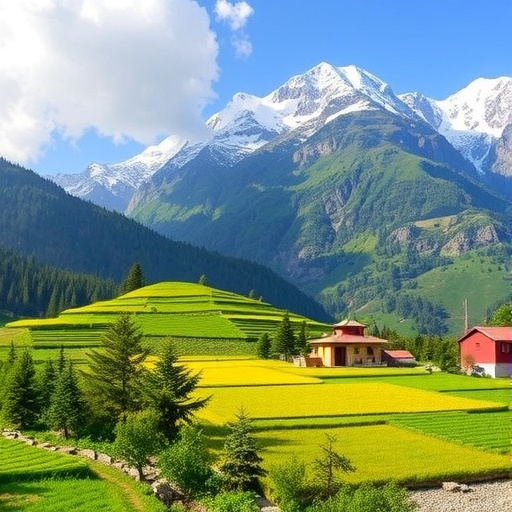
In the majestic expanse of the Western Himalaya, a region rich in biodiversity and cultural heritage, the impacts of climate change are becoming increasingly pronounced. Recent research spearheaded by Shah, Z., Pandey, K., and Sekar, K.C. dives deep into the complexities of these changes and their repercussions on agroecological systems. This inquiry not only examines the ecological ramifications but also explores the socio-economic consequences for local communities who depend on agriculture as their primary source of livelihood.
The study is set against a backdrop of growing climatic unpredictability, characterized by erratic weather patterns, glacial melt, and shifting monsoon regimes. These changes are not merely localized phenomena; they resonate throughout global agricultural systems, necessitating a more integrated understanding of climate interactions. The scholarly analysis put forth by the researchers highlights alarming trends, including diminished crop yields and increased susceptibility to pests and diseases, which challenge the very foundations of sustainable agriculture in the region.
As temperatures rise, the impacts are manifold. The researchers document a significant shift in phenological patterns—the timing of life cycle events among plants—impacting crop production cycles. This shift complicates traditional agricultural practices, as farmers struggle to adapt their planting schedules to align with the new climatic realities. The farmers of the Western Himalaya, steeped in generations of agricultural wisdom, find themselves at a crossroads, where past knowledge may not suffice in the face of rapid environmental change.
In their rigorous methodology, the researchers utilized a blend of remote sensing data, field surveys, and interviews with local farmers. This multidisciplinary approach provides a holistic view of the interconnections between climate change and agricultural productivity. The integration of quantitative data allows for robust analyses while qualitative insights from farmers add a valuable layer of context. This combination underscores the importance of inclusive research frameworks that account for local knowledge systems, leading to more resilient agricultural practices.
The report underscores another critical angle: the socio-economic dimensions of agricultural adaptation to climate change. Many farmers are already facing heightened economic pressure due to increased input costs and falling crop prices, exacerbated by climate variability. The findings suggest that without targeted interventions, many smallholder farmers could be pushed beyond subsistence, leading to greater levels of poverty and food insecurity. This potential crisis underscores a pressing need for policy makers to consider adaptive strategies that are economically viable and culturally appropriate.
Moreover, the research team emphasizes the role of indigenous knowledge in fostering resilience against climatic shocks. Farmers possess a wealth of traditional practices, honed over centuries, that can be pivotal in mitigating the effects of climate change. Techniques such as crop rotation, intercropping, and the use of local seed varieties are discussed as sustainable alternatives capable of enhancing food security while preserving ecological balance. The integration of such traditional wisdom with modern scientific approaches may hold the key to improving adaptive capacities among Western Himalayan farmers.
One of the most intriguing findings of the study pertains to the interplay between agriculture and biodiversity. The researchers reveal that the degradation of agroecological systems could lead to a loss of native plant species, which are critical not just for agricultural resilience but also for maintaining the region’s rich ecological heritage. Biodiversity loss poses a significant threat, as it diminishes the genetic variability necessary for crops to adapt to changing conditions. This cycle of loss could ultimately undermine both food security and ecosystem health.
As global conversations surrounding climate change and sustainable agriculture gain momentum, the plight of the Western Himalaya serves as a poignant reminder of the urgency of the situation. The region is not isolated; its challenges echo in agricultural communities worldwide facing similar climatic pressures. This interconnectedness emphasizes the need for collaborative efforts across borders and disciplines to develop comprehensive frameworks that address not just environmental sustainability, but also the socio-economic facets of climate adaptation.
The researchers call for urgent policy interventions that can empower local farmers by providing access to climate-smart agricultural techniques, financial support, and education. Investments in agricultural research are vital to develop crop varieties resilient to climate stresses, thereby fostering food security in the shifting climatic landscape. Local governments, NGOs, and international bodies are urged to work together to implement these strategies effectively, recognizing that the resilience of the Western Himalaya’s agricultural systems can be enhanced through concerted actions.
In conclusion, the findings presented by Shah, Z. and colleagues shine a light on the alarming impacts of climate change on agroecological systems in the Western Himalaya. This pivotal research illustrates the urgent need for adaptive strategies to mitigate risks and highlights the potential synergy between traditional practices and scientific innovation. As the world grapples with the realities of climate change, the lessons drawn from the Western Himalaya could serve as a blueprint for fostering resilience in agriculture worldwide.
Through this exploration, the research underscores a complex narrative—the trials of adapting to climate change intertwined with the wisdom of local practices and the importance of biodiversity. It is a call to action, urging a transformed approach that respects traditional knowledge while embracing scientific advancements for a sustainable agricultural future.
While this research is impactful, continuous monitoring and comprehensive strategies are crucial in addressing ongoing climatic challenges. Global stakeholders must prioritize understanding the nuances of local ecosystems while providing enough resources to support those who are most vulnerable. Thus, the future of agriculture in the Western Himalaya and beyond hinges upon a collaborative effort that cultivates resilience amid uncertainty.
In the face of existential threats posed by climate change, the quest for solutions is inescapable. The lessons learned from the Western Himalaya can inform broader discussions about sustainability, resilience, and the vital interplay between humans and the environment. This ongoing journey of adaptation may hold the key not just to the future survival of local farmers, but to our global agricultural systems as we strive to create a world that can thrive in harmony with our changing climate.
Subject of Research: Impacts of climatic change on agroecological systems in the Western Himalaya
Article Title: Impacts of climatic change on agroecological systems in the Western Himalaya
Article References:
Shah, Z., Pandey, K., Sekar, K.C. et al. Impacts of climatic change on agroecological systems in the Western Himalaya.
Discov Agric 4, 14 (2026). https://doi.org/10.1007/s44279-025-00470-7
Image Credits: AI Generated
DOI: https://doi.org/10.1007/s44279-025-00470-7
Keywords: Climate change, agroecological systems, Western Himalaya, agriculture, food security, resilience, biodiversity, indigenous knowledge, socio-economic impact.
Tags: biodiversity in the Himalayasclimate change effects on agriculturecrop yield reduction in the Himalayaserratic weather patterns in agricultureglacial melt and agricultureimpacts of climate change on farmingintegrated understanding of climate interactionslocal community adaptation to climate changephenological shifts in plant life cyclessocio-economic consequences of climate changesustainable agriculture challengesWestern Himalayan agroecosystems