The Global Consortium on Climate and Health Education (GCCHE) unveils an online knowledge bank with resources for educators on the health impacts of climate change. The announcement is timed for the Global Climate and Health Forum held in affiliation with the Global Climate Action Summit in San Francisco, September 12-14, 2018.
Launched in early 2017, GCCHE is a network of more than 170 health professions schools and programs, including institutions of medicine, nursing, and public health, committed to educating their students on the health impacts of climate change and other planetary health challenges. GCCHE aims to stimulate the growth of the emerging field of climate and health by creating a virtual town square in which health professions schools can share climate-health education resources, promote climate-health activism, and develop a global standard for knowledge on the health impacts of climate change.
The GCCHE knowledge bank features links to resources that are already posted and publicly available online including slides, videos, and online courses; curricular guidance, information about upcoming events, textbooks, articles and reports; and opportunities such as internships and jobs, funding, and calls for papers. Resources are indexed by impact area, within a larger climate-health teaching framework of core competencies (available on the GCCHE website). The indexing is designed to maximize the teaching resources' utility for educators and can be adapted to institutions' local needs and priorities. Resources will continue to expand based on input from GCCHE members. The knowledge bank is available to the public free of charge.
"We built this resource to support the growing ranks of students and educators hungry for authoritative information on the numerous health impacts of climate change and planetary environmental degradation," says Jeffrey Shaman, director of GCCHE and the Climate and Health Program at Columbia University's Mailman School of Public Health. "There has never been a more urgent need to educate and train a new generation of health professionals with the expertise needed to effectively respond to these challenges."
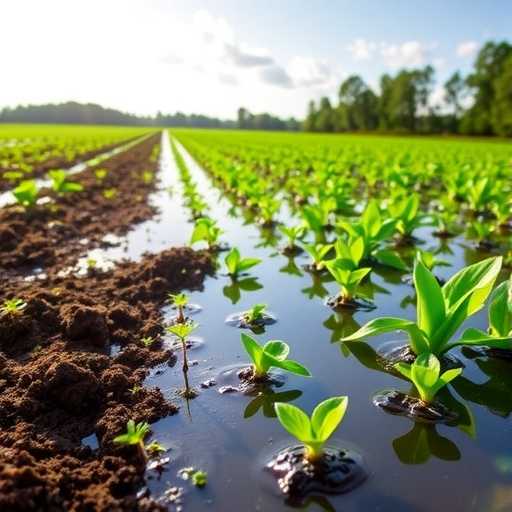
Countries around the world are contending with more frequent extreme weather and disasters, including deadly heatwaves, hurricanes, flooding, and forest fires; expanding ranges of ticks and other disease-bearing vectors; new pressures on the availability of food and fresh water; and human displacement due to rising sea levels and other climate-related changes. As the knowledge bank grows, it will provide resources for health professionals and the public to better grapple with these and other health impacts of climate change, and develop public health and clinical practice, policy initiatives, and communication tactics in response to climate and health issues.
###
About the Global Consortium on Climate and Health Education
The Global Consortium on Climate and Health Education (GCCHE) launched in 2017 with the vision that all health professionals throughout the world will be trained to prevent, mitigate, and respond to the health impacts of climate change. To advance progress toward this goal, the GCCHE aims to create a virtual town square across all health professions by bringing together member institutions to engage on climate-health education, promote climate-health activism across all health professions, and develop a global standard for knowledge on the health impacts of climate change that all graduates of health professions schools should possess. Start-up financial support for the GCCHE was provided by The Rockefeller Foundation, and current funding is provided by ClimateWorks Foundation. Representatives of health professions schools are invited to join the GCCHE here.
Media Contact
Tim Paul
[email protected]
212-305-2676
@ColumbiaMSPH
https://www.mailman.columbia.edu/