


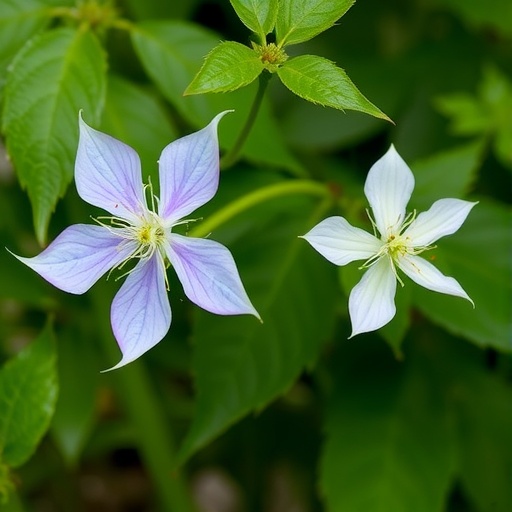
In a groundbreaking study, researchers have unveiled the potential of traditional medicinal practices through the examination of Clematis hirsuta, a plant whose leaves have been used in various herbal remedies. The study, led by a team of scientists including Abebe, Gelana, and Nigussie, investigates the in vitro antipromastigote activity of extracts derived from the leaves of this remarkable plant. The findings offer promising insights into the battle against two notorious parasites, Leishmania donovani and Leishmania aethiopica, the causative agents of visceral and cutaneous leishmaniasis, respectively.
Leishmaniasis is a tropical disease transmitted through the bites of infected sandflies, leading to significant morbidity and mortality across many regions. The diversity in clinical manifestations resulting from Leishmania infections poses a challenge for effective treatment strategies. Current therapeutic options often come with limitations, including high costs, toxicity, and resistance. Hence, exploring alternative treatments that harness natural compounds has become imperative. This study demonstrates how Clematis hirsuta could be a vital resource in developing new anti-leishmanial drugs.
The researchers utilized two distinct extraction methods—decoction and hydrodistillation—to obtain the bioactive compounds from Clematis hirsuta leaves. Decoction involves boiling the plant material to extract its active constituents, while hydrodistillation is a sophisticated technique that combines steam and water to isolate volatile compounds. Through these methods, the team aimed to understand the efficacy of different extraction techniques in yielding potent extracts that inhibit the promastigote form of the parasites responsible for leishmaniasis.
The study rigorously assessed the antipromastigote activity of the extracts through a series of in vitro experiments. Researchers employed specific concentrations of the extracts and monitored their effects on the Leishmania species. The results indicated a significant reduction in promastigote viability, suggesting that the extracts of Clematis hirsuta possess inherent anti-parasitic properties. The findings raise a compelling argument for integrating such natural remedies into conventional treatment regimens, particularly in areas where access to standard medications is limited.
Importantly, the underlying mechanism of action was explored, offering insights into how these extracts exert their antiparasitic effects. The researchers propose that the phytochemicals present in the leaves might disrupt key metabolic pathways within the parasites, leading to cell death. The study opens avenues for further investigation into the specific compounds responsible for this activity, which could be isolated and tested for their therapeutic potential.
The implications of this research extend beyond the immediate findings. By highlighting the efficacy of a locally available plant, the study champions the value of ethnopharmacology and encourages the documentation and validation of traditional knowledge. This could foster community engagement in conservation efforts, ensuring that such valuable resources are preserved for future generations while benefiting local populations through enhanced healthcare options.
Furthermore, as drug resistance continues to challenge the efficacy of existing treatments, the discovery of novel therapeutic agents from natural sources is crucial. The potential of Clematis hirsuta underscores the need for continued research into unexplored flora. Such studies could lead to the discovery of additional compounds that could serve as potent anti-leishmanial agents or even provide templates for novel drug development.
The research findings have opened up discussions regarding sustainable practices in natural product extraction. Given the increasing demand for plant-derived compounds in pharmaceuticals, ethical sourcing and cultivation practices become paramount. Employing sustainable extraction methods ensures a minimal ecological footprint while promoting the conservation of biodiversity, reinforcing the long-term availability of these precious resources.
As we continue to grapple with the global health implications of neglected tropical diseases, this study serves as a reminder of the intricate relationship between traditional medicine and modern science. Interdisciplinary collaborations that bridge the gap between these domains can yield innovative solutions to age-old challenges. Recognizing the potential of natural products contributes to a more holistic approach in public health, emphasizing prevention, sustainable practices, and community involvement.
Ultimately, this step forward in the research on Clematis hirsuta is a testament to human ingenuity and the relentless pursuit of knowledge. It reflects a growing awareness of the importance of harnessing nature’s resources responsibly and effectively to combat diseases that afflict the most vulnerable populations. The work sets the stage for future studies aimed at identifying specific active compounds and understanding their mechanisms, paving the way for new therapeutic pathways in the global fight against leishmaniasis.
This study not only contributes valuable insights to the field of parasitology but may also serve as a catalyst for further exploration of other plants with documented traditional uses. By shedding light on the health benefits of these botanicals, researchers may inspire greater investment in the bioprospecting of underutilized plant species, expanding the arsenal of tools available to combat infectious diseases.
In closing, the enticing results of the study involving Clematis hirsuta herald a new chapter in leishmaniasis research. As scientists move forward with this line of inquiry, the hope is that such discoveries will ultimately lead to more effective and accessible treatments for all populations impacted by leishmaniasis and other neglected tropical diseases.
Subject of Research: Natural anti-parasitic properties of Clematis hirsuta against Leishmania donovani and Leishmania aethiopica.
Article Title: In vitro antipromastigote activity of decoction and hydrodistillation extracts of Clematis hirsuta leaves against Leishmania donovani and Leishmania aethiopica.
Article References: Abebe, E., Gelana, T., Nigussie, H. et al. In vitro antipromastigote activity of decoction and hydrodistillation extracts of Clematis hirsuta leaves against Leishmania donovani and Leishmania aethiopica. BMC Complement Med Ther (2026). https://doi.org/10.1186/s12906-026-05251-3
Image Credits: AI Generated
DOI: 10.1186/s12906-026-05251-3
Keywords: Clematis hirsuta, antipromastigote activity, Leishmania, leishmaniasis, natural remedies, traditional medicine.
Tags: alternative treatments for tropical diseasesantipromastigote activitybioactive compounds extraction methodschallenges in leishmaniasis treatmentClematis hirsuta extractsherbal remedies for leishmaniasisin vitro studies on plant extractsLeishmania aethiopica researchLeishmania donovani treatmentnatural anti-leishmanial drugssandfly transmitted diseases.traditional medicinal practices



