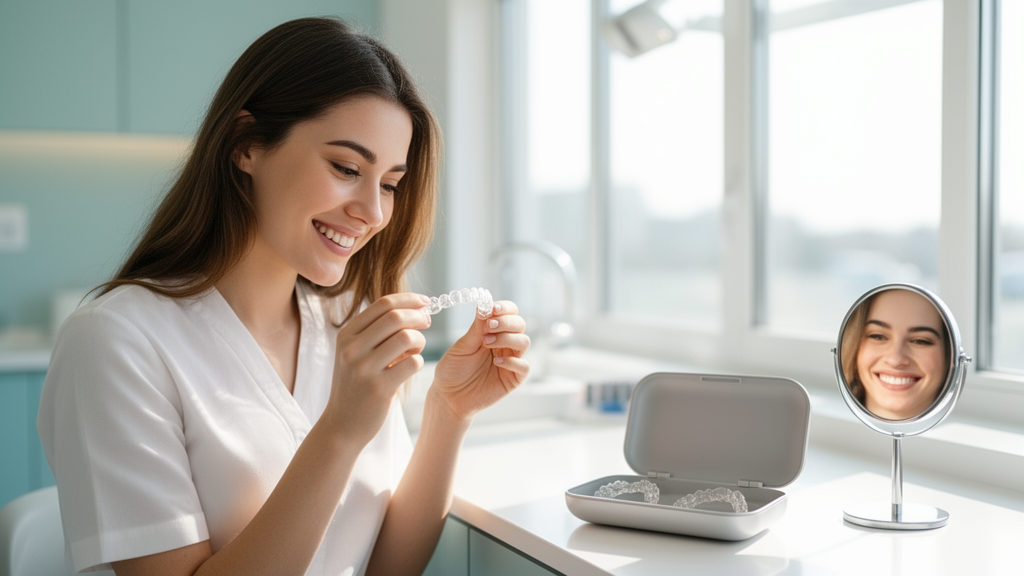
In a comprehensive comparative study evaluating patient-reported outcomes in modern orthodontics, clinical researchers have established that patients undergoing active clear aligner therapy and traditional fixed appliance therapy experience similarly high satisfaction levels, while clear aligner patients demonstrate an accurate ability to forecast their own daily appliance wear compliance. The clinical investigation, conducted across university and private practice settings in Virginia, examined 394 actively treated patients to evaluate how patient motivation, appliance perceptions, and behavioral compliance interact during ongoing orthodontic care. Although satisfaction metrics proved remarkably favorable across both treatment modalities, clear aligner patients registered statistically significant advantages regarding scheduled appointment frequency and perceived treatment value.
Earlier research has demonstrated that patient adherence to prescribed aligner protocols varies considerably, with noticeable compliance differences documented across different age groups. Because prospective patients are frequently presented with both clear aligners and fixed appliances during initial orthodontic consultations, understanding the underlying drivers of appliance selection, how satisfied patients remain with those decisions, and whether initial compliance expectations correspond with the practical realities of daily aligner wear provides essential clinical evidence to guide professional counseling and case selection.
To capture these patient experiences, researchers at Virginia Commonwealth University developed two original, parallel paper-based questionnaires tailored specifically for individuals undergoing active clear aligner or traditional fixed appliance therapy. The comprehensive research protocol and informed consent procedures received formal institutional approval from the Virginia Commonwealth University Institutional Review Board under protocol HM20028564, adhering to the ethical tenets of the Declaration of Helsinki. Prior to clinical administration, the survey instruments underwent rigorous review and content refinement by a panel of ten orthodontic providers, including orthodontic faculty members, clinical residents, and private practice orthodontists. The survey assessed four primary operational areas: patient demographics, introductory treatment information and selection motives, ongoing treatment progress and satisfaction, and self-reported treatment adherence. Hard-copy questionnaires accompanied by background information sheets were provided directly to patients upon their arrival for routinely scheduled orthodontic adjustment visits.
Patient recruitment was conducted over an eight-month window between February 22, 2024, and October 18, 2024, drawing participants from one university orthodontic clinic and one private orthodontic practice in Virginia. By recruiting participants concurrently across both an academic institution and a private orthodontic practice, the investigators captured a broad, clinically representative cross-section of orthodontic patients spanning diverse ages, educational backgrounds, ethnicities, and financing methods, reflecting the broad demographic spectrum routinely encountered in modern orthodontic settings.
In parallel, participants receiving traditional fixed appliance therapy were treated using standardized straight-wire MBT prescription brackets and conventional archwire sequences.
The survey instruments combined multiple-choice questions, free-response prompts, and a specialized ranking inquiry requiring respondents to designate their top three decision-making factors. Seven specific questions utilized a five-point Likert scale ranging from very satisfied (5) to very dissatisfied (1) or very good (5) to very poor (1) to measure treatment satisfaction and perceived progress. All statistical computations were performed using SAS Enterprise Guide version 8.2 with statistical significance defined at an alpha level of 0.05. A priori statistical power calculations established that a minimum total sample size of 300 participants—requiring at least 150 participants per treatment cohort—provided 80 percent statistical power to detect a small effect size (delta = 0.33) between treatment modalities, while providing sufficient power to detect a small effect size (delta = 0.23) for paired differences between expected and perceived aligner adherence. Categorical data were analyzed using chi-square or Fisher’s exact tests, and continuous satisfaction ratings were evaluated using t-tests.
Of the 394 actively treated patients who participated in the study, 206 participants (52 percent) were receiving clear aligner therapy, while 188 participants (48 percent) were undergoing traditional fixed appliance therapy. First-time orthodontic patients accounted for 62 percent of the overall study cohort (243 participants), whereas 38 percent (149 participants) were undergoing orthodontic retreatment. Within the retreatment subgroup, 75 percent had initially received traditional fixed appliances (112 patients), and 25 percent had previously been treated with clear aligners (37 patients). When evaluating retreatment appliance selection, clear aligners were chosen far more frequently: among patients initially treated with fixed appliances, 51 percent selected clear aligners for retreatment (57 patients), whereas 89 percent of patients initially treated with clear aligners selected clear aligners again (33 patients). Patients originally treated with fixed appliances were significantly more likely to choose fixed appliances for retreatment compared to those initially treated with aligners (49 percent versus 11 percent, p < 0.0001).
Distinct motivations shaped appliance selection across the two modalities. Among clear aligner patients, whether receiving initial treatment or retreatment, aesthetic appearance emerged as the most frequently cited motivation, identified by 55 percent of respondents, closely followed by anticipated physical comfort at 48 percent. Conversely, patients undergoing fixed appliance therapy identified a recommendation from their dental provider as the primary factor influencing appliance choice, reported by 53 percent of the group. Word-of-mouth recommendations from friends and family members also played a meaningful role in guiding appliance selection across both cohorts. In contrast, financial cost, commercial marketing campaigns, and new technology were selected far less frequently as decisive factors.
Perceptions regarding treatment outcomes differed significantly between appliance cohorts (p < 0.0001). Among fixed appliance patients, 68 percent believed fixed appliances delivered a superior treatment result compared to clear aligners, 31 percent believed both modalities achieved similar outcomes, and 1 percent believed clear aligners yielded superior results. In contrast, among clear aligner patients, 66 percent believed the two treatment modalities produced similar results, 32 percent believed aligners provided superior outcomes, and 1 percent believed fixed appliances were better. Fixed appliance patients were also more likely to express a desire to switch modalities during treatment. Despite these divergent perceptions, overall satisfaction was high across both groups, with mean scores exceeding 3.8 out of 5 for all evaluated parameters. Clear aligner patients reported statistically significantly higher satisfaction ratings regarding appointment frequency (4.4 versus 4.2, p = 0.0073) and overall treatment value (4.3 versus 4.1, p = 0.0048).
Evaluating compliance among 205 clear aligner patients revealed that expected adherence before treatment was virtually identical to perceived adherence during active treatment. On a five-point scale from very poor to very good, the mean difference between expected and perceived adherence was only 0.02 points, demonstrating no statistically significant divergence (p = 0.7352; 95 percent confidence interval: -0.12 to 0.17). Expected and perceived adherence were rated identically by 44 percent of respondents (91 patients), while perceived adherence was better than anticipated for 29 percent (58 patients) and worse for 27 percent (56 patients). Adherence differences showed no association with patient age (p = 0.5409) or desire to switch appliances (p = 0.5191). While acknowledging limitations including self-reported compliance and non-randomized treatment assignment, the authors concluded that patients generally wear aligners about as well as they anticipate, reinforcing that orthodontists should respect patient self-appraisals during consultations when recommending suitable orthodontic modalities.
Subject of Research: Patient satisfaction, treatment perceptions, and adherence in clear aligner versus fixed appliance orthodontics
Article Title: Patient satisfaction, treatment perceptions, and adherence in clear aligner vs fixed appliance therapy
Article References: Fischer, L. T., Shroff, B., Kravitz, N. D., Carrico, C., Diskin, N., Abubaker, A. O., & Lindauer, S. J. (2026). Patient satisfaction, treatment perceptions, and adherence in clear aligner vs fixed appliance therapy. Digital and Aligner Orthodontics, 1(1), Article 14. https://doi.org/10.1007/s44525-026-00016-2
Image Credits: AI Generated
DOI: 10.1007/s44525-026-00016-2
Keywords: clear aligners, fixed appliances, orthodontic treatment, patient satisfaction, treatment adherence, treatment perceptions, malocclusion, retreatment selection, appointment frequency, treatment value, Invisalign, straight-wire MBT, appliance esthetics, patient counseling, provider recommendations, paired t-tests, Virginia Commonwealth University
News Source: Ophelia Keating. (November 12, 2026). Clear Aligner Patients Match Braces in Satisfaction and Accurately Predict Adherence. Scienmag.